


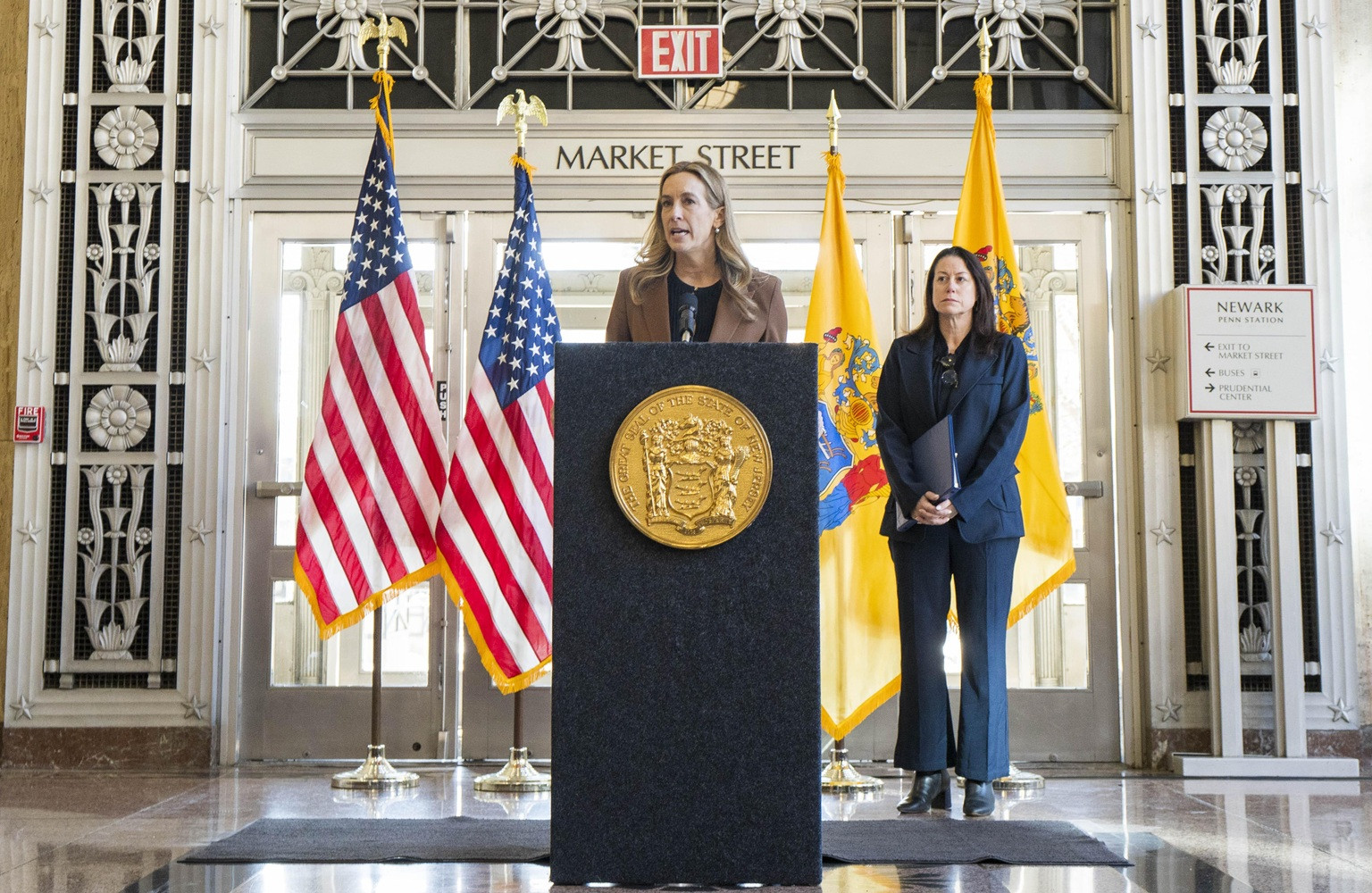
In another effort to keep the most important infrastructure project of our lifetimes moving ahead, the states of New Jersey and New York announced Wednesday that they are suing the Trump Administration for withholding $15 billion in federally committed funding for the Gateway project, acting Attorney General Jennifer Davenport said.
The suit, filed in federal court in the Southern District of New York, seeks emergency relief to stop the U.S. Department of Transportation from continuing to implement its indefinite funding freeze — funds needed to ensure that active construction on the project can continue, that workers do not lose their jobs, and that the states and their residents are not harmed.
The suit comes two days after similar action was taken by the Gateway Development Corporation — in the U.S. Court of Federal Claims — and two days before the funding for the project that has been released, runs out.
Gov. Mikie Sherrill, who made her willingness and eagerness to stand up to Trump a campaign pledge, spoke with resolve.
“Every time the Trump Administration gets involved, costs go up and working people suffer: The illegal attack on the Gateway Tunnel is yet another example,” she said. “New Jersey will not back down from this fight.
“If this project stops, 1,000 workers will immediately lose their jobs and hundreds of thousands of commuters will lose the chance at finally having reliable train service that makes their lives easier.”
The $18 billion project to provide new tunnels and rehabilitate the existing vital Hudson River rail crossing between northern New Jersey and New York City is considered vital.
Failing to complete the project would jeopardize the economic future of the Northeast region. But the argument goes deeper than that. Simply stopping and starting the project, even for a short period, would be of great detriment to the tunnel — and government projects in the future.
Greg Lalevee, the business manager for IUOE Local 825, explained it this way.
“You shut this down, even briefly, and people get reassigned,” Lalevee said.
Construction doesn’t work like an office, where staff return to the same desk after a furlough. Skilled trades crews are reallocated to keep working. Teams break apart. And when the project restarts, which crews are available — and how fast they can regain momentum — is unpredictable.
“Trades work together; we find a rhythm,” he said. “When you disrupt that, there’s no guarantee you get the same crew back. That’s why the restart is always slower and more expensive.”
Davenport said the suit is about protecting everyone.
“Our promise to our residents is clear: we will protect them from attacks on their rights and on their pocketbooks, whatever the source,” she said. “The president’s decision to freeze funding for the Hudson Tunnel Project jeopardizes safe and reliable infrastructure and puts thousands of jobs at risk.
“The Federal Government has left us no choice: we must challenge this illegal action in court, and demand emergency relief that will protect us from these unlawful harms.”
To be sure, the suit is not about asking for funds to complete the project — but simply forcing the federal government to release funds that already have been appropriated.
The Gateway project launched in 2019. Federal agencies have since obligated roughly $15 billion in funding under federal laws designed to ensure the safety, reliability, and resiliency of core infrastructure.
The states have made major, independent investments in the project too: New Jersey and New York have invested more than $500 million into the Gateway project so far. In addition, New Jersey has acquired over 100 parcels of land needed for construction of the new tunnel.
It all went south on the eve of a government shutdown last Sept. 30, 2025, when the U.S. DOT announced it would indefinitely suspend payment of all funds for the Hudson Tunnel Project pending a newly announced compliance review.
The DOT’s announcement came without warning and without any clear explanation of why it was necessary to freeze federal funding and threaten the project’s completion.
Officials from New Jersey and New York say the funding was suspended as a way to punish New York officials for opposing unrelated demands of the president.
In light of DOT’s continued implementation of its indefinitely funding freeze, the Gateway Development Commission issued notices last week to contractors stating that all active construction work must cease this Friday. That led to the GDC suit, which is now pending. Officials from New Jersey and New York say they are bringing their own independent lawsuit because they are suffering their own independent harms.
Ending federal funding would do more than just kill thousands of jobs and imperil the future commutes of hard-working New Jerseyans. It would also mean that New Jersey and New York lose the benefits of the millions in funding and land they provided to the Gateway Project. It would mean New Jersey and New York would need to incur significant new operating costs.
And because the Gateway Project is well underway with a number of active construction sites, it also means New Jersey and New York would have to incur millions to secure those sites and to prevent serious public safety and public health hazards.
To be sure, this impact of this suit — and this project — go beyond New Jersey and New York.
The existing tunnel that carries NJ Transit and Amtrak service from New Jersey to New York is insufficient for the region’s needs. Built in 1910, it suffers from ongoing deterioration and flooded significantly during Superstorm Sandy in 2012.
The tunnel’s 200,000 daily commuters face frequent service disruptions. Without a new tunnel, Amtrak and NJ Transit would eventually have to consider cutting capacity by 75% at peak hours, imposing significant economic harms on the region to the tune of $100 million per day.


