


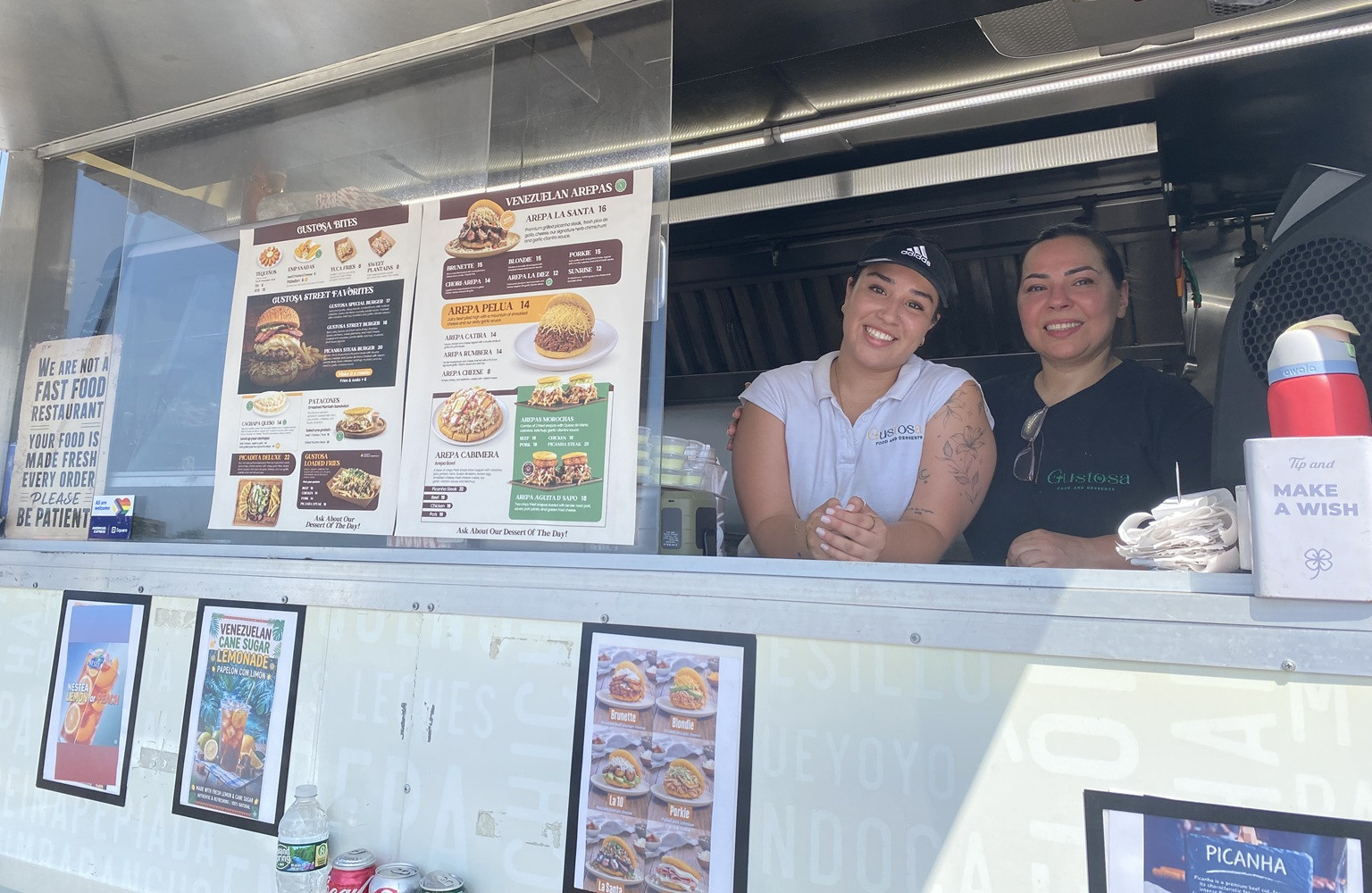
There’s a sign taped to the window of Gustosa Food & Desserts: “We are not a fast food restaurant. Your food is made fresh every order. Please be patient.”
Luisa Cobon knows exactly how long that patience is worth.
“On a slow day it can be at least five minutes, ten minutes maximum,” Cobon says of wait times during a typical event. “When it gets a little busy, it can be longer, but it’s worth the wait.”
That patience starts in the kitchen — or, in this case, the truck itself. Most people who don’t know Venezuelan food default to what they know from Mexican cuisine, Cobon says, but the two aren’t the same.
“Everything is gluten-free, starting off with empanadas,” she says. “We always make everything fresh. We make the dough for the empanadas, we make the dough for the arepas. Everything is fresh, and that’s pretty much how things are in Venezuela.
“Some people buy pre-made items; we don’t. Literally everything here in the truck, we make ourselves. Even our sauces are made from scratch.
“We spend a lot of time but it’s worth it.”
The menu leans on the classics.
Arepas — cornmeal pockets stuffed with fillings — are the truck’s best-known item. There’s also the cachapa, a sweeter cousin to the arepa. One standout dish, made with steak, chorizo, fresh queso de mano and the truck’s own “macho” sauce, recently landed the truck a spot on a local “Jersey Eats” list.
Gustosa is based in Union but rarely stays put. The truck travels to festivals and private events across the state most weekends. It was at RevNJ’s Rev, White & Blue celebration earlier this month. As for now, the business has no plans to expand into a brick-and-mortar location.
“We’re seeing how things go,” Cobon says. “Maybe later on down the line, we’ll have something else.”
Cobon handles a little bit of everything at Gustosa — hospitality, kitchen work, interviews like this one. The truck’s owner, Maria Delgado, largely stays behind the scenes.
“We’re family friends,” Cobon says of her relationship to Delgado.
That sense of family carries extra weight right now.
Venezuela is still recovering from a pair of powerful earthquakes that struck the country on June 24, killing more than 3,500 people and leaving nearly 18,000 without homes, according to the latest figures reported by Venezuelan officials. The disaster has left tens of thousands more displaced, with recovery expected to take years.
“It’s a terrible tragedy,” Cobon says. “A lot of us still have family back there. We are doing our best to send money back home, and whenever our customers come and ask us about anything, we send them to locations we know actually get the help to Venezuela where it’s needed. We’re using our social media to spread the word, too.”


