


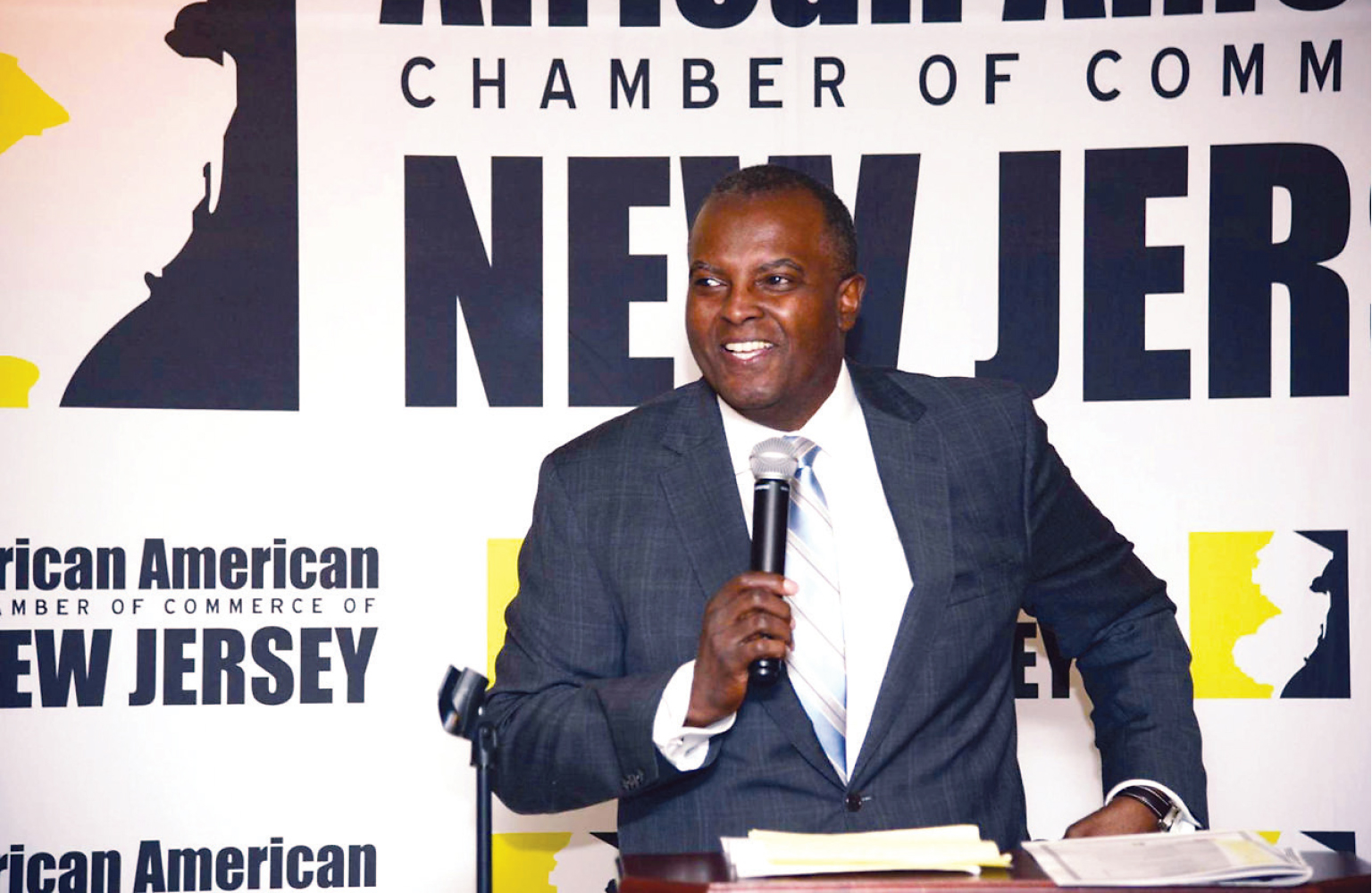

John Harmon called the aftermath of the death of George Floyd in 2020 the greatest chance for this generation of Black-owned businesses to connect with a greater economic ecosystem.
He also called it the greatest missed opportunity.
The recognition of the inequities was gratifying. The money that poured in was positive. But the inability to use the moment to create meaningful partnerships and a greater understanding was a miss — one that is being felt today, he said.
Harmon, the founder, CEO and tell-it-to-you-straight leader of the African American Chamber of Commerce of New Jersey, spelled it out this way.
“When I look back on the aftermath of George Floyd, I see that people realized the need, saw the inequities and were really trying to help, but they did not really have a strategy or a partnership with the people who received their dollars,” he said.
“They would just say, ‘We know what your mission says, and we’re going to send you the money.’ Where was the execution? Where was the impact? That was not discussed.
“So, when things started to shift, there was no relationship behind it …”
That’s the present-day problem.
More companies are pulling away from the programs they started, especially those that rely on government contracts. The ones that remain have had to change the names of their initiatives. And they risk backlash if they continue.
One owner of a Black-owned business told me she has lost longtime clients — clients who worked with her because of her competency, not her color — because they feared being labeled as a company with a diversity, equity & inclusion policy.
Of course, none of this addresses the real issue for Black business owners, Harmon said.
This has never been about charity — it has always been about opportunity.
As he prepares for the African American Chamber’s annual gala — one that will outline best practices and salute the most talented leaders of color — Harmon said it’s imperative for the chamber and its member businesses to reclaim the narrative.
Read more from BINJE’s Black Business Leaders 2026
- Click here to read BINJE’s Best Black Business Leaders 2026 (digital edition)
- The money came — the partnerships didn’t
- Qaaliis Café: Come for the coffee — stay for the culture
- BINJE’s BEST Black Business Leaders: Why Repollet is No. 1
- BINJE’s BEST Black Business Leaders: A to H
- BINJE’s BEST Black Business Leaders: I to Z
“We’ve seen a handful of folks not renew their membership because they do federal contracting,” he said. “I shake my head when I hear that stuff — because, if they are moving away from us because of DEI, then they really don’t understand what we were about in the first place. We’ve always been about value. We’ve always been about connecting companies to our members that can help them win and help us win. It’s never been a charitable exchange.
“At the end of the day, value should trump DEI if you’re looking at it really from an objective perspective.”
Harmon is quick to note that the value of Black Americans has always been present — even if history has not always given proper credit.
The first open‑heart surgery was performed by a Black surgeon, Dr. Daniel Hale Williams; the modern light bulb would not exist without the innovations of Lewis Latimer, who improved the carbon filament; GPS navigation is rooted in the groundbreaking mathematical work of Gladys West. And, while a Hollywood film finally brought Katherine Johnson’s contributions at NASA to the mainstream, another pioneer, Alice Parker of Morristown, remains a hidden figure despite her role in advancing home‑heating technology.
“I think we are doing a disservice to ourselves as Black people, when we don’t put tentpoles down and really talk about our value,” Harmon said.
That value isn’t just in major discoveries — it’s in dollars and cents, too.
Harmon said 2026 will be a year that the chamber calls out retailers (think grocery store chains and car dealerships) that don’t recognize how much they are benefiting from their Black consumers.
It’s all part of a process of creating relationships, ones that go beyond financial contributions to a new level of understanding.
That didn’t happen enough in aftermath of George Floyd.
“Too often, it was just, ‘Give me a name, give me an address, give me a tax ID and we’ll give you a check,’” Harmon said. “It would have been better if we said, ‘Let’s meet and talk about how we can deploy these resources for mutual benefit.’
“That’s unfortunate. It was a missed opportunity.”


