


Location-based entertainment has officially crossed the threshold from a secondary retail amenity to a primary tenant driver. According to JLL’s newly released 2026 Entertainment Report, the U.S. and Canadian experiential retail pipeline has expanded to 721 planned locations, representing a massive 16.5 million square feet of real estate demand.
Driven by shifting post-pandemic habits and a widening economic divide, regional commercial hubs are rapidly transforming vacant department stores and cinema boxes into active entertainment complexes.
The exponential rise in local experiential offerings highlights a stark bifurcation in American spending habits. High-net-worth households continue to spend aggressively on luxury travel and premium domestic events, fueling an 11.3% jump in performing arts spending and a 3.5% lift in spectator sports attendance.
However, mid-to-lower-income families are increasingly feeling the squeeze of a “barbell economy” and trading down. With a three-day vacation to Disney World now averaging $2,783 for a family of four before accounting for airfare, local open-air power centers are capitalizing on the demand for affordable, closer-to-home alternatives.
| Entertainment Category | Target Demographic | Format Footprint | Core Focus |
| Kid Zones & Trampoline Parks | Budget-Conscious Families | 20,000–60,000 sq. ft. | High-volume, active recreation |
| Competitive Socializing | High-Income / Corporate | Varying CBD Formats | Premium dining, tech-driven gaming |
| Challenge & Escape Rooms | Millennials / Gen Z Groups | 10,000–45,000 sq. ft. | Gamified puzzles, repeat-visit tracking |
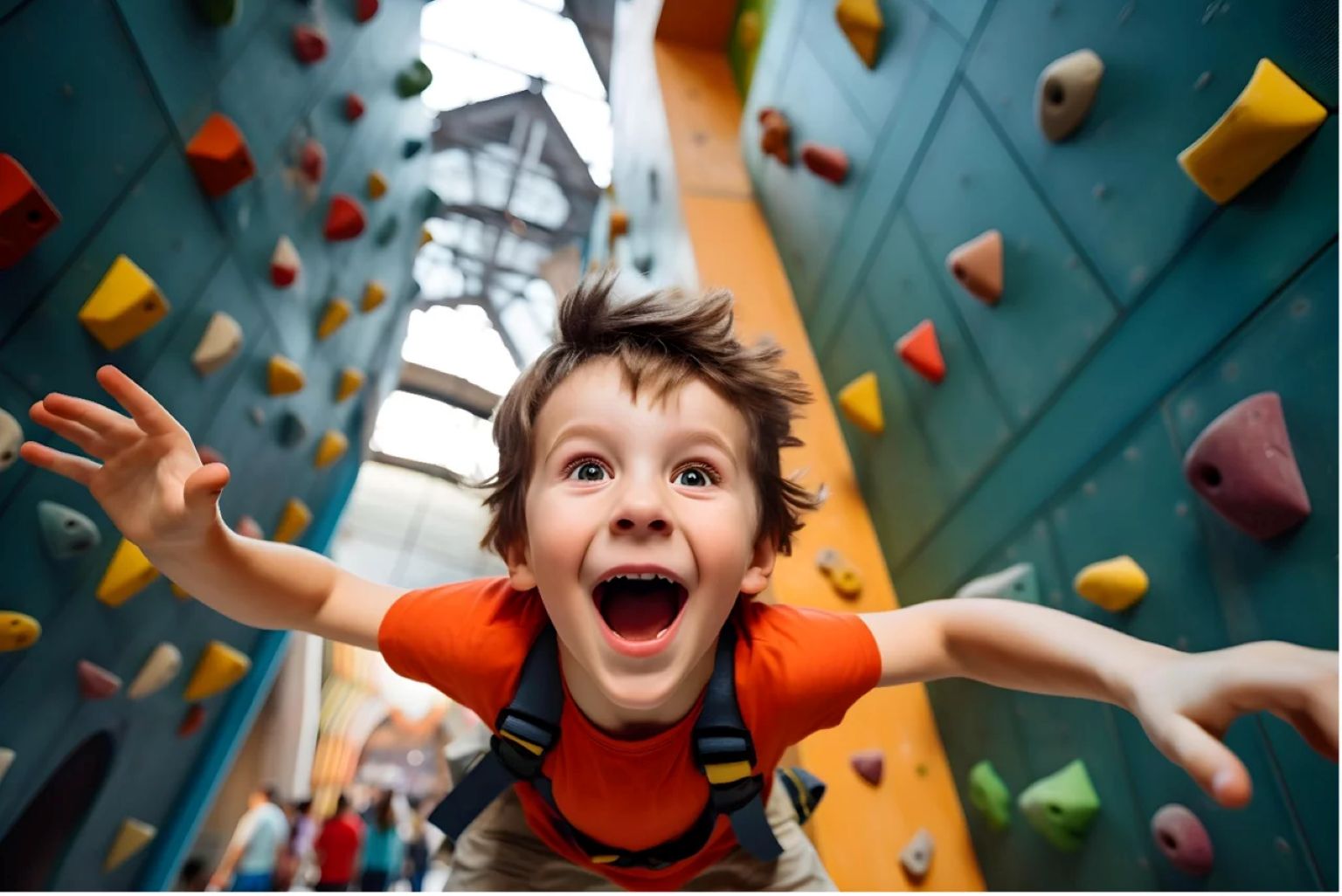
Nowhere is the pivot toward local value more obvious than in the explosive growth of trampoline parks and indoor action arenas. The kid zone category represents 61% of all planned square footage in the JLL database, commanding 10 million square feet of upcoming space across 355 pipeline locations.
- Sky Zone: Remains the sector’s largest operator with 258 open locations and 32 announced sites.
- Urban Air Adventure: Operates 215 footprints and has 31 in development, actively absorbing 25,000 to 60,000 square-foot vacancies left behind by former Bed Bath & Beyond and major retail anchors.
- Slick City Action Park: Leading aggressive expansion waves with 34 active parks and 41 currently in the pipeline.
While legacy Family Entertainment Centers (FECs) like Chuck E. Cheese (465 sites), Bowlero (351 sites), and Dave & Buster’s (240 sites) still hold the largest absolute real estate footprint at roughly 40 million square feet, growth in that segment has leveled off to 10.6% since 2023, leaving room for nimble, high-action concepts.
The traditional escape room—a format historically vulnerable to “one-and-done” visit limitations—has undergone an engineering overhaul. Operators have pivoted toward “challenge rooms” packed with 25 or more micro-games tracked via RFID wristbands, creating a gamified, high-score routine that encourages repeat local business.
As a result, escape and challenge spaces posted the highest overall growth metric in JLL’s study, surging 247% since 2023 to hit 430 active locations.
“Opportunities to convert large vacant boxes into high-volume interactive playgrounds are shifting the entire retail paradigm,” the report notes.
A prominent frontrunner in this space is Level99, an interactive concept pairing 50-plus physical challenges with a scratch-kitchen restaurant. Backed by a $50 million infusion from Panera founder Ron Shaich’s Act III Holdings, Level99 has built its portfolio entirely by taking over massive department store vacancies—including former Sears and JCPenney locations at Natick Mall and Providence Place. Upcoming flagships include a 45,000 square-foot buildout at Disney Springs in Orlando and a major footprint at Westfield Garden State Plaza.
Concurrently, interactive television adaptations are scaling. The Cube, a British game show experience hosted during its American TV run by Dwyane Wade, is making its U.S. brick-and-mortar debut this summer. The concept is taking over a 25,000 square-foot third-floor space on Chicago’s Michigan Avenue, positioned directly above a new Uniqlo flagship.
The persistent cultural narrative that American shopping malls are terminal structures does not align with retail leasing reality. While open-air power centers and lifestyle destinations doubled their collective share of entertainment move-ins between 2019 and 2025, total mall market share held remarkably flat. Class A regional and super-regional properties are securing the nation’s most capital-intensive experiential flagships.
High-Profile Anchor Conversions:
- Netflix House: Debuted two massive 100,000-plus square-foot concepts in late 2025, taking over a former Lord & Taylor at King of Prussia Mall and a former Belk at Galleria Dallas to run rotating immersive experiences themed around Squid Game and Stranger Things.
- Meow Wolf: Actively expanding into a 70,000 square-foot former Cinemark multiplex at Howard Hughes L.A.
- Arte Museum: The multi-sensory Korean digital art installation is breathing new life into the former ArcLight Cinemas box at Santa Monica Place with a 48,000 square-foot lease.
For landlords and institutional real estate investors, the takeaway is absolute. Americans are bypassing expensive destination vacations in favor of closer, localized experiences. The real estate boxes that sat at the bottom of standard retail leasing lists five years ago are now driving the most lucrative, distinct, and high-foot-traffic deals in the commercial landscape.


