


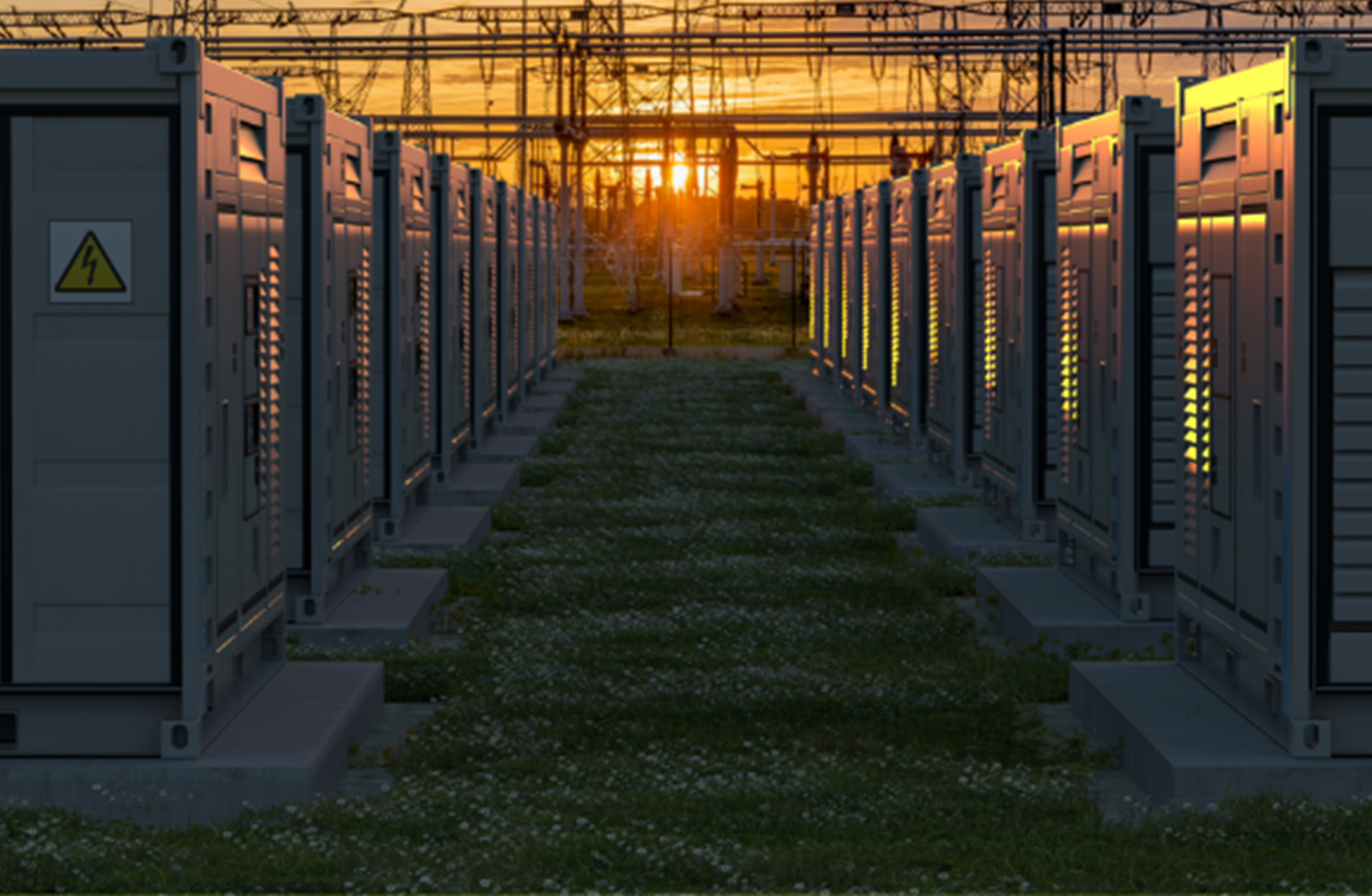
New Jersey should enact a tax credit for battery storage projects, streamline permitting and develop a pool of trained workers to help stabilize the electricity grid and reduce price spikes, a clean energy industry group said in a new policy report.
Large-scale battery energy storage systems (BESS), which store energy for later use, “are among the most scalable and cost-effective tools for improving grid reliability, affordability and clean energy integration,” the New Jersey Association of Clean and Renewable Energy said.
The group lauded policy and legislation enacted in 2025 and 2026 to encourage battery storage construction, but said more needs to be done. Their recommendations include:
- Enacting a 10% to 15% investment tax credit to encourage large-scale developers
- Creating a streamlined permitting path, with agency review timelines no longer than 180 days for certain projects
- Adopting statewide standards covering fire safety requirements, setbacks and community notification procedures
- Embedding battery storage projects in the next Energy Master Plan update.
“The decisions made over the next 24 months will play a significant role in determining whether New Jersey emerges as a regional leader in grid modernization and energy resilience,” the report said. “The question is no longer whether New Jersey will need large-scale battery storage, but whether it will build it quickly enough to meet growing demand.”
The rapid growth of artificial intelligence data centers in New Jersey has boosted electricity demand. Governor Mikie Sherrill, who took office in December, declared a state of emergency on utility costs in her first executive order and directed the BPU to expand solar and battery storage, streamline permitting and address load growth from data centers.
The group acknowledged that battery storage is only part of a solution to New Jersey’s energy issues, but said it is likely to become an increasingly important component.
Developers installed a record 58 gigawatt-hours (GWh) of new battery storage capacity in the U.S. in 2025, and plan as much as 70 GWh of new capacity this year. New Jersey’s current battery storage capacity is about 1 GWh, significantly less than states like California, with 59.8 GWh, and Texas with 26.3GWh, according to data in the report.


