


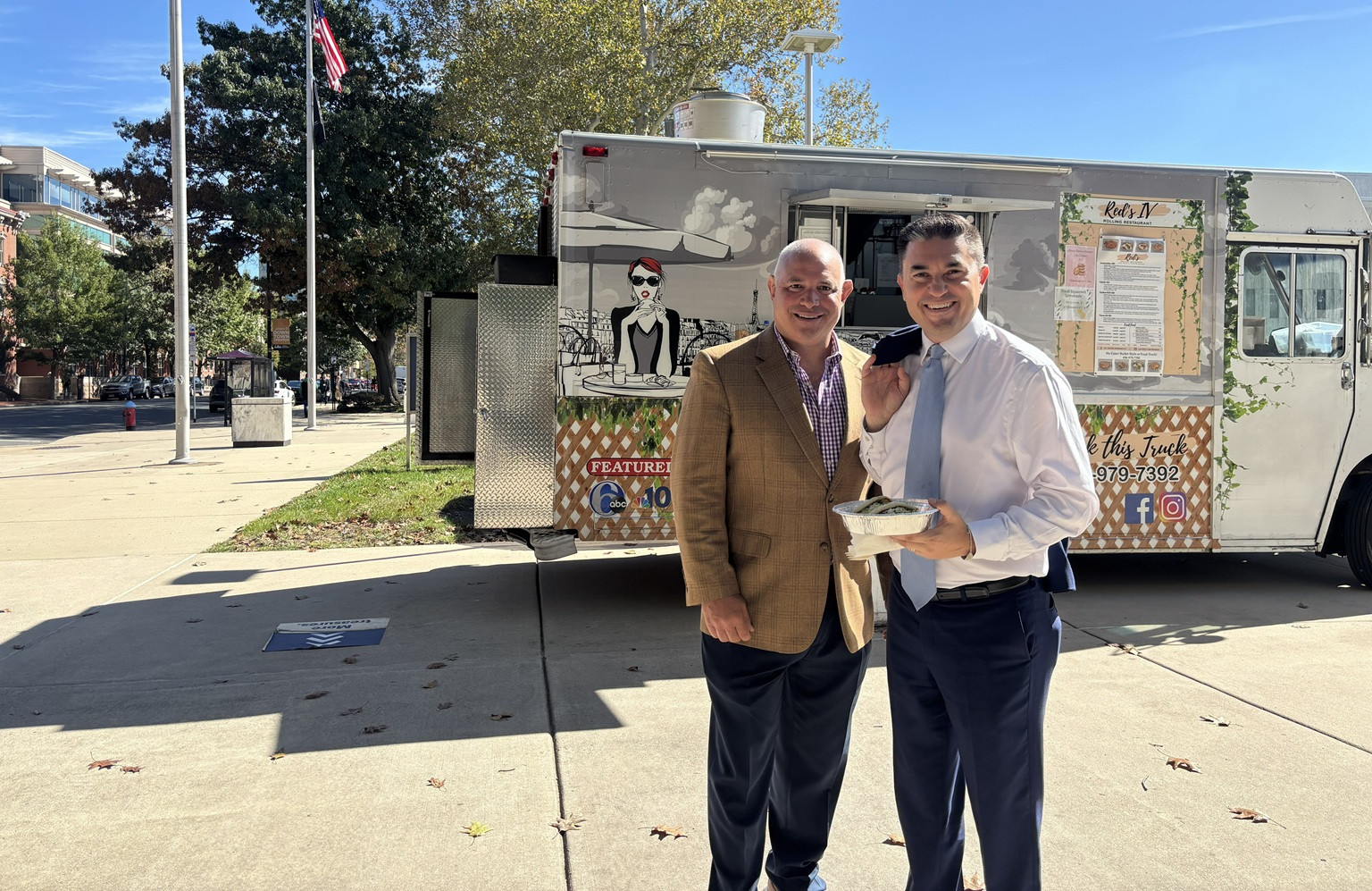
As communities across New Jersey head into the holiday season, the New Jersey Bankers Association (NJBankers) is stepping up to ensure fewer neighbors go hungry. On Oct. 15, NJBankers parked Red’s Rolling Restaurant outside the New Jersey State Library in Trenton for its second annual “Food Truck to Fight Food Insecurity” event, directly benefiting the Community FoodBank of New Jersey (CFBNJ).
The afternoon drew a steady stream of lunch crowds from the State House and surrounding areas, including Assemblyman Michael Inganamort. All sales from the truck—totaling $1,000—were matched dollar-for-dollar by the NJBankers Charitable Foundation to support children, families, and seniors facing economic hardship.
“The support of partners like NJBankers helps us provide food to our neighbors when they need it most,” Elizabeth McCarthy, president & CEO of the Community FoodBank of New Jersey, said “We’re grateful for their commitment to giving back and for initiatives like this that turn everyday purchases into meaningful support for children and families across New Jersey.”
According to CFBNJ data, food insecurity remains a pressing crisis in the Garden State:
- Over 1.2 million New Jersey residents are currently food insecure.
- More than 330,000 children are among those affected, with numbers continuing to rise.
- Working households make up the majority of those served, with many individuals juggling multiple jobs yet still struggling to afford basic necessities.
The Trenton food truck initiative is a cornerstone of the broader Bankers Care program, which showcases how local financial institutions invest in community welfare through volunteerism, charitable giving, and financial literacy.
“As more New Jerseyans face challenges putting food on the table, our state’s banks remain committed to supporting the communities they serve,” NJBankers President & CEO Michael Affuso said. “Through initiatives like the Food Truck to Fight Food Insecurity, we’re helping provide individuals and families with the resources they need while demonstrating the meaningful difference banks can make in the lives of their neighbors.”


