


The lawyers on the panel at the N.J. Utilities Association’s annual conference last week in Jersey City weren’t debating whether Gov. Mikie Sherrill’s energy agenda would face a legal challenge. They were debating when.
Angelo Genova, the chairman of Genova Burns and acting general counsel of the
association, laid it out this way: Sherrill’s agenda to overhaul utility rates and accelerate the state’s clean energy transition is moving so fast, and with so little traditional
regulatory process, that a legal confrontation may be unavoidable.
“There’s a collision course underway,” Genova said. “If there can’t be understandings
reached between the industry, the regulators, the government, the legislation, then I
think there’s a high probability that we’re going to find ourselves in a place where people
will say we’re entitled to due process, we’re entitled to the opportunity to be heard, we’re
entitled to litigate these issues.”
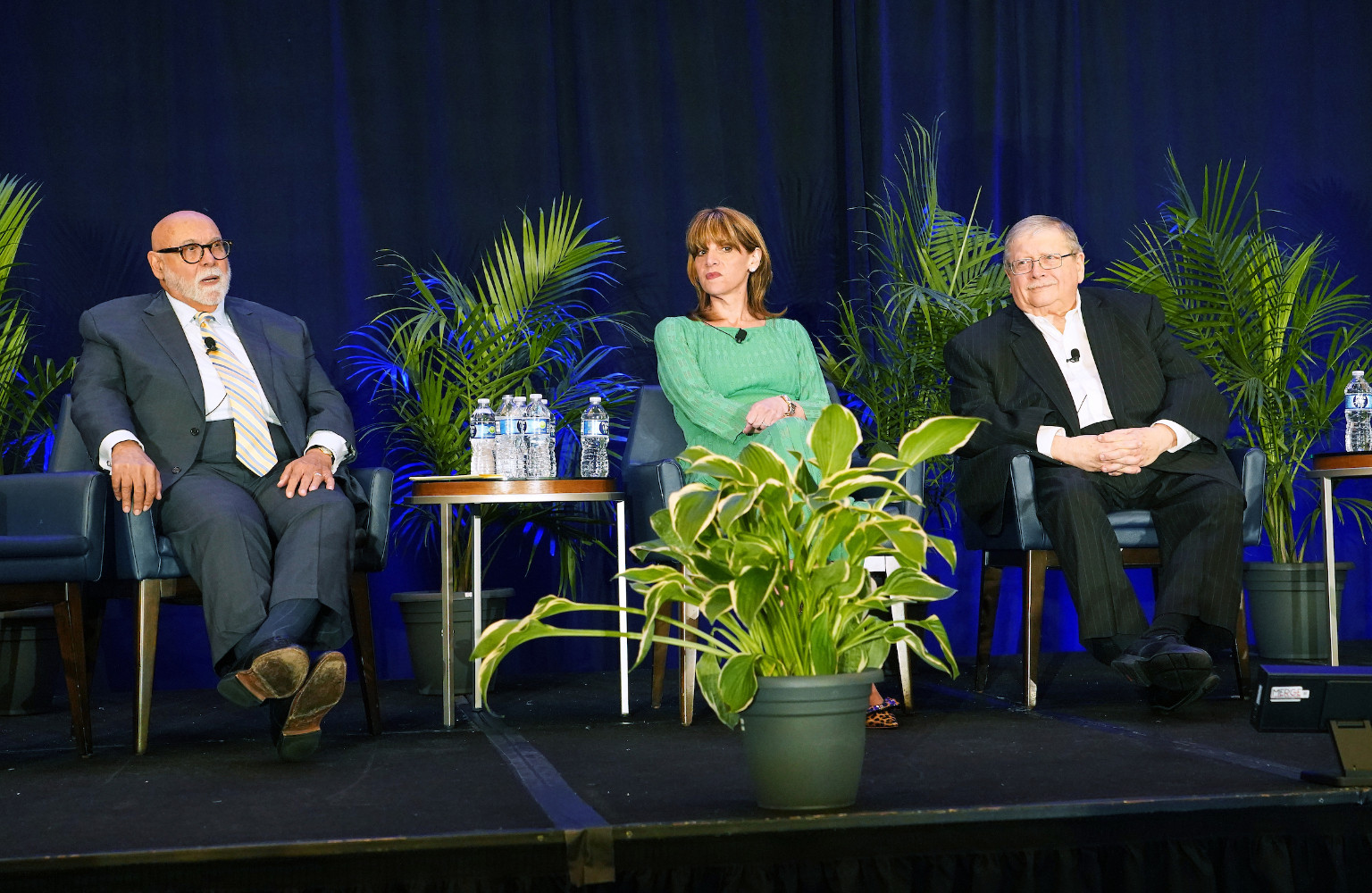
The panel, which included Genova, CSG Law attorney and member Rebecca Moll
Freed, and Steve Genzler, the Newark Office Managing Partner at Saul Ewing, was part of the association’s annual conference and covered the legal and regulatory fault lines opening up under Sherrill’s energy push — from proposed changes to the rate of return on equity model to the governor’s executive order freezing consumer utility rates.
The conversation was insightful.
***
Genova’s central argument is structural.
New Jersey’s regulatory process — the kind that requires evidentiary records,
discovery, public comment, and genuine debate — exists because rate-making
decisions have long, lasting consequences. Sherrill’s proposals, he said, are being
presented not as proposals at all.
“What’s telling, particularly if you pay attention to the May 7 hearing that the BPU
conducted, is that these are being presented as mandates as opposed to proposals,”
Genova said. “They don’t sound like proposals, or at least that’s my takeaway.”
The NJUA, he said, has already weighed in — carefully. The association has expressed
grave concerns about the administration’s proposal to revisit the return on equity model,
while signaling openness to dialogue and alternatives. But Genova made clear there are
limits to how far the industry will go before it pushes back formally.
“The industry wants to have a dialog, has had that kind of dialog, and hopefully that’s
going to continue,” he said. “But when you get to the point where things are being
dictated or mandated without exhausting procedural requirements and creating records
and having genuine debate and letting people weigh in, that’s kind of where the rubber
hits the road.”
The rate freeze — one of Sherrill’s most visible early moves — drew pointed analysis
from Freed, who said the executive order was carefully worded but raises deeper
questions that a freeze alone can’t answer.
“Rates are not going to be frozen if people are using their electricity more,” she said. “I
think what will start to happen is it may seem and feel good for now, but is it really a fix?
And then I think people are still going to see issues with rates, issues potentially with
reliability, the infrastructure itself.”
Genova went further, raising a question he said nobody has formally challenged yet:
whether the legal predicate for the freeze — an executive order issued under
emergency authority — can actually survive scrutiny.
“A governor’s authority to mandate something by way of executive order on a theory
that there exists an emergency requires an emergency, and a question in my mind at
the inception was what’s the nature of the emergency that’s being addressed — is the issue of energy affordability a genuine emergency, like COVID was an emergency,”
Genova said.
“You could look at the law on what qualifies as an emergency, particularly when market
forces are what drive energy costs, beginning with wholesale rates emanating from
PJM.
“No one’s chosen to raise the question that I just raised, but to me the first question is:
Is energy affordability a genuine emergency, allowing for the exercise of the authority to
impose a freeze. To me, that is a basic legal question.”
***
The political backdrop complicates everything, as it always does.
Sherrill won her gubernatorial race by a wide margin. The panel acknowledged that no
utility company is eager to be first to publicly challenge a popular governor, particularly
one whose platform centered on consumer energy costs.
Genzler put it directly – and a bit comically. The pushback, he said, will come when
someone’s ox gets gored.
“Appeals from the board almost always start with a defect in the process … sometimes
they move on to substantive issues, and sometimes they don’t, but that’s almost always
the beginning,” he said.
Freed pointed to the political whiplash that has made long-term planning nearly
impossible — from the Murphy administration’s clean energy push to Trump’s
dismantling of offshore wind to Sherrill’s new agenda — and noted that the law doesn’t
operate in a vacuum.
“You don’t want theoreticals; you want the industry experience,” Freed said. “And I think
what’s also challenging, particularly for New Jersey, is we have off-year gubernatorial
elections, so you’re dealing with all these competing political forces.”
Utilities, she said, do not want a public fight with the governors or the Legislature.
“I think we are living in an era where there is a lot of that back and forth,” she said. “You
don’t want to sue the government that’s regulating you. I feel like that would be the last
place you’re going to see it.”
***
Genova, who has spent decades in the room where these decisions get made, said the
deeper problem is that government — like corporations — has stopped planning long
term. Agendas change with governors. Capital investment decisions that take years to
play out get made against a backdrop of regulatory uncertainty that changes election to
election.
“It’s very hard for the industry to make capital investments in different forms of
generation when it doesn’t know from term to term how it’s going to be received from a regulatory point of view,” he said.
Freed said the emergency order raises a concern that goes beyond this administration.
Once the precedent is set, the question becomes how far it travels.
“You’re throwing around the term emergency, so I guess if person A does it, gets away
with it, for lack of a better term, and then you’re starting to build precedent in that
regard,” Freed said. “How far is it a slippery slope? How far down the road do you go
before you don’t even recognize where you came from.”
Genova said the due process question — the evidentiary record, the hearings, the
genuine debate — isn’t procedural red tape. It’s the mechanism by which consequential decisions get made carefully, with full information, and with the opportunity for the people affected to be heard.
“That’s all the reason why getting back to how this all started — why due process
matters, why a hearing matters, why an evidentiary record matters, why thoroughness
matters to these judgment calls,” Genova said. “Because they have very long, long
playing consequences.”

