


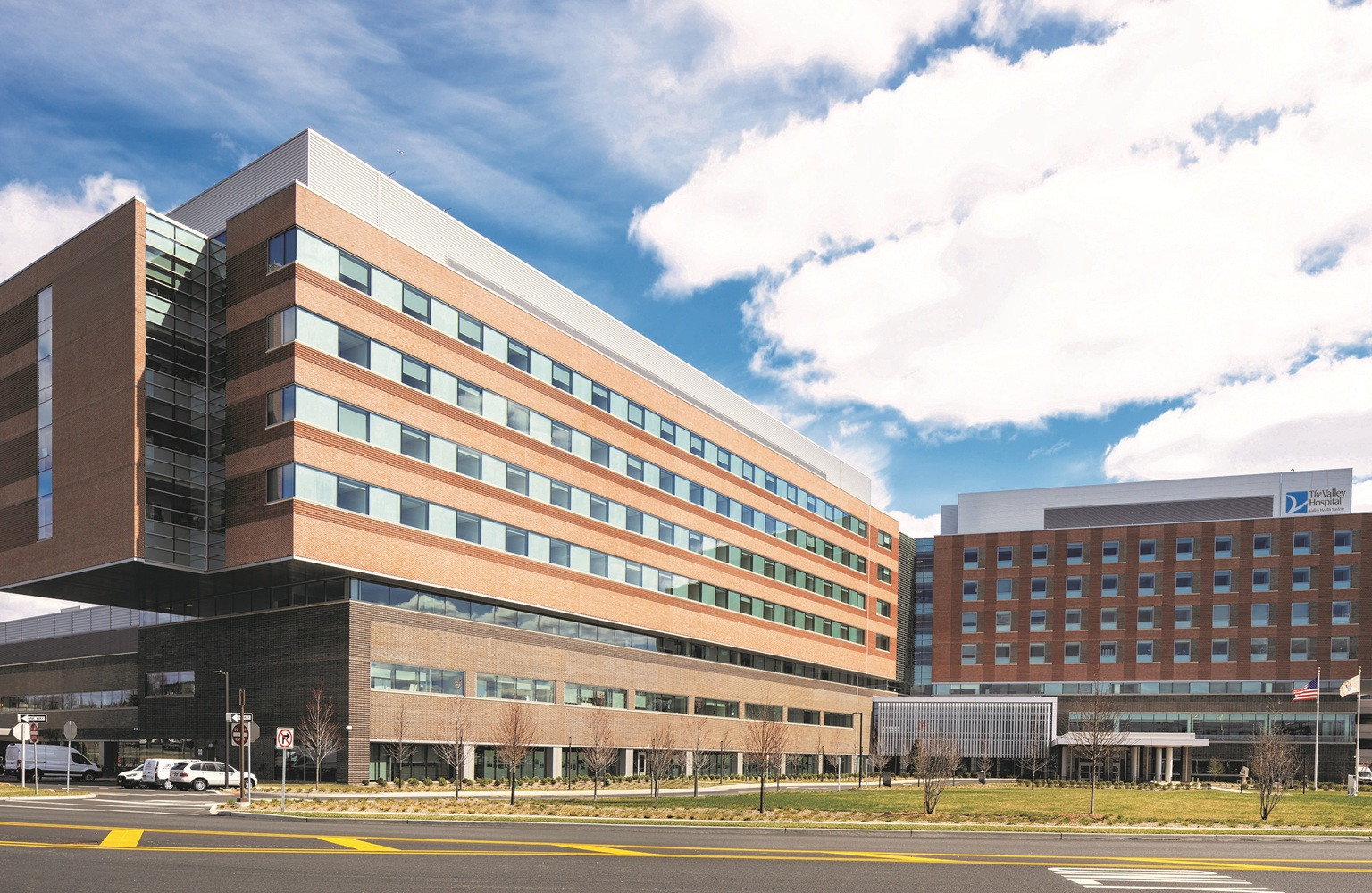
Valley Health System is no longer simply showing off the state-of-the-art hospital it opened in Paramus in the spring of 2024. Now it’s showing how it has become a central force in health care in North Jersey — doing so while managing a surge of patients, navigating endless AI offerings and launching a new medical education program.

For CEO Dr. Robert Brenner, that moment has required a series of deliberate choices: how fast to grow, where to invest and how to balance access, workforce pressures and long-term sustainability — all without losing the culture that built Valley’s reputation.
Some of those decisions are visible, such as ambulatory expansion and investments in new technology. Others are less obvious but just as consequential: an emphasis on medical education, a refusal to pursue mergers and a cautious approach to artificial intelligence that keeps people firmly in control.
Read more about Valley Health
- At Valley Health System, success has created a new challenge: Handling increased demand
- 10 things about … Valley Health System
- Quality over quantity: Why Valley Health has no interest in merging
- Why medical education is central to Brenner’s vision for Valley
- Where AI fits — and where it doesn’t — at Valley Health
Taken together, they form a playbook for how Valley is responding — not reactively, but intentionally — to the moment.
Here are 10 things to know about Valley Health System right now:
10. The patient surge is a sign of success
The new hospital, designed around patient experience and flexibility, is pulling patients from far outside Valley’s traditional footprint. People are driving longer distances for care — and staying.
Systemwide volumes are up more than 12%, a level of increase that typically unfolds over several years, not months.
9. The surge is coming from every age group
Valley is feeling pressure from:
- an aging population,
- younger patients arriving with more complex illnesses,
- and a baby boom that has led to a 15% increase in OB visits.
There’s no reason to believe demand from any of these groups will slow anytime soon.
8. Medical advances are extending lives — and multiplying encounters
From TAVR procedures to LVADs to advanced oncology and cardiac care, Valley is doing more for patients who once had fewer options. Success in medicine means patients live longer — and require more ongoing care. (A good problem to have.)
7. Access has become Valley’s defining operational challenge
With demand rising, Valley’s top priority is access — hiring providers, expanding hours, rewriting scheduling templates and improving navigation. Getting patients in sooner is now the system’s key competitive metric, Brenner says.
6. Brenner’s training as a physician shapes how he leads as CEO
Brenner says his background gives him balance. Yes, as a CEO, he wants to streamline operations. But as a physician, he understands the impact — big and small — of any change.
He believes that experience helps him relate to doctors and nurses differently, though he jokingly admits: “They may still see me as just another suit.”
5. AI is being used as a tool — not a cure-all
Valley is embracing AI cautiously, applying it only where it clearly solves defined problems, including burnout among clinicians, nurses and staff. Tools such as ambient listening are freeing two to three hours of provider documentation time each day. Virtual nursing and patient-monitoring tools are helping with discharges, education and fall prevention.
Every deployment follows one rule: humans remain firmly in the loop.
4. Valley is expanding — but only where it makes sense
The opening of a 60,000-square-foot facility in Montvale reflects Valley’s strategy of shifting care to the right setting. The former campus in Ridgewood remains operational, and outpatient facilities are helping absorb volume without overwhelming acute-care beds.
Beyond Paramus and Montvale, future expansion remains under evaluation. No decisions have been made.
3. Valley is explicitly not looking to merge
Despite industry consolidation, Valley Health has no interest in merging, Brenner says. Leadership believes mergers often raise costs without improving quality — and can dilute accountability.
Just as important, Valley’s financial discipline over decades has made it more efficient than many peers and has helped it avoid the cash crises that force consolidation elsewhere.
2. Medical education is shaping Valley’s culture from the inside
The launch of graduate medical education at the same time the new hospital opened was intentional. This is not about boosting headcount; studies show residents raise standards, expectations and accountability across care teams.
Brenner believes teaching organizations think differently — and perform differently.
1. Valley is planning for durability, not headlines
Across access, technology, growth and workforce strategy, Valley is optimizing for endurance. Brenner says the goal is not rapid scale, but sustained relevance in a volatile environment — while remaining deeply connected to the community it serves.


