


The Autism Training Hub, a new initiative at Rutgers, aims to bring together the state’s available — but often fragmented — autism training programs and services under one central location.
Created by the Rutgers Graduate School of Applied and Professional Psychology, the hub is designed to connect professionals, students and community members with the university’s deep expertise in autism research and clinical practice.
Lara Delmolino, the director of applied and academic autism services and an associate dean at the graduate school, said the hub addresses a long-standing challenge in the field.
“While public awareness of autism has grown and diagnoses have increased, professional preparation has often developed in silos, limited to specific disciplines or stages of life,” she said. “The Autism Training Hub seeks to address that fragmentation to support an autism-informed professional workforce across disciplines and across the lifespan.”
The hub’s goal is to help employers, educators, clinicians and students find and access training that deepens support for neurodivergent individuals along the autism spectrum. It soft launched this spring and plans additional expansion by year’s end.
The initiative reflects a broader shift toward lifelong learning in autism education, recognizing that professionals often seek new competencies at multiple points in their careers. An educator may look for strategies to build inclusive classrooms; a clinician may need diagnostic certification. The hub is built to provide both.
“The hub is about making autism-informed training visible, connected and available at every stage of a professional career,” Delmolino said. “It acknowledges that careers evolve. Training must, too.”
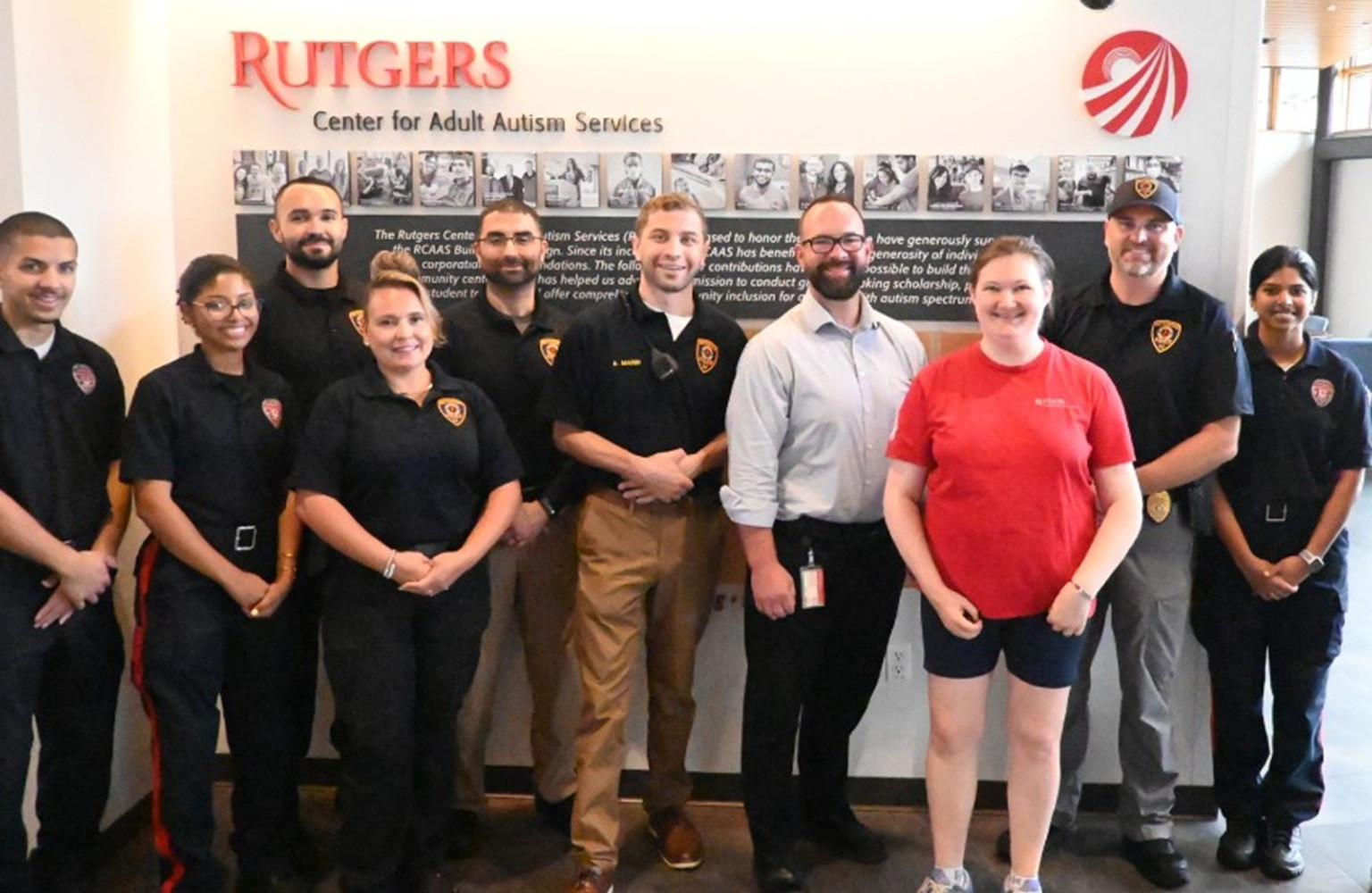
The hub brings together new and existing elements of the graduate school – including the Rutgers Center for Adult Autism Services and the Douglass Developmental Disabilities Center, which focuses on childhood needs. It will offer courses and programs aimed at improving quality of life for autistic individuals at home, in school, at work and in the community, while providing evidence-based, practical training for the professionals who support them.
New Jersey has some of the highest autism prevalence rates in the country, according to the Centers for Disease Control and Prevention. While autism is not a new disorder, the field has historically focused on children. Rutgers and the graduate school, through initiatives such as the hub, are working to expand research and clinical services for adults, highlight disparities in underserved communities and increase access for those with the highest support needs.
“Autism as a field has focused on childhood for a very long time,” Vanessa Bal, the Karmazin and Lillard Chair in Adult Autism at the graduate school said. “But children grow up. The needs of adults are going unaddressed.”
That gap becomes most visible as children approach what insiders call the “service cliff.” In New York and New Jersey, state education and health departments support children with autism, but at age 21, that support ends. Families are left to navigate social security, guardianship and Medicaid largely on their own. The Autism Training Hub aims to be a resource during that transition.
Within the hub, Rutgers’ adult services are integrated into a broader system that includes college transition, employment and mental health care, reinforcing the idea that adulthood is not an endpoint but part of the lifespan.
One major focus will be preparing psychologists and psychiatrists in adult autism diagnostics. A shortage of certified specialists means adults seeking a first diagnosis often have no option but to visit pediatric clinics, where practitioners may not be trained to evaluate adults. A hub course on adult autism assessment, led by Bal in early April, drew such strong demand that a second session is already planned.
Training more broadly will be another focal point. While the graduate school and its affiliated centers have long offered autism-related education – including doctoral and master’s programs, clinical practica, professional workshops, diagnostic certifications and community consultations – the hub will make these offerings more accessible to non-psychology students and the public.
“We are also continuing to build partnerships with other professional training programs, ensuring that medical professionals can receive hands-on experience providing care to individuals with high support needs,” Delmolino said.
With both in-person and online programs, the hub will serve as a centralized portal where students, professionals and community members can find and access autism-focused courses and seminars.
“No matter your profession, understanding autism makes you a better colleague, leader and human,” Delmolino said.


