


The augmented reality welding hood looks like it’s pointed at a piece of plastic covered in QR codes.
But when you put it on, the plastic becomes a piece of steel. The welding rod in your hand mimics the real thing, sparks and all, except there’s no fire and nobody gets burned. Guides appear in your field of vision — too close, too far, wrong angle — until your muscle memory catches up and the guides disappear.
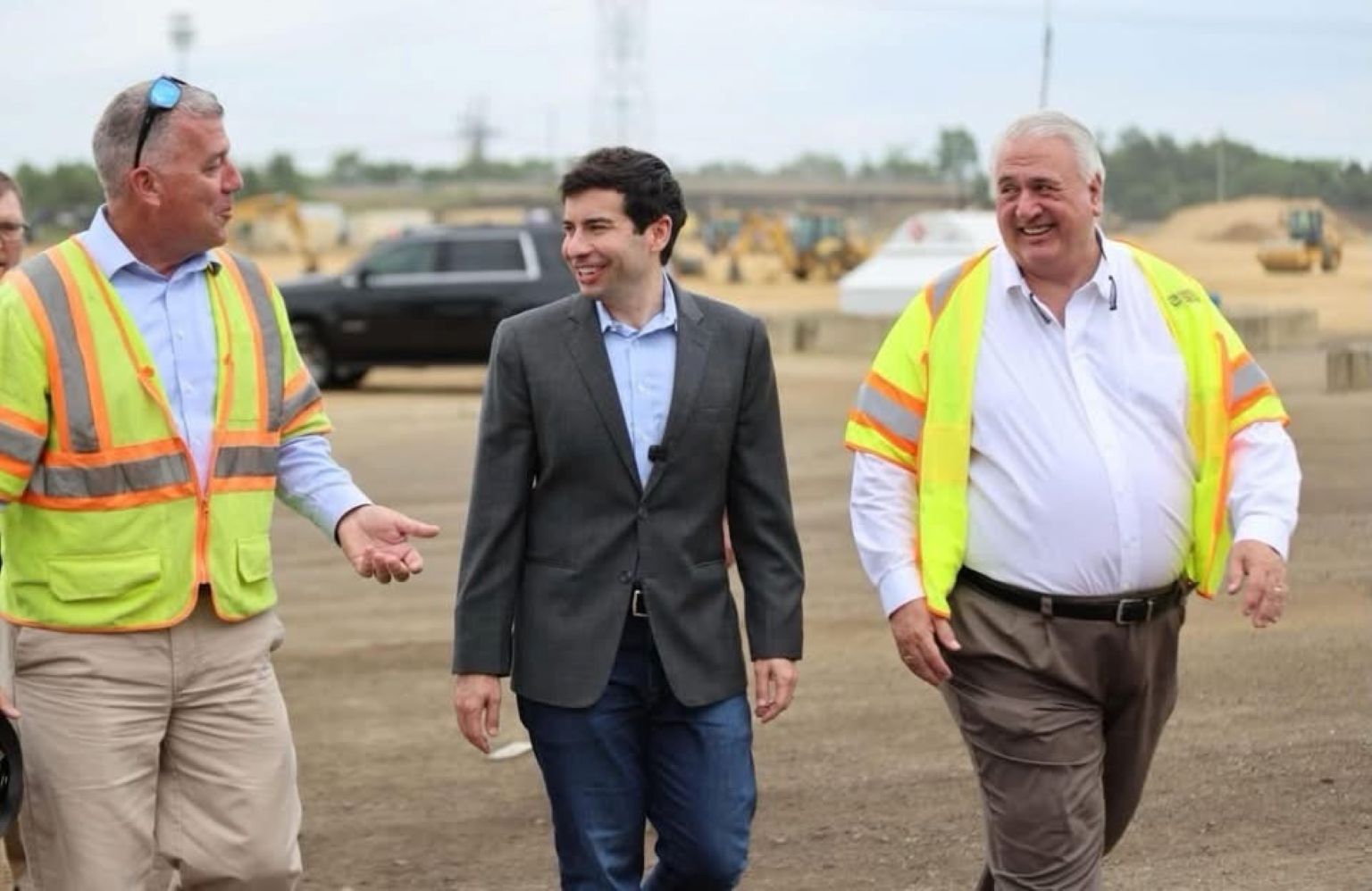
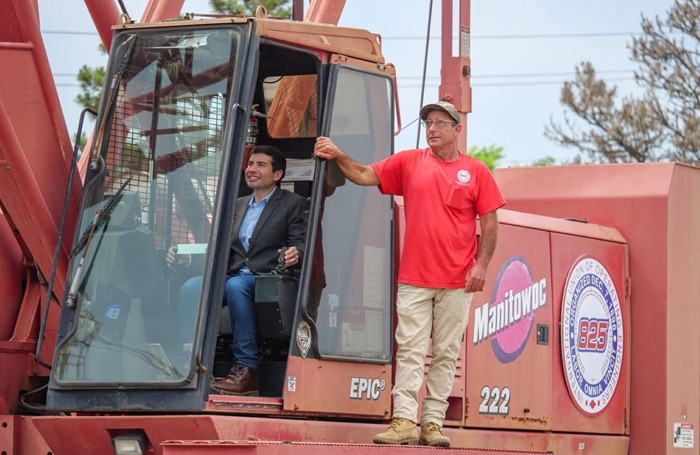
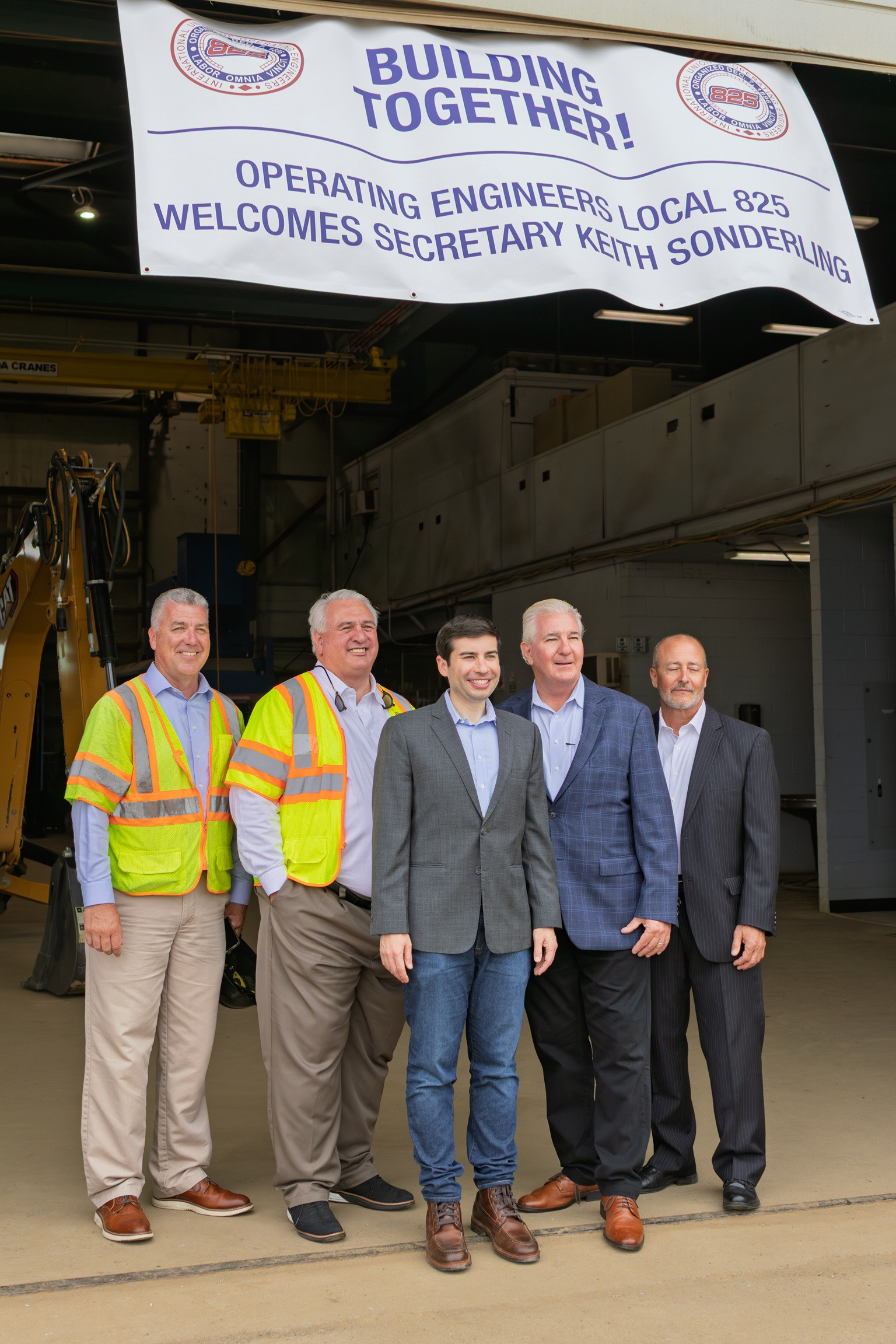
That’s where Keith Sonderling, the acting U.S. Secretary of Labor, found himself during a recent visit to the IUOE Local 825 training center right off Exit 8A in South Brunswick.
He put the hood on. He tried his hand. By all accounts, he passed the first test.
Greg Lalevee, the union’s business manager and the host of the visit, was impressed.
“To his credit, he did quite well,” he said.
***
The visit wasn’t really about a Cabinet official trying on welding gear. It was about apprenticeships — specifically, the Trump administration’s goal of reaching a million apprentices nationwide. Sonderling’s responsibility, as the man overseeing the Department of Labor’s funding and oversight of those programs, is to figure out how to get there.
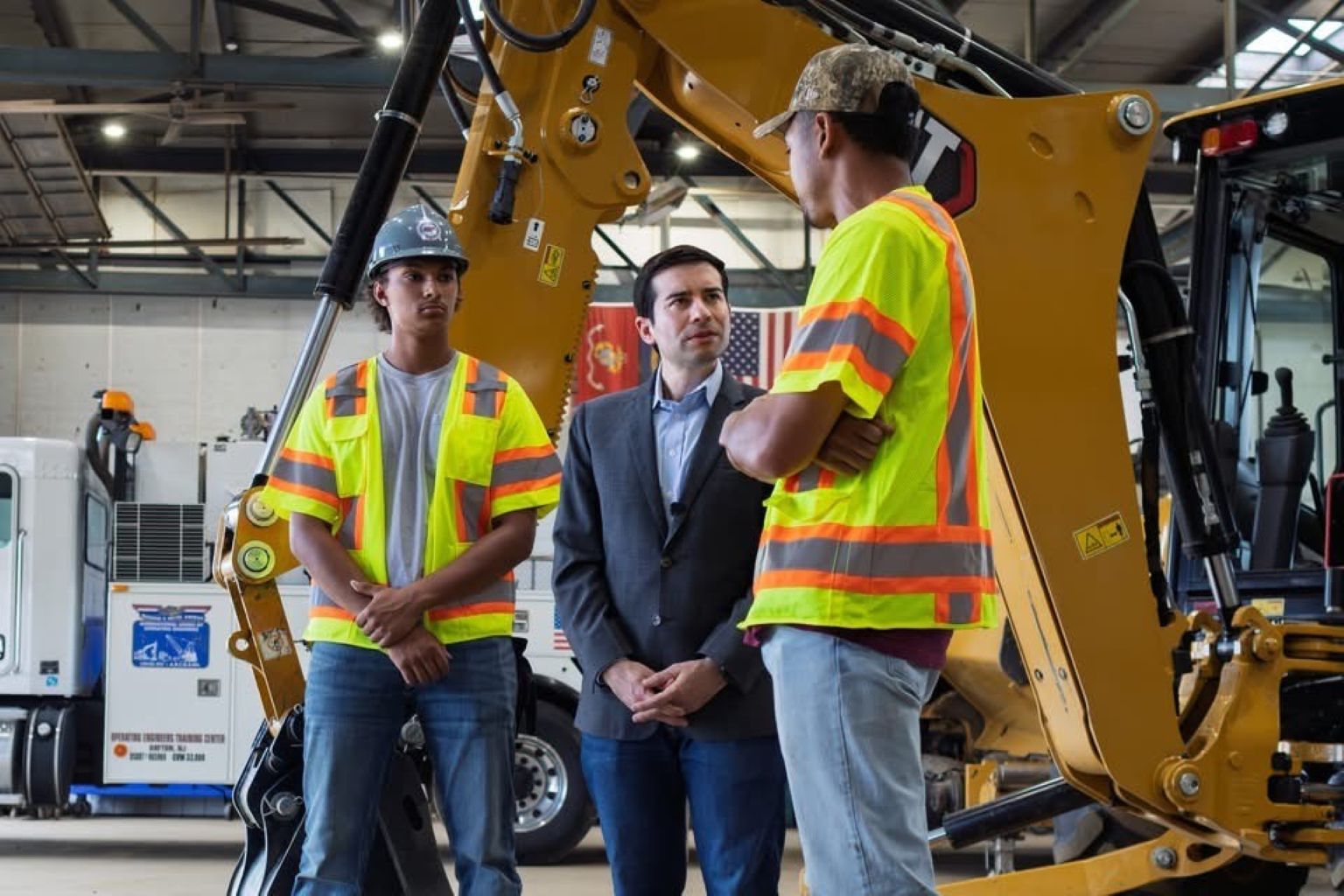
The IUOE training center was an obvious stop. Local 825 builds its own equipment operators from the ground up, training people to run cranes, bulldozers, excavators, pile drivers and everything in between.
The facility occasionally gets some federal money for a particular project, but nothing on a regular basis. The training center is mostly funded by the union and contractor organizations.
That’s why Lalevee made sure two contractor partners were in the room for the visit: Dave Rible, executive director of the Utility & Transportation Contractors Association of N.J., and Jack Kocsis Jr., longtime CEO of the Associated Construction Contractors of N.J.
The point, Lalevee said, was to make sure Sonderling saw the partnerships up close. This is not just a union running its own show, but a union and its employers building the workforce together.
And building it right.
“We start with a philosophy,” Lalevee said. “If you do four years of training at our training center, you should essentially be the Navy SEAL of an equipment operator.”
***
The augmented reality welding simulator was just the start of the tour.
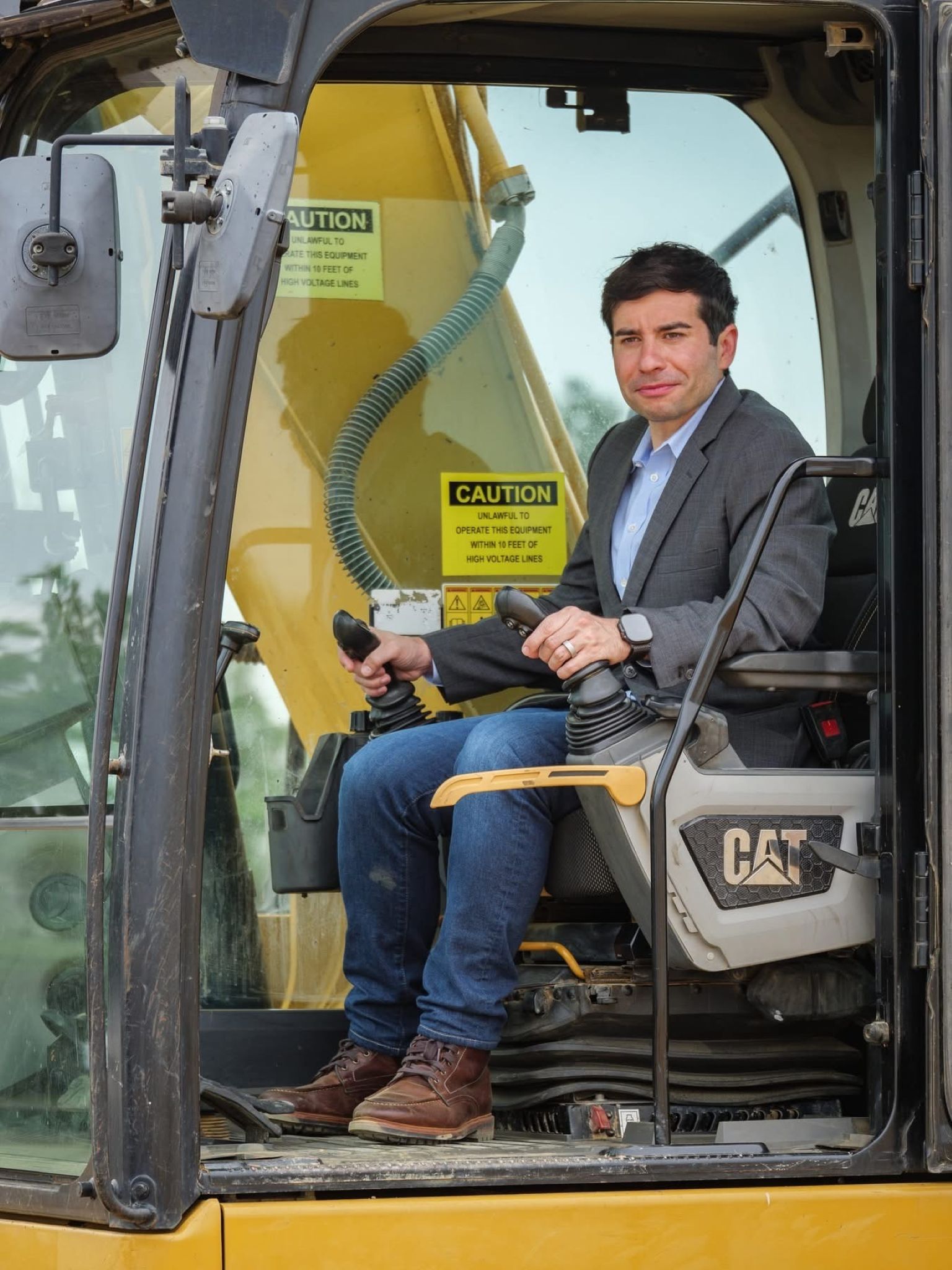
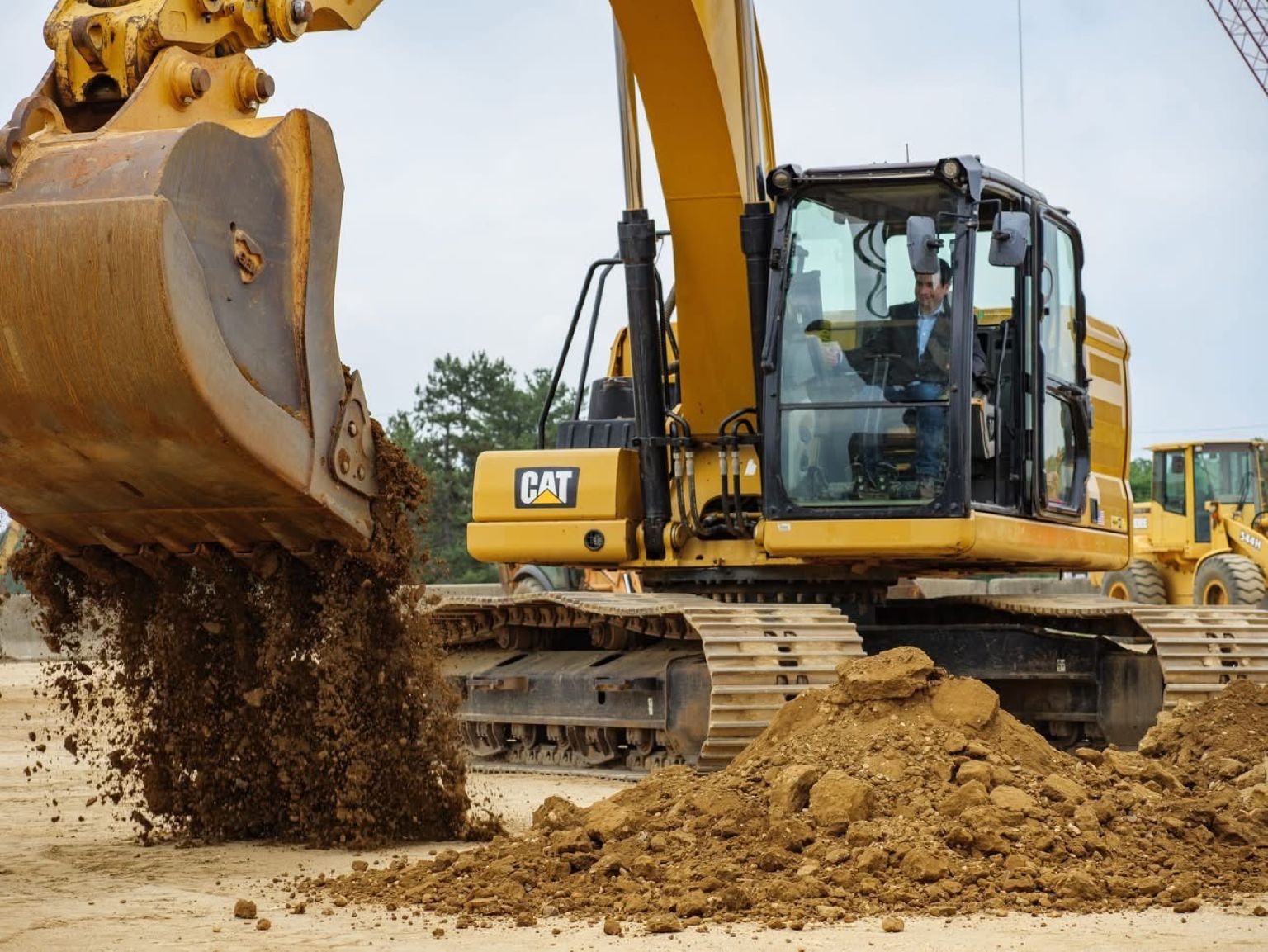
Sonderling also climbed into a crane simulator, made a few of what Lalevee called classic first-timer mistakes, took correction from an instructor, and then walked outside and operated a real crane.
The same went for an excavator. Inside the simulator first, where the controls mimic exactly what’s waiting outside. Then outdoors, in a real machine, in a controlled environment, building on what he’d just learned without real consequences if something went wrong.
That’s the whole philosophy of the training, Lalevee said. Simulate first, where mistakes are free, then transition to the real world, where they’re not.
Mistakes in the IUOE world can be big, Lalevee said.
“You’re on the 6 o’clock news with helicopters overhead and everyone knows your name,” he said.
***
What might be most interesting about the visit isn’t the technology — it’s what’s happening behind the scenes with class sizes.
For years, Local 825 ran cohorts of 30 apprentices twice a year. Then they tried something smaller: 10-person groups through a direct-entry partnership with two New Jersey county vocational schools.
The smaller group did so well, Lalevee said, that the union is restructuring its entire apprenticeship model around it — six cohorts of 10, or five cohorts of 12, rather than two cohorts of 30. Smaller classes mean more one-on-one attention, more granular instruction and apprentices who progress noticeably faster.
The union also tracks every apprentice’s progress electronically.
An apprentice working in the field fills out an online diary of what equipment they ran and for how long. That data follows them back to the training center, where instructors use it to identify specific gaps — not just “needs more bulldozer time,” but “spent 200 hours stockpiling material instead of grading roadbed, needs work on fine motor control.”
It is, in other words, a century-old trade being taught with the kind of precision and technology that wouldn’t be out of place in a much newer industry, Lalevee said.
The impressive 61-acre facility, which opened more than 60 years ago, already has helped thousands of apprentices.
***
Sonderling left with photos, a better understanding of what union training actually looks like up close and — Lalevee hopes — a sharper sense of how to direct federal apprenticeship dollars when the time comes.
“It’s not a bad thing to have met three or four people downstream in the staff to say, ‘Hey, we just put in for that, remember us — you came and saw this,’” Lalevee said.
Whatever happens with the funding, Sonderling got something most people touring a Cabinet official’s schedule never get: Hands-on experience for the type of program the federal program is looking to expand.
“This is what we do,” Lalevee said. “We build our workforce from the ground up.”


