


The threat of a Feb. 6 shutdown of the Gateway Tunnel project isn’t like closing a park or furloughing museum workers for a few weeks. Those pauses are frustrating. This, says Greg Lalevee — business manager of IUOE Local 825 — would be catastrophic from the first hour of the first day.
“People think a shutdown just means turning the lights off and coming back a few weeks later,” Lalevee said. “How do you shut down a massive construction site, even for three days? You don’t just stop and start again.”
And the damage isn’t temporary. It compounds, driving up costs, slowing schedules and potentially undermining the entire project long-term.
That’s why Lalevee is hoping the warnings coming out this week are a big wake-up call about a project that is much farther along than many may realize. Consider: In Manhattan, a major access shaft is being dug. Enormous utility infrastructure — including a major sewer line under the West Side Highway — already has been moved.
Under the Hudson, the soil‑mixing operation necessary to stabilize the riverbed is already two‑thirds complete. The work is tightly regulated: It can only happen in six‑month increments over three years, due to fish migration patterns. This is year three — the final year.
And in New Jersey, the first major contract, preparing the portal bridge and relocating utilities, is all but finished.
Even more, costs associated with the next phases already are here.
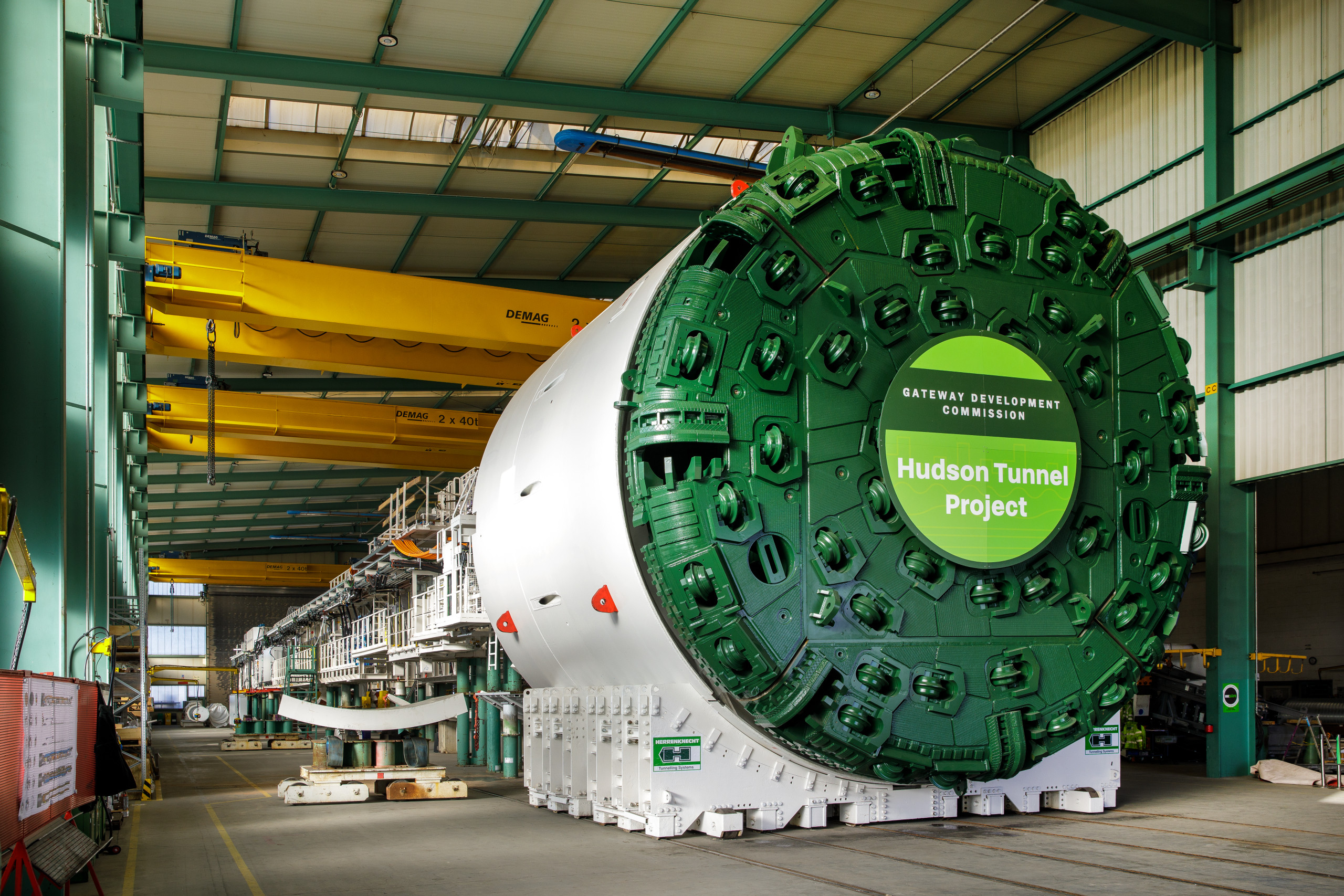
Consider the tunnel boring machines. One is arriving in pieces now. Another is literally on a ship headed here. These aren’t machines you pull off a shelf. They are custom‑built for Gateway’s geology. They cost staggering sums. Returns are not allowed.
“People say stopping this project will save money,” Lalevee said. “Stop it now? That’s how you actually make it a boondoggle.”
****
Gateway is entering its most intensive phase — and also its most vulnerable politically. The fear, Lalevee says, is that the project gets trapped in a cycle of “fits and starts” every time President Donald Trump doesn’t get what he wants.
That has consequences that stretch far beyond February.
“If we keep having this kind of disruption, contractors are going to bake that into their price on future bids,” he said. “It will drive the price up.”
That’s not speculative. It’s basic construction economics — uncertainty always gets priced in.
And the effect won’t be limited to Gateway. If the president shows he’s willing to weaponize major federal projects, contractors bidding a bridge in Tennessee or a highway in California will assume the same thing can happen there.
“This changes how they look at every federal job,” he said.
Up to now, Lalevee credits the Gateway Development Corporation, Amtrak, and the labor trades for keeping the project focused on one goal: Breaking the stereotype that megaprojects are destined to be late and over budget.
“We all want to deliver this ahead of schedule and under budget,” he said. “But you can’t do that if contractors don’t trust the funding. It undermines the whole mission.”
***
The Gateway project is about more than just infrastructure; it’s about the people building it, too.
According to the GDC, pausing construction on the project will immediately kill nearly 1,000 jobs, and an extended pause will risk 11,000 current construction jobs, as well as 95,000 jobs and $19.6 billion in economic activity anticipated with the project’s completion.
“You shut this down, even briefly, and people get reassigned,” Lalevee said.
Construction doesn’t work like an office, where staff returns to the same desk after a furlough. Skilled trades crews are reallocated to keep working. Teams break apart. And when the project restarts, which crews are available — and how fast they can regain momentum — is unpredictable.
“Trades work together; we find a rhythm,” he said. “When you disrupt that, there’s no guarantee you get the same crew back. That’s why the restart is always slower and more expensive.”
What Washington calls a “shutdown” is more than just a simple pause.
Contractors need to know how long it will last: Days? Weeks? Months?
They start planning immediately.
If the shutdown stretches, there would be negotiations to demobilize equipment, remove it, store it — and then, months later, haul it back and restart everything.
“People don’t realize how much effort it takes to get to this point,” Lalevee said. “And how much effort it takes to stop — and then start again. This project is not designed for that.”
***
Gateway has enormous economic potential. Despite this, it obviously has become a political football in recent months. Lalevee credits the GDC for remaining steady.
“They’ve stayed the course and done the work,” he said. “They’ve avoided screaming into microphones and jumping into press conferences.”
But with Feb. 6 approaching, Lalevee said there are no more buffers.
“It’s out of options,” he said.
GDC CEO Thomas Prendergast stated the obvious.
“We have done everything in our power to keep construction moving forward as planned, but we cannot fund this work on credit indefinitely,” he said.
Amid the uncertainty, Lalevee sees one reason for optimism — and it has nothing to do with bipartisanship or ideology.
It’s that Trump is, before anything else, a real‑estate developer. And real-estate developers understand value, especially their own.
“I honestly think the biggest help we have is that he has interests on both sides of the river, personally,” Lalevee said.
If Gateway collapses, the economic shock wouldn’t be theoretical. It would be immediate and quantifiable, he said.
A shutdown would hit traffic flow, business activity, commuter reliability and therefore property values, especially high‑value assets near the transit backbone. Trump’s holdings sit directly in that blast radius.
“He’ll wake up one day and find Trump Tower has been devalued by 15%, Bedminster will be down 15%,” Lalevee said. “Does he really want to suffer all those losses?”
That, Lalevee says, may ultimately be the factor that keeps the project alive.
“This project is too big, too far along, and too important to play games with,” he said.


