


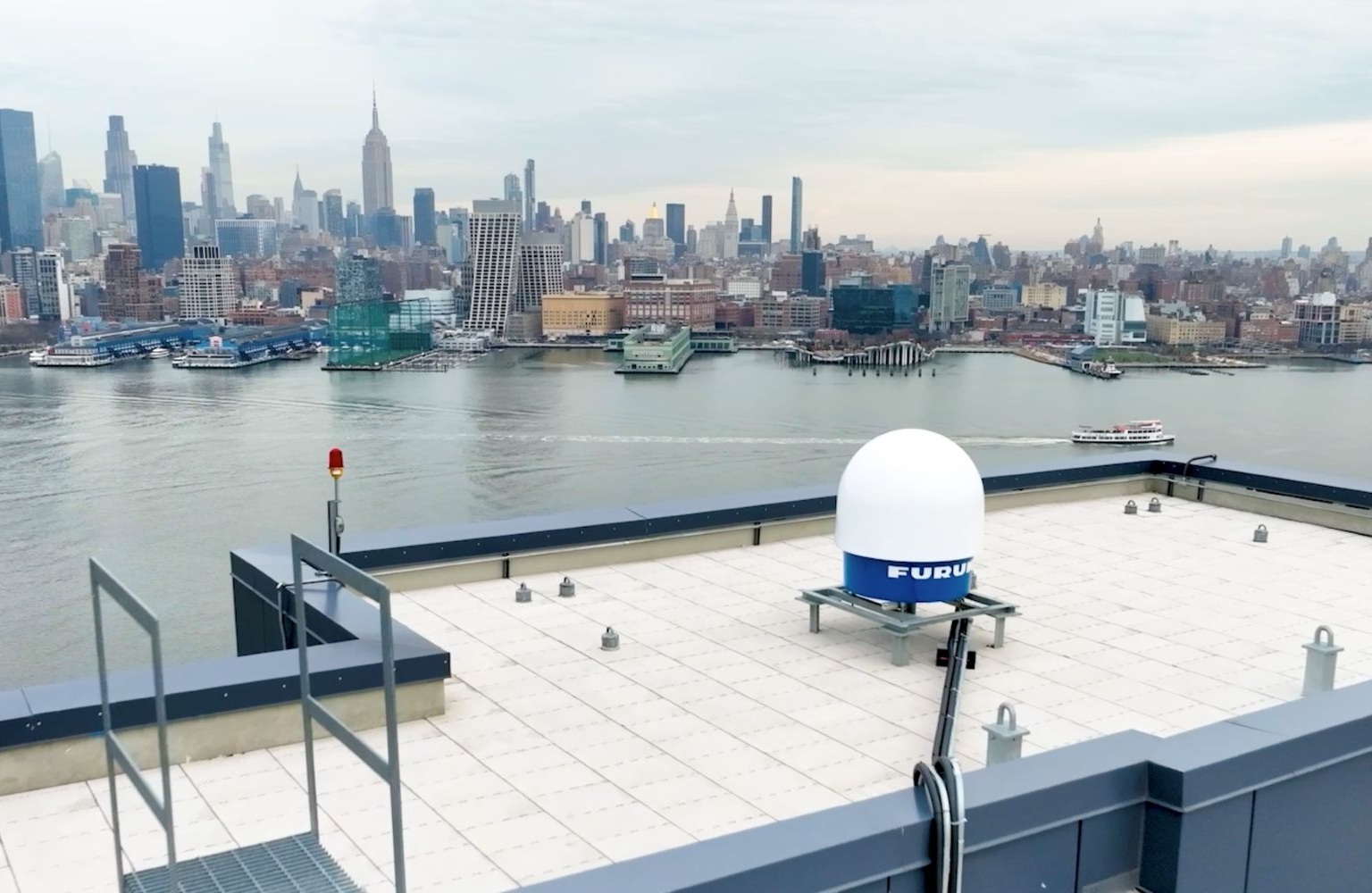
In a major move to fortify the Hudson River waterfront against increasingly erratic weather, Stevens Institute of Technology announced the installation of a state-of-the-art X-band weather radar system on its Hoboken campus.
Operated by the university’s renowned Davidson Laboratory, the new system provides a level of hyperlocal “nowcasting” previously unavailable to the nation’s most densely populated corridor. While traditional National Weather Service (NWS) S-band radars are designed for long-range monitoring, the X-band’s shorter wavelengths allow it to detect minute, neighborhood-scale precipitation patterns that often precede deadly flash floods.
The X-band radar operates at a frequency of 8–12 GHz, delivering ultra-high-resolution imagery (up to 75 meters) compared to the roughly 2,000-meter resolution of standard NEXRAD systems. This granularity is vital for urban centers like Jersey City, Newark, and Manhattan, where localized “microbursts” can trigger street-level flooding in minutes.
“In a region where flash flooding can develop in minutes and threaten lives, having access to high-resolution, real-time radar data is essential,” Marouane Temimi, associate professor at Stevens said. “It will allow us to provide an important service to our partners, including Offices of Emergency Management (OEMs) and the NWS.”
The radar is the latest addition to a robust resilience toolkit at Stevens, which includes:
- Stevens Flood Advisory System (SFAS): A platform that already provides four-day advance forecasts for over 150 locations from Delaware Bay to Maine.
- SEECPRS Integration: The new radar feeds into the Stevens Extreme Event Coastal Preparedness and Response System, which utilizes supercomputing and AI to predict storm impacts.
- Real-Time Nowcasting: The ability to predict weather conditions just minutes into the future—a critical gap identified during the catastrophic remnants of Hurricane Ida in 2021.
“This installation represents a significant investment in research that will enhance the safety and resilience of our surrounding communities,” Greg Townsend, assistant VP at Stevens said.
Beyond its immediate public safety benefits, the radar serves as a “living laboratory.” Stevens students and faculty will utilize the real-time data to refine predictive models, gaining hands-on experience in the growing field of climate-tech and environmental engineering.
For Hoboken residents—many of whom still remember the “Ida” and “Sandy” floods—the spinning radar atop the Stevens campus serves as a high-tech sentinel, promising a few more precious minutes of warning before the next storm hits.


