


In an era where specialized medical care can mean the difference between healing and further trauma, a critical gap remains in the American health care system: the availability of forensic nurses.
Recent data reveals a sobering reality: fewer than 25% of U.S. hospitals currently offer any form of forensic nursing support. In rural areas, certified forensic nurses—professionals specifically trained to treat victims of violence while meticulously collecting legal evidence—are virtually nonexistent.
To combat this shortage, the Rutgers School of Nursing has launched a pioneering forensic nurse examiner course. As the only program of its kind in New Jersey, it serves as a vital pipeline for specialists trained to handle the delicate intersection of medicine and the law.
Since its inception in late 2024, the program has quickly scaled to meet demand. By May 2026, it will graduate its fifth cohort, bringing the total number of trained professionals to 80.
“Our course is designed to deliver a unique level of care after a highly traumatic incident,” Jeannette Manchester, associate dean and director of the program, said. “It requires a different learning path than most other services that nurses provide.”
Historically, victims of sexual assault or domestic abuse were treated by General Emergency Room doctors. However, as ER volumes surged, doctors found themselves with limited time to provide the intensive, trauma-informed care these patients require.
Forensic nursing emerged to fill this “disconnect,” providing a dedicated point of contact who understands both the clinical and legal stakes.
The Role of a Forensic Nurse Examiner:
- Medical Care: Providing immediate trauma-informed treatment.
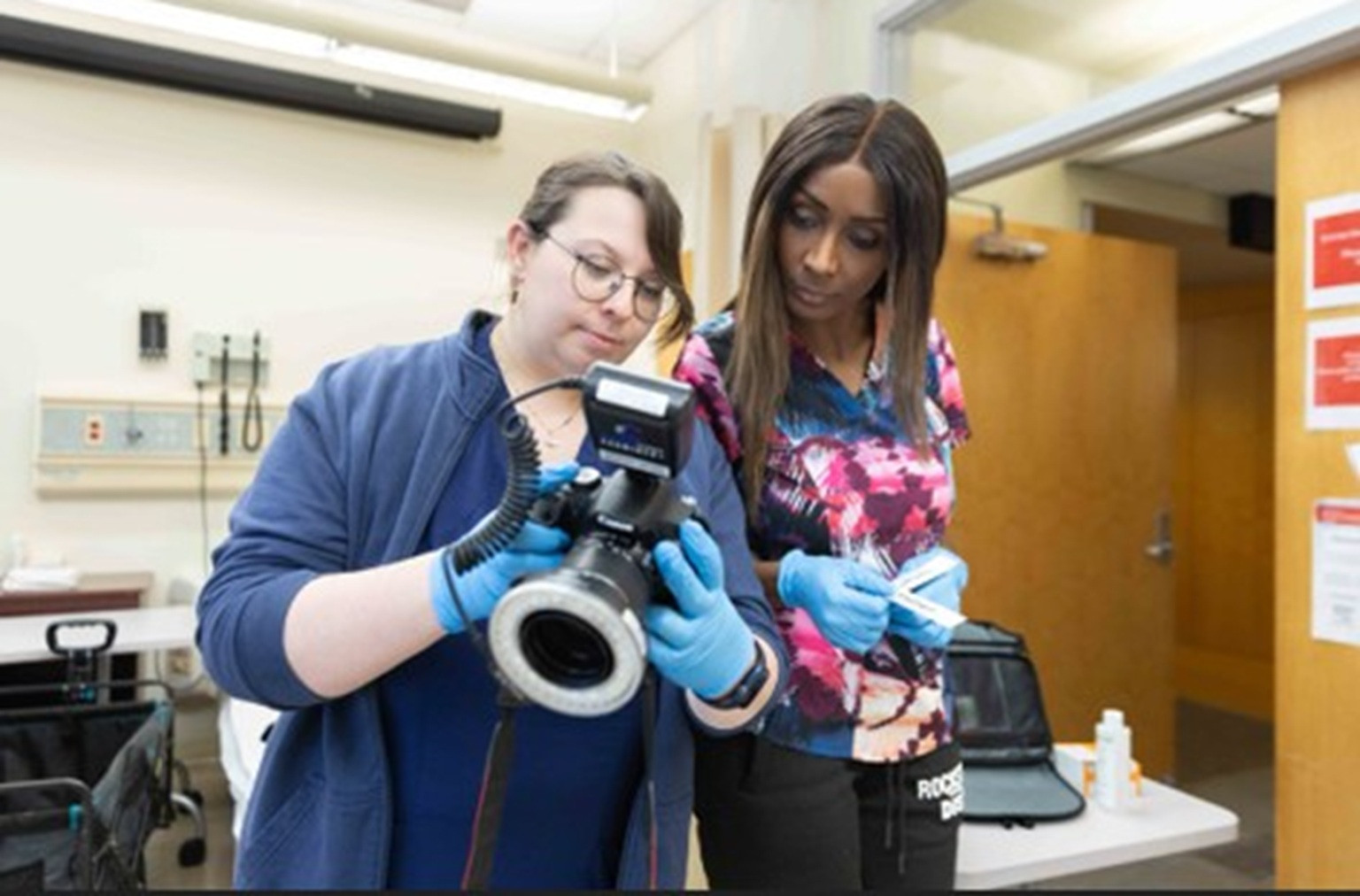
- Evidence Collection: Identifying and photographing injuries from nonconsensual contact.
- Legal Support: Preparing to defend medical exams and findings in a court of law.
- Neutrality: Maintaining a balanced stance between the prosecution and defense to ensure the integrity of the medical record.
The three-month program led by instructors Kristen Crespo and Nicole Fusco combines flexible online learning with high-intensity clinical weekends. Students practice their skills on manikins and “patient-actors” who simulate real-world trauma scenarios.
The instructors acknowledge the unique pressures of the field. Many students enter the program with anxiety regarding genital anatomy or the prospect of testifying in court.
“Nurses might get nervous because of the things they see on TV, but the job ends up being 10 times worse in their head,” Crespo noted, debunking the “glamorous” Hollywood portrayal of the job.
While the technical skills are rigorous, the core of the curriculum remains rooted in empathy. Many students are driven by personal experiences or a desire to expand their “nursing toolkit” to help those in their darkest hours.
“The most important part,” added Fusco, “is being there for a patient during one of the worst days of their life.”


