


In the earliest days of the COVID-19 pandemic, when its cause was unclear and its eventual impact unfathomable, Gov. Phil Murphy routinely did something that showed the confusion of the time.
When the mail came to his house, he collected it — wearing gloves — and put it on top of a newspaper in his kitchen, ensuring the envelopes from the outside world would not directly touch the counters.
How the virus spread was that unknown.
As he approached the final days of his administration, Murphy knows how he handled the pandemic will forever be a defining moment of his eight years in office.
Murphy’s moments
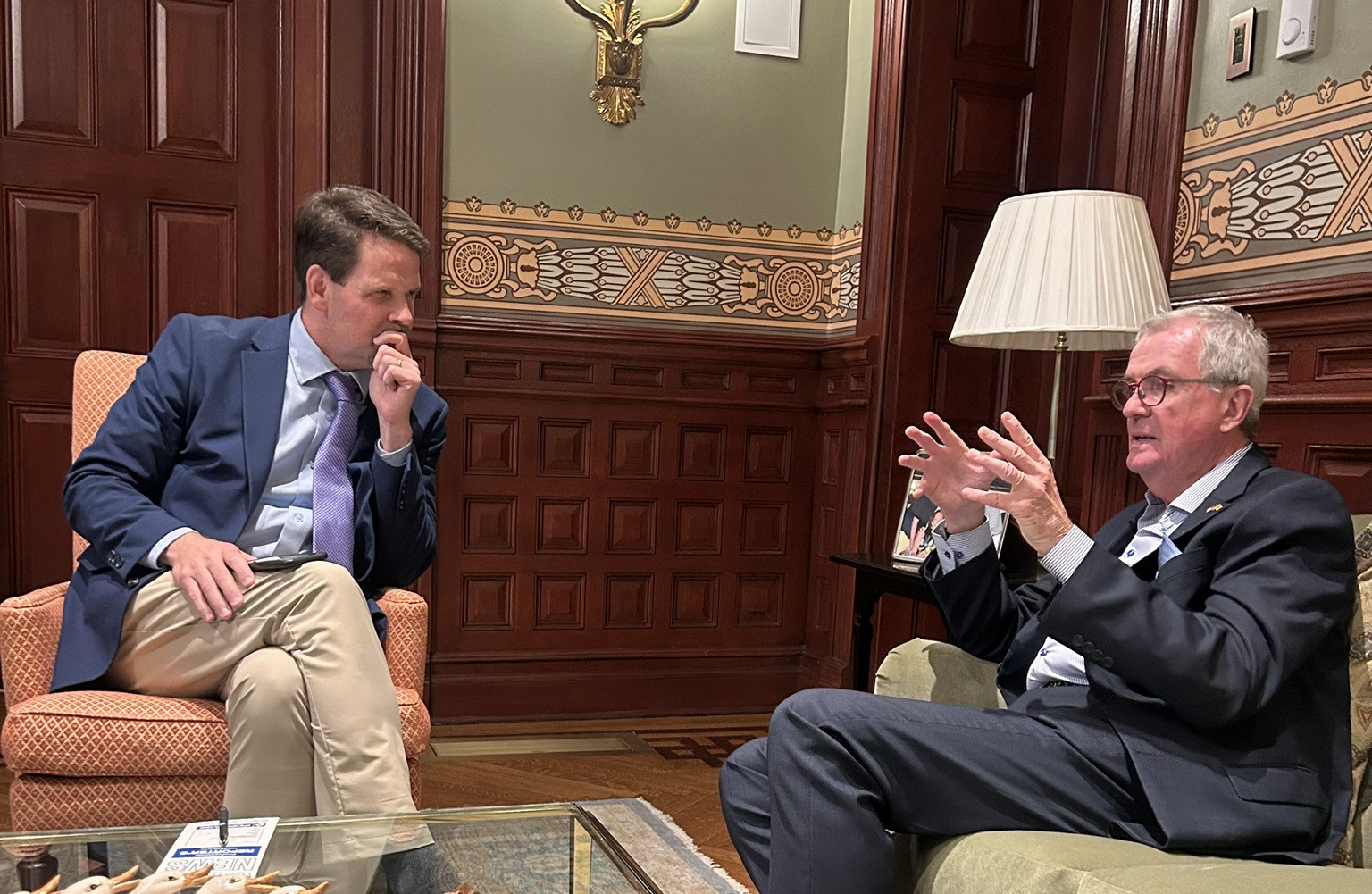
Gov. Phil Murphy spoke with BINJE Editor Tom Bergeron about his eight years in office. BINJE will produce numerous content items — all with an eye toward his impact on the business community. The schedule:
Wednesday
AM: COVID: A defining moment
PM: Energy: All in on offshore wind
Thursday
AM: Budget, taxes and pension payments
PM: Choose New Jersey
PM: The Disparity Study
Friday
AM: His legacy
PM: A last look back — and first look ahead
Murphy, speaking to BINJE during an interview meant to recap his term, said he understands the criticism that came with his COVID response — he closed too much and was too slow to re-open at the top of the list. But he defended his decisions with vigor.
The mail moment spoke to the challenges of the time.
“Everybody was in the dark looking for a light switch,” he said.
When Murphy signed an executive order on March 21, 2020, ordering everyone to stay home if possible and for all non-essential businesses to close, he had no idea how long it would last.
Days turned to weeks, turned to months.
“Broadly speaking, we did what we thought was the right thing at the time, given what we knew,” he said. “Criticism of what happened comes with the Monday morning quarterbacking. People forget: In March, April and May of 2020, there was a huge debate about the efficacy of masks. Like, ‘Are masks good? Are they bad?’
“At that point, when in doubt, you had to shut down.’
Murphy then judged himself.
“I think the reopening had to be sort of phased in, whether it was schools or businesses,” he said. “Do I think we got it right, plus or minus? Yes, given what we knew at the time.
“Does that mean that we’re ignoring the pain it caused, from mental health issues for kids in school to small businesses? No, we get that. But sometimes in life, you’ve got to accept a tough price in exchange for doing the right thing.”
Murphy addressed criticism that the state did not do enough to support the small business community.
“I think we put more money on the street for small businesses than any states, other than California and New York,” he said. “And we’re the 11th in population, and ninth in size of our economy.”
Tim Sullivan, the CEO of the N.J. Economic Development Authority who also was part of the interview, said the state distributed more than a billion dollars to the small business community through various grants and programs.
Sullivan also noted the state made money available before the federal government did with the CARES Act. And that the various programs never shut anyone out.
“We didn’t decline anybody for lack of funding,” he said.
Sullivan pushed back on the idea that lack of government support forced a large number of small businesses to close.
“That’s categorically not true,” he said. “Yes, lots of them closed for a period of time. Some of them by order, some of them by choice, because Mom and Pop didn’t necessarily want to be face to face with their customers.”
Sullivan said there are more small businesses in the state than there were pre-pandemic.
“That’s not to say there’s not some tragedy in that churn,” he said. “Lots of small businesses closed, lots of diners, pizzerias and barber shops closed. But so many others have opened in their place. The regenerative nature of the entrepreneurial class did its thing.”
Murphy and his team also defended the decision to not use federal money to replenish the unemployment insurance fund — as approximately half of the states did — saying the grants in programs initiated through the EDA and Legislature “far exceeded” what UI replenishment would have provided. They also pointed to a bill, enacted by the Legislature that lowered employers’ UI contribution rates for a certain period of time, which they said helped businesses recover.
That being said, Murphy was careful to defend his record without celebrating.
“When you lose over 35,000 people, you’ll never catch any of us patting ourselves on the back for anything we did,” he said. “We did our best. It’s an overwhelming tragedy. It could have been a lot worse. That doesn’t make anyone who lost one of those 35,000 feel any better, but it could have been a lot worse.”
Murphy said he’s most pleased that the state would be better prepared for another pandemic.
“We’re the only government that I’m aware of which did a complete, arm’s length review — a postmortem assessment of almost 1,000 pages,” he said. “We had no input, other than being interviewed. The first time we saw it was the day it was published.
“There are a whole range of recommendations of what you need to do, should this happen again. I’m incredibly proud that we did that. I think the next generation of administrations will have a much better playbook than we had if something like this, God forbid, comes around again.”


