


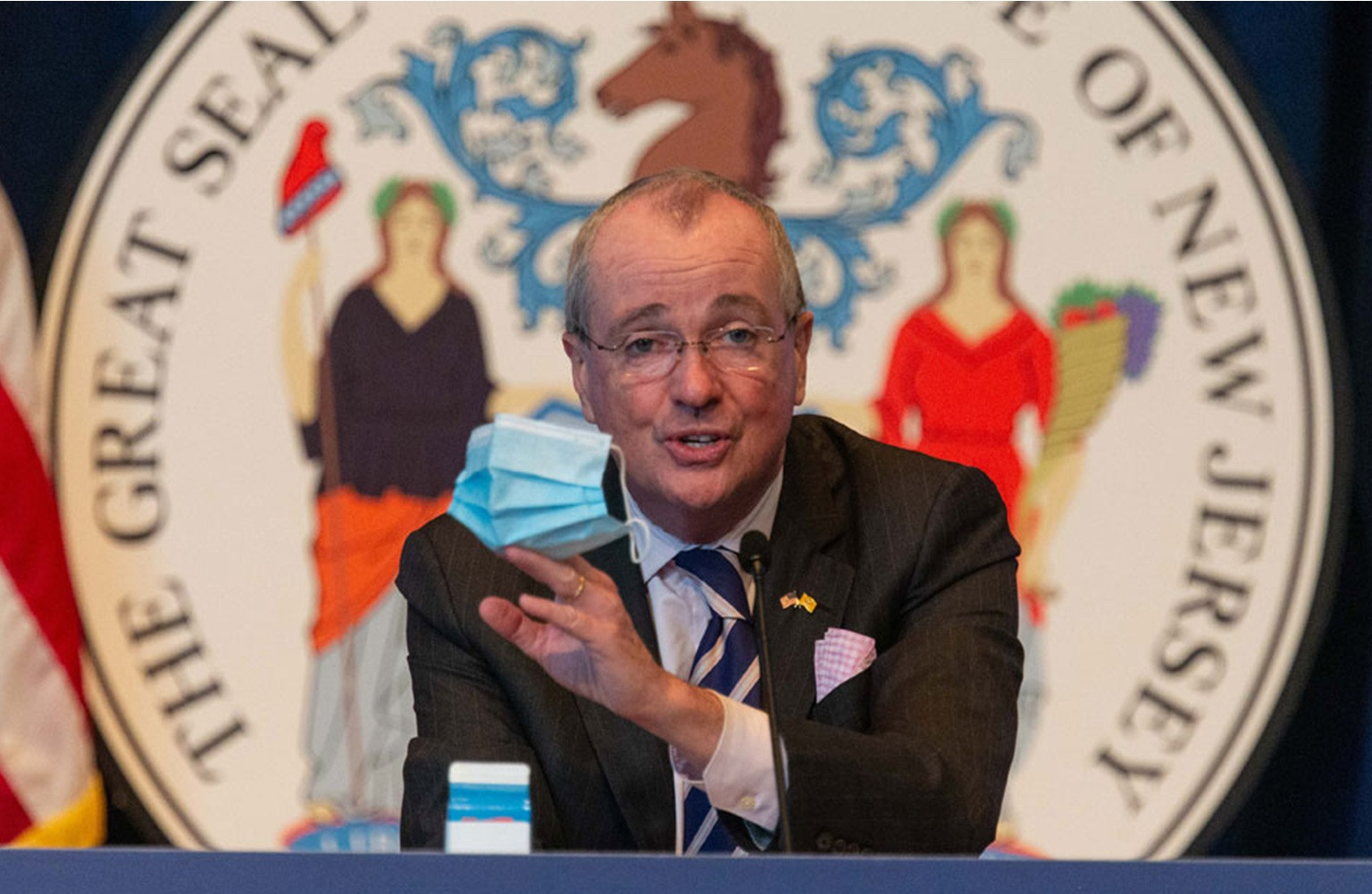
From guiding the state through COVID to guiding the final of the World Cup into MetLife Stadium, Gov. Phil Murphy’s imprint on New Jersey cannot be overstated.
But what will his legacy be?
Murphy’s moments
Gov. Phil Murphy spoke with BINJE Editor Tom Bergeron about his eight years in office. BINJE will produce numerous content items — all with an eye toward his impact on the business community. The schedule:
Wednesday
AM: COVID: A defining moment
PM: Energy: All in on offshore wind
Thursday
AM: Budget, taxes and pension payments
PM: Choose New Jersey
PM: The Disparity Study
Friday
AM: His legacy
PM: A last look back — and first look ahead
To coincide with his eight years in office, we offer eight legacy issues. And just because we know they will stir debate, we offer eight grades, too.
With that, our legacy issues and moments:
8. NJ Transit
From Day One, Murphy repeatedly said he was going to “fix NJ Transit if it kills me.” Murphy’s still alive, but NJ Transit still isn’t fixed. At least not completely.
“It was the wreck within the wreck when we got here,” Murphy told BINJE during an hour-long conversation to wrap up his administration. “It was incredible undermanaged, there were not enough engineers to make it through a summer weekend, it was about to miss out on the federal government’s mandated safety requirement, it’s on-time performance was completely unacceptable, the trains and buses were old and dirty and the stations had been ignored.”
Plenty of new cars and buses are here (with lots more coming), stations are being updated and the overall experience is … better. On a scale of 1-10, Murphy says the project is a 7-8 (thankfully missing a chance to say ‘6-7’), but he hedged on the assessment.
“Have we batted a thousand? No,” he said. “We’ve come a long way, but I say that, knowing that if your train this morning was late or didn’t show up, you’re angry. And you should be.”
GRADE: I, but not for incomplete. For “If.” As in, if all the ordered trains and buses come, if all the proposed stations are renovated in a mixed-use format, if the Gateway Tunnel project is completed, if the system is able to handle the needs of the World Cup … NJ Transit will have more than made the grade.
7. Energy
We detailed the administration’s efforts with offshore wind extensively during the week. And it’s certainly part of his legacy. But as Murphy leaves office, the skyrocketing energy bills are an even bigger mile marker on his administration.
Placing blame (everyone’s favorite game involving politicians) is a challenge. We give the utility companies a pass (they were warning folks — and if you think they control your entire bill, think again). And we give Murphy a pass on offshore wind. We, too, feel it not only can be a source of clean energy, it also can be a major economic driver.
Two other issues cannot be overlooked.
The energy master plan seemed to be more about philosophy than an economic blueprint. A plan doesn’t come with that many unanswered questions — and without a price tag.
Then there was the push to electrification, which came with a we-know-what’s-best-for-you mentality. The mandates on EVs defied all logic. The push for electrification (heat pumps, stoves, etc.) — and doing it while saying it was optional — eroded trust.
GRADE: H, as in hybrid. Take all those unrealistic goals for EVs and make them for hybrids and you might have a solution. You’ll certainly have more people working in the same direction.
6. AI Hub
Suggestions that government moves slowly are accurate. But not here. Murphy not only saw the AI boom, but he also saw it as a sector in which the state could dominate. He quickly put together summits/conferences and the AI Hub at Princeton, which quickly put New Jersey ahead of the game. Building it with Microsoft, CoreWeave and Princeton assured that the state will stay there.
The Hub, overseen by the N.J. Economic Development Authority, has the potential to be an enormous game-changer.
“AI is going to change our lives like folks don’t understand,” Murphy said. “And the only question is: Are we going to be out ahead of this or be dragged by it? We’ve been strongly of the opinion, notwithstanding the anxiety and the fear, that you are in the game or watching it like a movie.”
GRADE: A, as in all-in on AI.
5. Pension payments
Murphy refused to kick the can down the road. And while his push to make a full pension payment (which he did five times) was questioned early, no one can question that it helped the state’s ratings (which saves money) while proving it could be done. The sad part: Proving that it could be done made the decades of not doing so seem even worse.
Murphy spelled it out.
Had the state been making its regular pension payments, the latest payment would have been less than $1 billion — meaning the state essentially paid a $6 billion penalty this year, a penalty it will continue to pay for decades.
“The malfeasance from both sides of the aisle for decades in this state, the fact that we’re digging out of this and we have been every minute of our eight years together, angers me beyond almost anything,” he said.
This isn’t about having such rich pensions (that’s another discussion); this is about paying your bills.
GRADE: A, as in anger for all those who let it get to this point.
4. World Cup
The ability to bring the world’s biggest event to the U.S. should not be overlooked (see: Qatar beating U.S. out in a vote that actually was rigged). The effort it took to bring the World Cup final to New Jersey cannot be overstated.
Dallas has the stadium with the most luxury boxes (do the math: 400 boxes at $10M a pop). Los Angeles has the coolest-looking stadium (in the entertainment capital of the world and in the spot all other WC finals have been held).
What did New Jersey bring? Grit. Both an embrace of our heritage and diversity — and with a soccer-obsessed governor leading the charge. Because of it, billions of eyeballs around the world will be focused on New Jersey (even if the announcers will call it New York).
Grade: A, as in attitude. A lot of people and a lot of manhours went into getting the big game. But it doesn’t happen without Murphy making it a top priority.
3. TV/Film Industry
Getting Netflix to come to New Jersey was one of the biggest business moments in Murphy’s tenure. Getting Lionsgate — and then Paramount — to come, too, was equally impressive. But here’s the thing: It only shows the tip of the economic iceberg that comes with the industry.
For starters, so many people in the industry who live in New Jersey no longer have to go to New York City to work. Their tax dollars stay here. As does all the money that comes from feeding the crews and building the sets.
And the industry is not just about big studios. LeFrak has shown how the state’s incredible locations can be used for selected scenes and commercials. Moshe Gross has a great gig as a location broker going, too. Best of all, the incentives in place ensure there is a spot for shots of all shapes and sizes. (Who wants to go to Georgia, anyway?)
GRADE: A, as in ‘Action.’ Something you’ll be hearing a lot more of in the years to come.
2. Strategic Innovation Centers
Candidate Murphy talked about New Jersey reclaiming its place as a state of innovation. Or better, a state for entrepreneurs. It was a running theme throughout his time in office. And while it got a jump start from some new incentives (including the Evergreen fund), it was the dozen Strategic Innovation Centers that ultimately will get it done. The state finally has figured out the matrix to get government, higher education, venture capital, big business and entrepreneurs to work together.
The centers, located up and down the state, are guided by the EDA, which provided an investment, ensuring the state will benefit from big successes.
The SICs will tackle key sectors such as hard tech, fintech, aviation, AI, maternal health and life science. The HELIX in New Brunswick, which will feature the new home of Nokia Bell Labs and a local chapter of Portal Innovations, will draw global attention.
Murphy estimates that the centers could combine to produce 350 or so companies a year. It’s now easy to envision the next Google — or the next CoreWeave — being created here.
Best of all, the centers are fully funded.
“One of our theories coming in is that New Jersey had monster research dollars at some of the best private and public universities anywhere, but we were not stapling the higher ed research dollars into the real economy,” he said. “That was the theory. I think we cracked the back of that.”
GRADE: E, as in endless and everlasting potential.
1. COVID-19
March 21, 2020: “To mitigate the impact of COVID-19 and protect the capacity of New Jersey’s health care system for the state’s most vulnerable, Gov. Phil Murphy today signed Executive Order No. 107, directing all residents to stay at home until further notice.”
The pandemic was just a little more than five years ago, but it’s still hard to imagine that this happened.
It’s still hard to imagine that the state re‑opened shuttered hospitals, built units in parking lots and even drafted ventilator protocols to decide who might live or die.
And it’s still hard to imagine that 35,000 people died in New Jersey, more than 1.2 million died in the U.S. and more than 7 million died around the globe.
Go ahead. Practice revisionist history. Tell yourself it wasn’t any worse than a bad flu, that it only impacted the elderly or those with comorbidities. Just being thankful that you’re alive and able to do so.
GRADE: S, as in safety. Spout out all your conspiracy theories around COVID while Monday morning quarterbacking the response. But realize this, his pandemic press conferences were a master class in keeping constituents informed. And whether you liked his decisions or not — felt they went too far or not far enough — understand they were made with one goal in mind: To keep everyone safe. And that’s the No. 1 job for a governor.


