


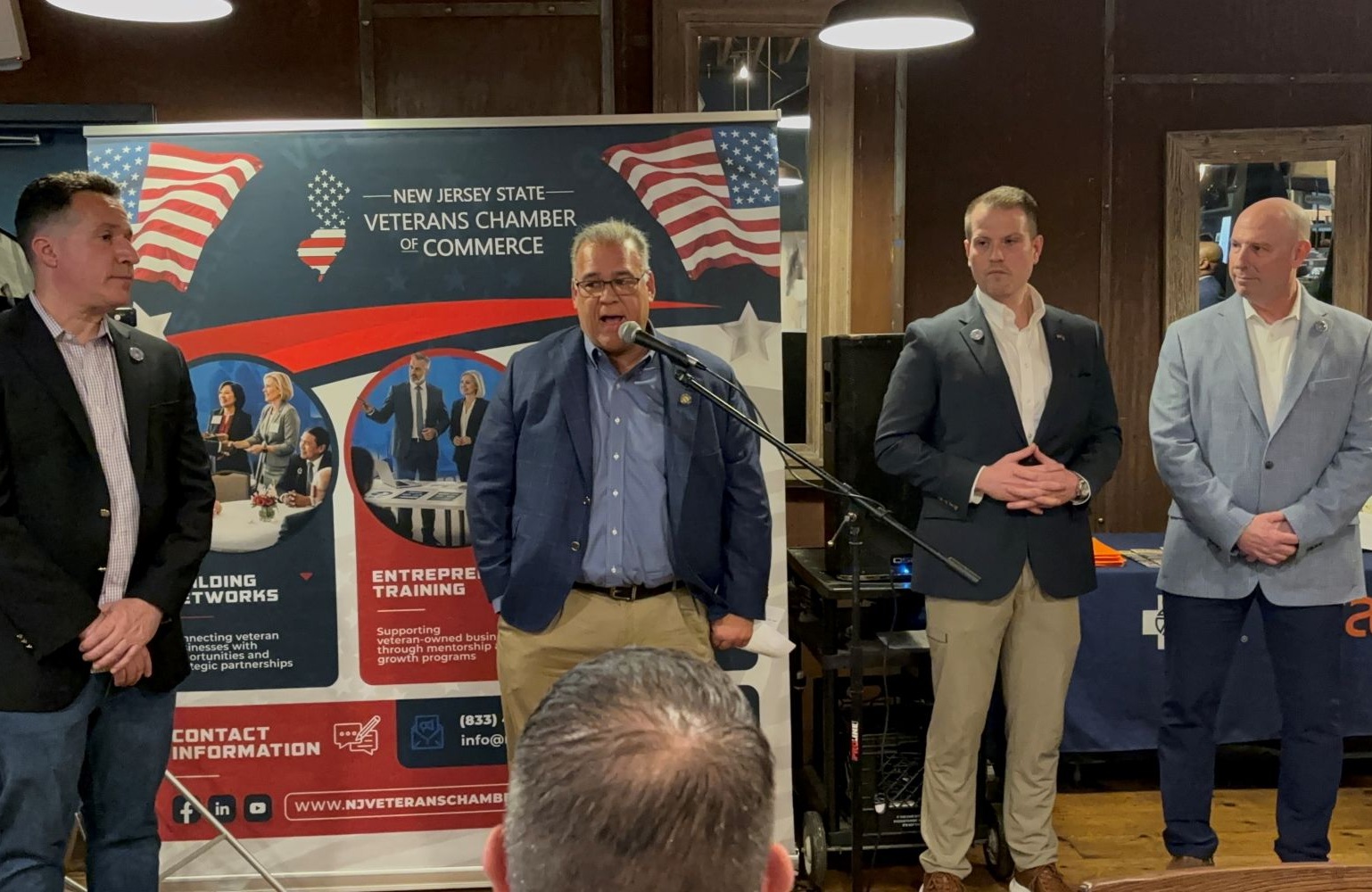
Jeff Cantor, the CEO of the N.J. State Veterans Chamber of Commerce, spoke in a way that every veteran business owner in the room could understand: The state has made rules to help you gain revenue — but it’s not doing enough to help you get that money in your bank account.
“There’s a set aside here in the state of New Jersey — 3% of all state contracts are supposed to go to disabled veteran owned businesses; that’s money that could be in your pocket,” he said.
It’s just not getting there. The rules and regulations do not match the intent, at the expense of veteran business owners, Cantor said.
Cantor was speaking at the Chamber’s Veterans Business Networking event last week at the Beach Haus Brewery in Belmar. It wasn’t the first time he had mentioned the failure to fulfill the set-asides — and it wasn’t the only initiative he said the chamber had issue with.
Cantor noted 17 legislative priorities the chamber is offering in an effort to help veteran owned businesses and disabled veteran owned businesses get their fair share of government contracts, initiatives including tax incentives for NJ businesses to use Veteran and Disabled Veteran Owned Businesses, eliminating registration fees for veteran businesses and increasing the set aside from 3% to 6%.
State Sen. Doug Steinhardt (R-Washington), a member of the budget and labor committees, told a crowd of approximately 30 that they have his support.
“The first is improving access to state contracts, lowering the bar to make it easier for veteran owned businesses and disabled veteran owned business to get access to the kind of contracts that tend to come easy to everyone else that happen to know somebody in Trenton,” he said.
But it’s not just about access to the state contracts, Steinhardt said. Regulatory issues and access to capital, along with overall red tape, often cause issues for veterans trying to start a business, he said.
“New Jersey is wrapped in nothing but red tape,” he said. “It is painful to try and do business here.”
Steinhardt said change will only come if everyone pushes in the same direction.
“I think that partnership between the legislature and [the veterans chamber] is critically important to make this happen,” he said.
Cantor did not mention that Gov. Mikie Sherrill and her husband, Jason Hedberg, are both veterans, but he said previously that he is hopeful that will bring more attention to the issues facing veteran business owners.
“That is a huge bonus,” Cantor said previously. “Jason has come to our events and let us know that he supports what we are doing. We think that will be a big help.”


