


Energy isn’t just a commodity — it is the foundation of our economy, our national security, and our quality of life. And ensuring that New Jersey has the resources necessary to power the future is one of the most important responsibilities we have in front of us.
As our world advances at an unprecedented pace, the United States — and New Jersey in particular — must be able to meet the growing needs of our society. That means ensuring the reliability, affordability and resilience of the energy systems that power our economy and everyday life.
To achieve this, we must invest in the infrastructure, technology, and energy generation needed to support a modern, thriving, and competitive state. Whether it’s upgrading our grid, expanding in-state energy production, or planning for long-term load growth, the decisions we make today will determine the prosperity and stability of tomorrow.
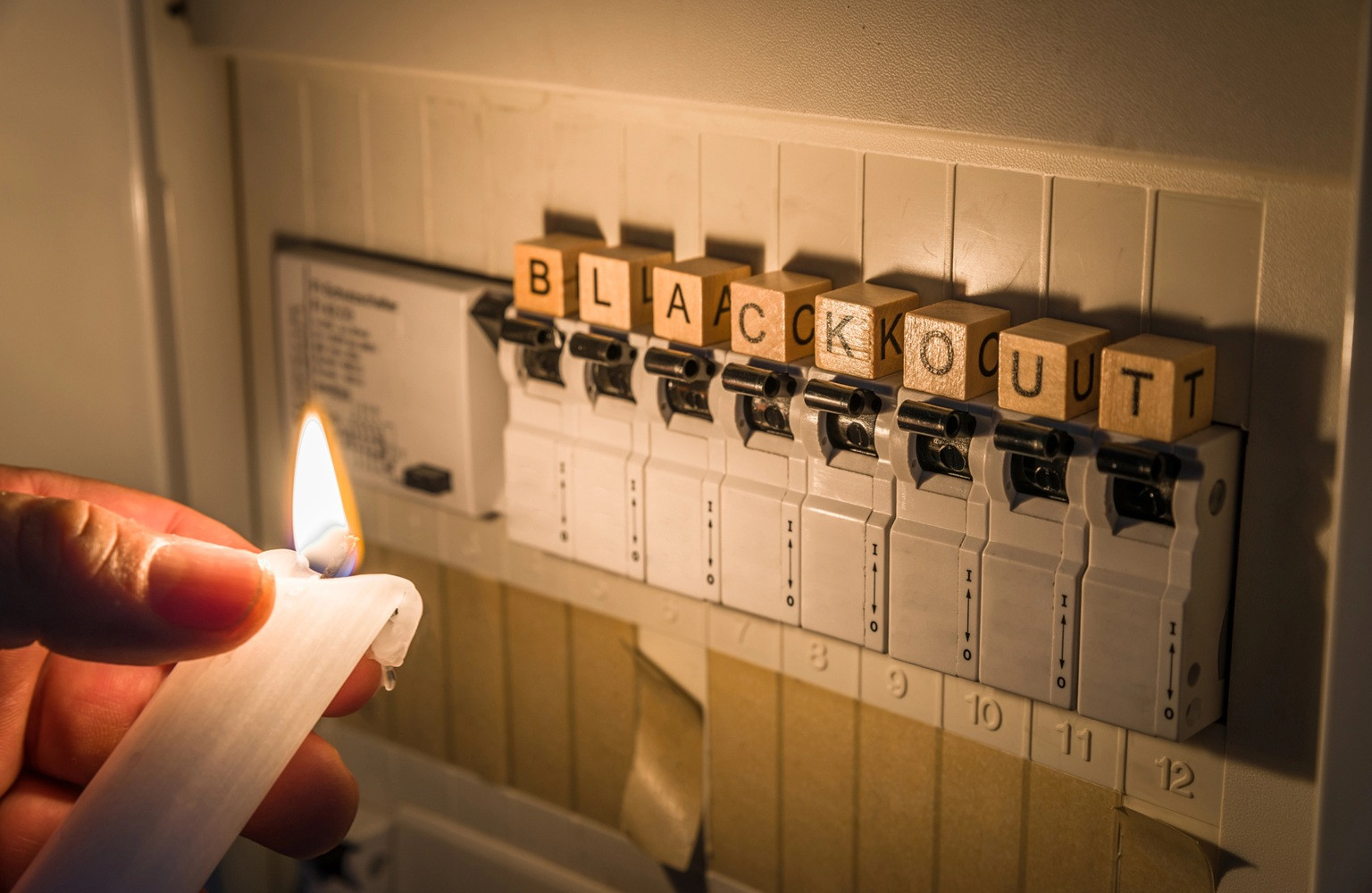
On Aug. 11, during a hot summer day, a switchyard connecting a coal plant to the grid tripped, putting 1.3 million residents in the Baltimore region at risk of a blackout. The grid operator and local utility worked quickly, efficiently, and according to procedures to shed load, managing and isolating the lack of supply to surrounding residential areas and avoiding a blackout in a major American city.
The question is not what happened, but why. The reality is this: Maryland’s policies, coupled with a chronic lack of interstate transmission, left its grid unable to support local substations when demand surged. And in a world where the average American home now contains on average 22 different connected devices — all requiring energy to operate, send messages, and receive communications — the consequences of even a short outage are magnified far beyond what they were a decade ago.
For years, the consequence was only higher prices for local utility customers, as Maryland has had the most constrained system in PJM. But now, reliability and keeping the lights on is a challenge.
Maryland produces about 60% of the electricity it consumes, relying on imports for the rest. During high-demand conditions, Maryland simply doesn’t have the stabilizing local generation necessary to keep voltage levels intact and substations energized. On that August day, when temperatures peaked, the system had nothing left to give — the coal plant and its substation tripped, forcing the local utility to scramble before all the lights went out.
New Jersey must treat this moment as a warning
The Regulatory Research Associates (a division of S&P Global, which rates regulators in each state) released their 2025 ratings report of state regulatory agencies, also known as the State Regulatory Evaluations — on Energy. Both Maryland and New Jersey fall into the lower-ranking states, with Maryland rated Below Average/3 and New Jersey just above Below Average at Average/3.
Maryland’s ranking stems from deep structural problems: restrictive siting, limited development of firm generation, high policy-driven mandates, and overwhelming dependence on imports. New Jersey’s ranking, in contrast, is tied to political turnover, affordability pressures, market conditions, and policy choices. RRA even lists New Jersey as a “jurisdiction to watch,” meaning our future — good or bad — hinges on decisions we make now.
New Jersey’s energy picture is stronger than Maryland’s, but still vulnerable.
New Jersey produces a substantial share of its own electricity.
In 2024, New Jersey generated about 60 TWh of electricity (≈60.2 million MWh), with multiple datasets confirming the total.
New Jersey still imports electricity — but has the electrical infrastructure to handle it.
According to the U.S. Energy Information Administration (EIA): New Jersey produced about 80% of the electricity it consumed. Of that 80%, renewables — mainly solar — only produced 8% of the electricity needed.
Annual averages show the state imports nearly one-fifth of its power.
On any given day, depending on demand, New Jersey may import 20% to 35%, but it could be up to 55% during particularly hot or cold snaps in a typical Jersey winter or summer season.
Maryland imports 40% of its electricity daily, but due to its location, it is also challenged by transmission constraints; if in-state resources are not able to supply locally, there is limited ability for the larger pool to support Maryland’s needs. Just as if there are no roads to transport goods, very few services can be provided.
Maryland is a lesson in what happens when policy outpaces infrastructure — in other words, when ideals do not match reality.
Maryland’s blackout was not a fluke. It was the result of a decade of decisions that made it harder — not easier — to build a reliable in-state energy system. Retirements outpaced new developments. Imports ballooned. Transmission constraints intensified. And eventually, on a hot August day, a substation simply couldn’t keep up.
And we all knew it was coming: the grid operator issued several max generation alerts last summer, the most in its history. Without the reserve margin, there simply was not enough supply on the wires after the generation tripped. We all end up paying for this through PJM’s capacity auction.
When there is insufficient electric production in a region, PJM will do everything possible to move power across its transmission system from one state or zone to another. But PJM can only move what exists. When there is not enough generation or the infrastructure is not strong enough to carry that power quickly, reliability suffers. Our electric grid operates much like our roadways — electrons travel across wires the same way people travel across bridges and highways. And just like roads and bridges, when new or expanded infrastructure is needed, it requires time, planning, and serious investment to ensure it can handle increased traffic.
The path forward: Build, modernize and prioritize reliability
If New Jersey wants to grow the economy and create jobs without expanding firm, reliable energy, our 20–35% import range will grow — and so will our vulnerability.
To avoid Maryland’s fate, New Jersey must make reliability the foundation of its energy policy:
- Expand firm in-state generation.
- Nuclear, natural gas, fuel cells, CHP, and solar & storage that adds to and complements — not replaces — dispatchable power.
- Modernize regulations to support the investment needed for our State.
- The RRA findings highlight how uncertainty discourages investment; we must reverse this.
- Plan for and invest ahead of load growth.
- Planning for both supply and infrastructure, ensuring construction is completed before it is needed.
- Strengthen the assets that already work.
- Our nuclear and natural gas fleet remain the backbone of reliability. We need to ensure those resources thrive and continue to supply the energy needed to run the State’s economy.
- Align policy goals with physical reality.
Maryland’s mistake was assuming the grid could handle mandates without matching infrastructure.
Maryland’s blackout was not a technical curiosity — it was a preview. It showed exactly what happens when a state becomes overly dependent on imports, when the wires are already at maximum capacity, when investment in the energy sector is insufficient, and when ideals outpace reality.
New Jersey produces a far healthier share of its electricity — roughly 80% annually — yet still imports 20–35%, depending on daily conditions. That cushion is not infinite. Without action, it will erode.
Maryland is a warning. New Jersey still has a choice.
The question is whether we act now — or wait until a blackout of our own forces a conversation we should be having today.
Erick Ford is the president of the New Jersey Energy Policy Coalition.


