


One by one, representatives from all the major utility companies in the state spoke to
the audience at the annual Supplier Diversity Development Council conference.
Each had the same message: We want to go into business with you.
To be sure, this wasn’t a one-time occurrence. And it wasn’t a performative show of
support for diverse-owned businesses in response to the widespread backlash against
programs that dare to use the term “diversity” or embrace initiatives suggesting
inclusion is good for the business community.
This was the 27th annual conference of the SDDC, a group created by the N.J. Board of
Public Utilities with the express purpose of tracking diversity spend and sharing best
practices.

The SDDC was clearly ahead of its time. And those at the event last Thursday made it
clear they understood this is a key moment to show public support for DEI.
Bianca Reyes, manager of supplier diversity at PSEG and incoming president of the
SDDC, spelled it out:
“We want to work with people who live in our service territory — the communities we serve — that’s why we’re here,” she said.
“We want to create a level playing field because everyone deserves a chance to grow their business.”
Reyes and the utilities aren’t the only ones who feel that way.
Lisa Chowansky, president of HC Constructors, said her firm is looking to hire diverse
contractors — just as it has throughout its 40-year history.
Chowansky said it’s part of the company’s mission to help young businesses.
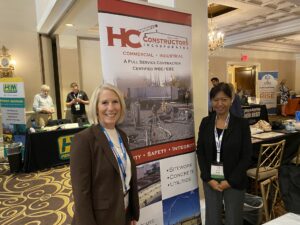
“There are companies out there that are growing and need an opportunity to grow — regardless of who they’re growing under,” she said.
It’s not about labels or categories or box-checking, Chowansky said.
“You can say they’re diverse, you can say they’re small, you can describe them any way you want,” she said. “We’re trying to make this an economy that works for everybody — isn’t that the goal?”
That belief thrilled Carmen Gates, the external affairs officer at the African American Chamber of Commerce of New Jersey and its vice president of community development.
“It means so much,” she said. “It shows that not all companies are capitulating to the
nonsense, the noise, and the rhetoric that’s out there.”
And for good reason, Gates said.
“Data shows that companies and organizations that are more diverse are more
successful,” she said. “Those are just the facts.”
Gus Penaranda, a longtime leader for LGBTQ+ businesses in the state, agreed.
“The companies that put their name on this board for this conference — this year and in
this environment — are sending a clear message: There’s no way you can exist if you
don’t work with diverse suppliers,” he said.
Penaranda also pointed out that working with diverse suppliers aligns with the current
mood coming out of Washington.
“This administration, on the federal level, is all about transactions,” he said. “Well, if you
want to do business in New Jersey, you have to work with the nearly 50% of the
population that is diverse and owns a large portion of the nearly 1 million certified
businesses in the state.”
Reyes said that’s the essence of what PSEG is trying to do.
“We understand that there is a business case for working with diverse suppliers and that
it brings value,” she said. “And we also believe that hiring local companies is important.
Ratepayers are funding all of our projects, so why wouldn’t we want to work with people
who live in our service territories? We want to show that everyone is welcome and that
we don’t exclude anyone. We believe in inclusivity — that’s why we’re here.”

