


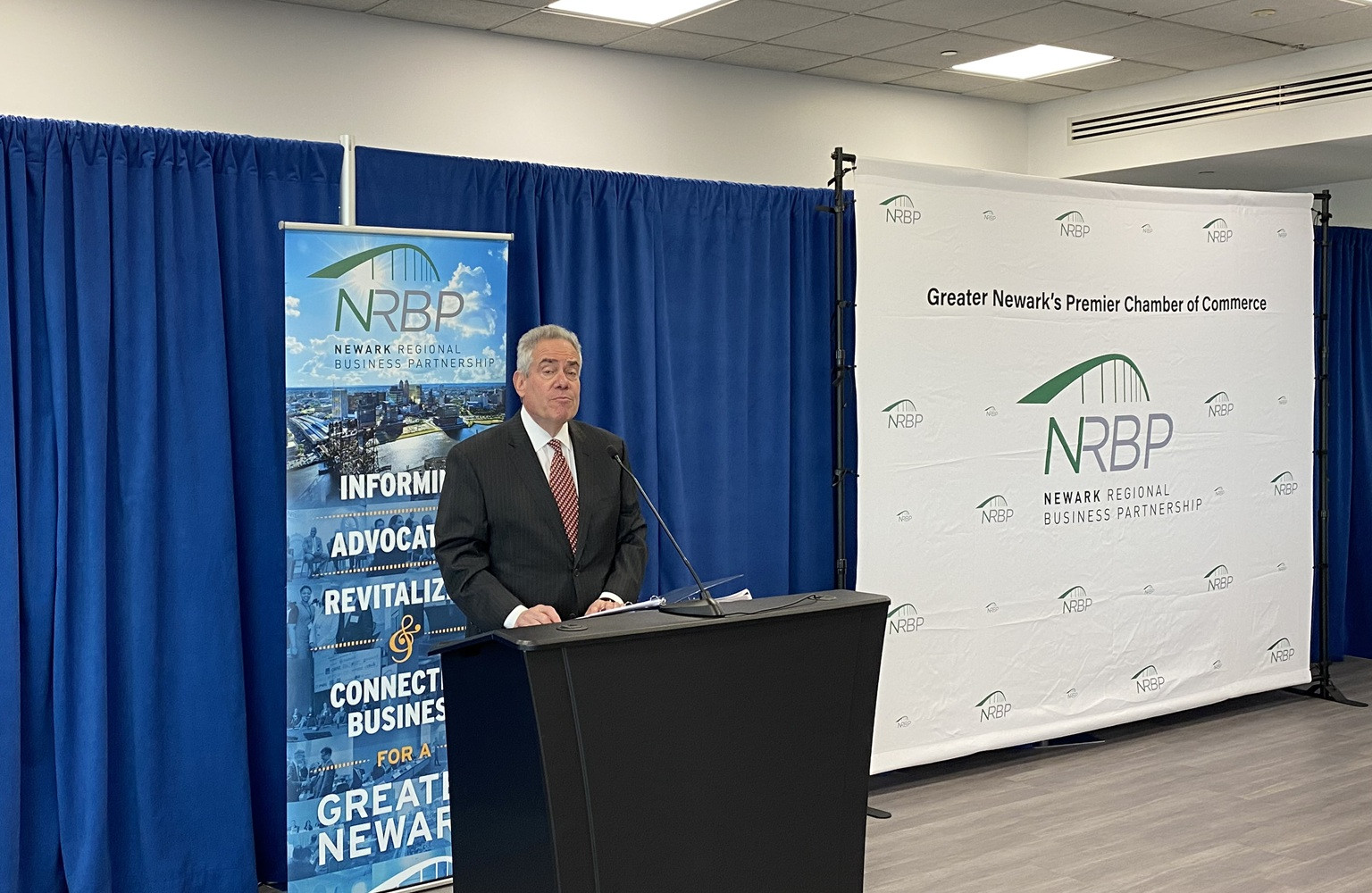
Seton Hall Law School Dean Ronald Weich isn’t ready to declare that the United States
has entered a constitutional crisis. But he’s watching closely.
Weich said the nation is in the middle of a “stress test” — one that will reveal whether
Congress, the Supreme Court, and ultimately the voters in the upcoming midterm
elections can still act as meaningful checks on presidential power.
“I remain optimistic,” Weich said. “We’re going to see how the Constitution survives
this.”
Speaking candidly last week during a Q&A session during a public forum at Seton Hall
Law, Weich acknowledged the extraordinary political and legal turbulence of the past
year.
He pointed to efforts by President Donald Trump to seemingly go beyond his authority
in his efforts to eliminate birthright citizenship, to unilaterally impose tariffs and to fire
members of the various boards and commissions. And he noted many of these issues
are going straight to the Supreme Court, bypassing another check – the lower courts.
All of this is happening in real time, Weich said.
“Those issues are right now,” he said. “I want to see what the Supreme Court does. I’m
hoping that the court rises to the occasion.”
Weich brings more first-hand knowledge and background to the discussion than many
in his position would.
A graduate of Yale Law School, Weich served as assistant attorney general for
Legislative Affairs in the Department of Justice, a post he held from 2009-12, during the
Obama administration.
He also worked in Congress, serving as chief counsel to two powerful former U.S.
Senators Edward Kennedy (D-Massachusetts) and Harry Reid (D-Nevada).
Weich’s comments came after delivering the keynote address at an event organized by
the Newark Regional Business Partnership. He touched upon everything from the role of Congress and the Supreme Court to teaching the next generation of attorneys during
these tumultuous times.
Here’s a greater look:
On waiting for the courts — and the voters
Pressed on what it would take to feel confident the nation had passed its constitutional
“stress test,” Weich pointed to the courts.
“Almost all of the issues I highlighted are in the courts,” he said.
Lower federal courts, he argued, have done “a very good job” sorting out what is legal
and what is not. But the Supreme Court, he noted, has been more cautious —
especially in emergency cases that arrive without full briefing or argument.
“It does appear that the Supreme Court has not put effective constraints on executive
authority,” he said, though he emphasized that many matters remain unresolved.
But the courts aren’t the only actors.
“We also need to see the American people be heard again,” Weich said, noting that the
2026 midterm elections will offer voters a chance to weigh in.
He made clear he wasn’t offering political advice — “I don’t do politics,” he said — but
he underscored the importance of civic participation.
And he issued a warning: “Violence, in my view, is never the answer.”
The country, Wiech said, must resist the temptation to let political conflict spill into
unrest.
On a Congress that knows better — but stays quiet
One of the most striking parts of the conversation came when Weich was asked
whether the country had seen this level of dissent before. He pointed to the 1960s as
the closest parallel but said today’s dynamic is different — and in some ways more
troubling.
“What’s most disturbing to me is that there are individuals who know better and are not
calling this out,” he said, referring specifically to members of Congress.
He invoked the framers’ intent: Congress was designed to be a check on executive
power. But, he said, “you don’t see that so much.”
To illustrate what congressional oversight once looked like, Weich highlighted former
New Jersey Congressman Peter Rodino, who challenged his own party’s president
during the Truman administration because he believed wrongdoing had occurred. That
kind of independence, he suggested, is rarer today.
(The room in which the talk was delivered was named for Rodino.)
Still, Weich noted signs of pushback. He pointed to a recent speech by Republican
Senator Thom Tillis, who condemned threats against Federal Reserve Chair Jerome
Powell and vowed to block other Fed confirmations until the issue was resolved.
“That was some real pushback,” Weich said.
Though, it must be noted, Tillis already has announced he is not seeking reelection.
On grading the judiciary so far
Weich was asked specifically whether he felt the judiciary is enabling expanded
executive power.
“In terms of the courts, it’s a mixed bag,” he said.
Lower courts have attempted to check executive action, Weich reiterated, but the
Supreme Court has not yet done so. The coming weeks, he said, will be telling.
“There’s a reason why federal judges have lifetime tenure,” he said. “They’re meant to
be removed from politics and not subject to political intimidation. We’ll see if that holds.”
On teaching law in a time of upheaval
Asked how he addresses incoming law students who have watched a year of political
turmoil unfold in real time, Weich didn’t sugarcoat the difficulty – but seemed to
welcome the challenge.
“Legal education is tough in this environment,” he said. “There’s a lot to teach.”
He described how professors now routinely “rip from the headlines” to help students
understand professional responsibility, constitutional structure, and the limits of
executive authority. Weich, himself, did this while recently teaching a professional
responsibilities course.
Far from being discouraged, he said today’s students at Seton Hall Law are energized.
“The people who come to law school today are here because they want to participate in
these great debates,” he said.
Still, the question lingered: How do educators reassure students that the system will
hold?
Weich’s answer was rooted in history. The country, he reminded the audience, has
endured the Civil War, the Great Depression, Watergate, the unrest of the 1960s, and,
most recently, the pandemic.
“And we’ve emerged to be strong and to be true to its principles,” he said.


