


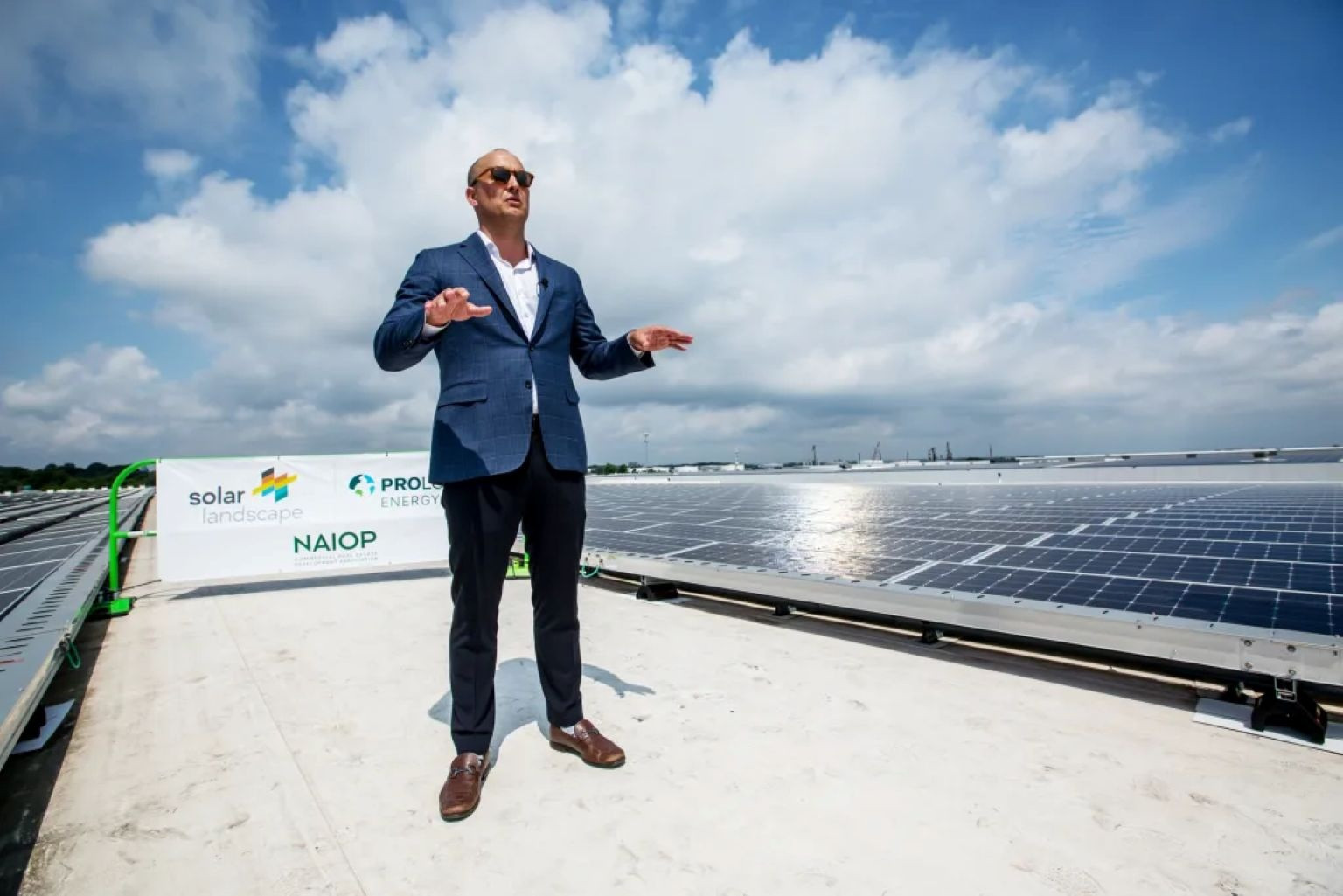
Solar is hot again in the state.
The announcement Wednesday that the N.J. Board of Public Utilities has approved a massive 3 GW expansion of the next phase of the state’s Community Solar Energy Program — a move spurred by the executive order Gov. Mikie Sherrill issued on inauguration day — is proof of that.
The move, which expands the program’s capacity by 12x and increases viable rooftop solar capacity from roughly 20 million to 240 million square feet statewide.
It’s the type of initiative the governor has been speaking of since she was Candidate Sherrill. But anyone who has followed the solar industry for a decade knows there are challenges.
They start with timing.
The combination of expanded state capacity and time-limited federal support is expected to drive a surge of new projects. It needs to. The expansion, which was expedited into service (it goes into effect today, two days after it was approved), coincides with a federal solar tax credit only available through July 4, which allows developers to offer higher rooftop lease rates to commercial property owners.
Expanding correctly is just as important as expanding quickly.
New projects aren’t guaranteed to be built. Across the industry, only about a quarter of projects ultimately reach completion due to interconnection constraints, permitting delays, financing gaps, and construction challenges. The true measure of success is how effectively projects are converted into operational energy.
Asbury Park-based Solar Landscape, founded back in 2012, continues to be ahead of the curve.
In the state’s initial CSEP pilot and first post-pilot solicitation, the company was awarded 184 projects. Today, 93 percent have advanced into execution or completion, with 72 percent already completed and the remainder in construction or late-stage development.
In May 2025, the company was awarded an additional 99 community solar projects, all actively advancing through development.
CEO Shaun Keegan feels these results translate into real outcomes for New Jersey: Lower electricity bills for families and additional capacity strengthening the grid. Working with more than 140 commercial property owners statewide, Solar Landscape projects save households an estimated $325 annually, he said.
“This is a significant moment for solar in New Jersey, but scale alone doesn’t guarantee results,” Keegan told BINJE. “The real measure is whether projects are built and connected to the grid. From the beginning, Solar Landscape has focused on disciplined execution, working closely with property owners, utilities and communities to move projects from concept to operation quickly so customers can start seeing the savings on their energy bills.”
Part of Solar Landscape’s success can be traced to its willingness to make a sustained investment into people and capital at a time others were not.
As the program transitioned from pilot to permanent status, Solar Landscape committed to scaling its New Jersey workforce, hiring nearly 200 in-state employees over the last two years. The company plans to create more than 150 additional roles in 2026. At any given time, approximately 600+ installers are active on projects statewide, supported by IBEW labor.
“Building projects at this scale requires a highly skilled workforce. We’ve made a deliberate investment in growing our team here in New Jersey and partnering with IBEW labor to ensure projects are built efficiently and reliably. As community solar expands, that commitment to quality labor and local hiring is going to be critical to delivering projects on schedule.”
Keegan said consistent delivery depends on effective coordination between developers and utilities. Predictable and responsive interconnection processes are essential to moving projects from lease to operation, he said.
He noted the efforts of PSE&G, among others.
“We work with many utilities across the country, and PSE&G stands out as a highly engaged and constructive partner in New Jersey,” he said. “Their commitment to collaboration has helped move projects efficiently from award to operation.”
New Jersey is not alone in building a strong community solar market. States such as Illinois and Maryland have developed comparable programs. In each of these markets, disciplined execution and strong utility coordination remain essential to ensuring projects move efficiently from award to operation, Keegan said.
Solar Landscape is a national brand, Keegan said.
Of course, growing in his home state has special significance. And with the expanded solicitation open — and pushes for more generation coming daily — Keegan feels Solar Landscape is in position to help.
“The opening of the 3 GW expansion of New Jersey’s Community Solar Program marks a historic milestone for the state’s energy affordability,” he said. “With this expansion, New Jersey has solidified its position as a national leader in community solar, delivering meaningful energy savings to residents while creating new opportunities for commercial property owners.
“We congratulate Gov. Sherrill and the New Jersey Board of Public Utilities for prioritizing community solar and advancing a framework that enables the program to scale,” he said. “As the leading provider of commercial rooftop solar in the state, Solar Landscape stands ready to partner with property owners, communities, and utilities to deliver projects that create jobs and provide affordable power to the grid.”


