


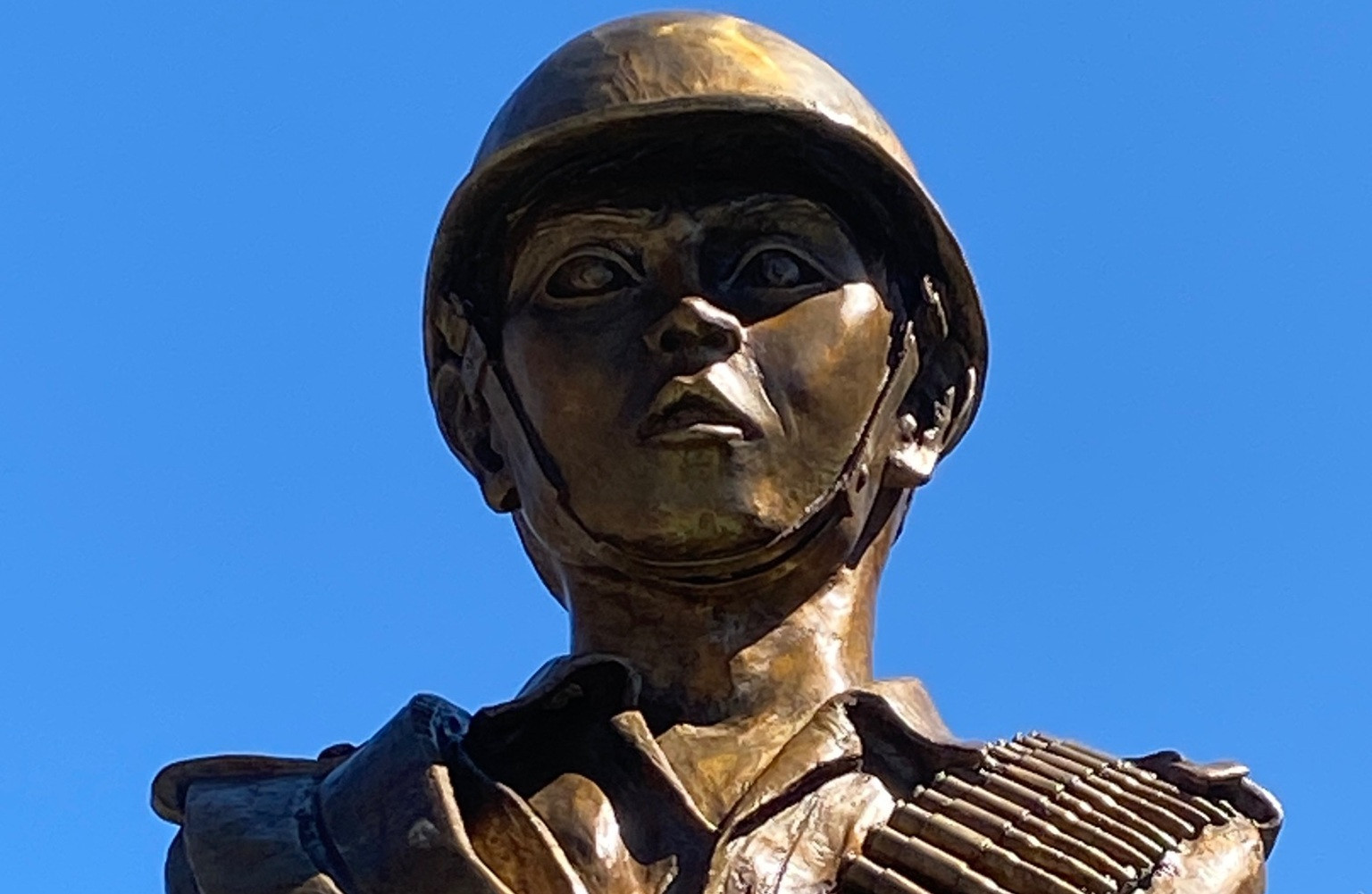
You may never read the plaque next to the statue in the square that you walk by every day during an urban commute. Or even know who — or what — the statue was built to honor. They are part of the invisible infrastructure that defines a city. Until they are not.
Statues are built to last, but they don’t hold up over time. Without regular care and maintenance, they become an eyesore. One that cities too often neglect while they tend to other, more pressing needs.
That’s not the case in the Exchange Place Special Improvement District in Jersey City. Chaired by longtime real estate leader Mike DeMarco, it knows how little things mean a lot. That’s why the SID recently spent hundreds of thousands of dollars cleaning and restoring statues all over their area. It’s why DeMarco wasn’t surprised to hear that a new tenant noted the ambiance of the area as a reason for signing a lease.
“Anything that is outside for 30-40 years, battling the elements, needs to be cared for,” he said.
 That’s why the SID worked to remove a century of grime from the soldiers outside City Hall, cleaned a statue of a Filipino soldier from the Battle of Manila in World War II, restored a weather‑beaten Korean War Memorial and recast a police monument that had been stolen twice.
Those projects are a window into how his operation has become a crucial, if largely unsung, driver of Jersey City’s success. Using money collected from local property owners, DeMarco said his SID does all of the little things that add up. It starts with beauty: Trash collecting, landscaping and snow removal. It extends to art and leisure: The creation and maintenance of parks and festivals. And, of course, includes security.
“Everything we do, the city should, would or could do,” he said. “They just can’t. They don’t have the funds.”
His SID does. And its budget may be growing. DeMarco quickly does the math. More than 6,000 units are coming to his area. That means a bigger budget for him — which will help with his next goal, turning a vacant property into a community center.
To be clear, the Exchange Place Special Improvement District doesn’t operate on its own. All of its projects, programs and initiatives need to be approved by the city. Then again, the city cannot dictate what the SID does, either. DeMarco and his team have to agree to city suggestions, too. Luckily, the two have worked together on a common goal: Beautifying the city.
Which takes us back to the statues.
Individually, their impact may be limited to just that glance while you’re walking by. Collectively — and paired with all the other efforts that the SID is doing — they are part of the “wow” factor that every developer wants to see.
DeMarco, who ran Mack-Cali when it was one of the most important REITs in the state, knows how the real estate game is played.
“Anyone can look inside any building or at any floor and instantly see how they want to fix it up; it’s just a question of whether the math works,” he said. “What they can’t fix up is the area around the building.
“So much of site selection and leasing is done in the first few seconds after you get out of the car. If a developer or a tenant sees a beautiful area where kids are playing and people are outside eating, they’ll say, ‘I can see myself here.’
“If they don’t, they might say, ‘I just may keep my money in my pocket.’”


