


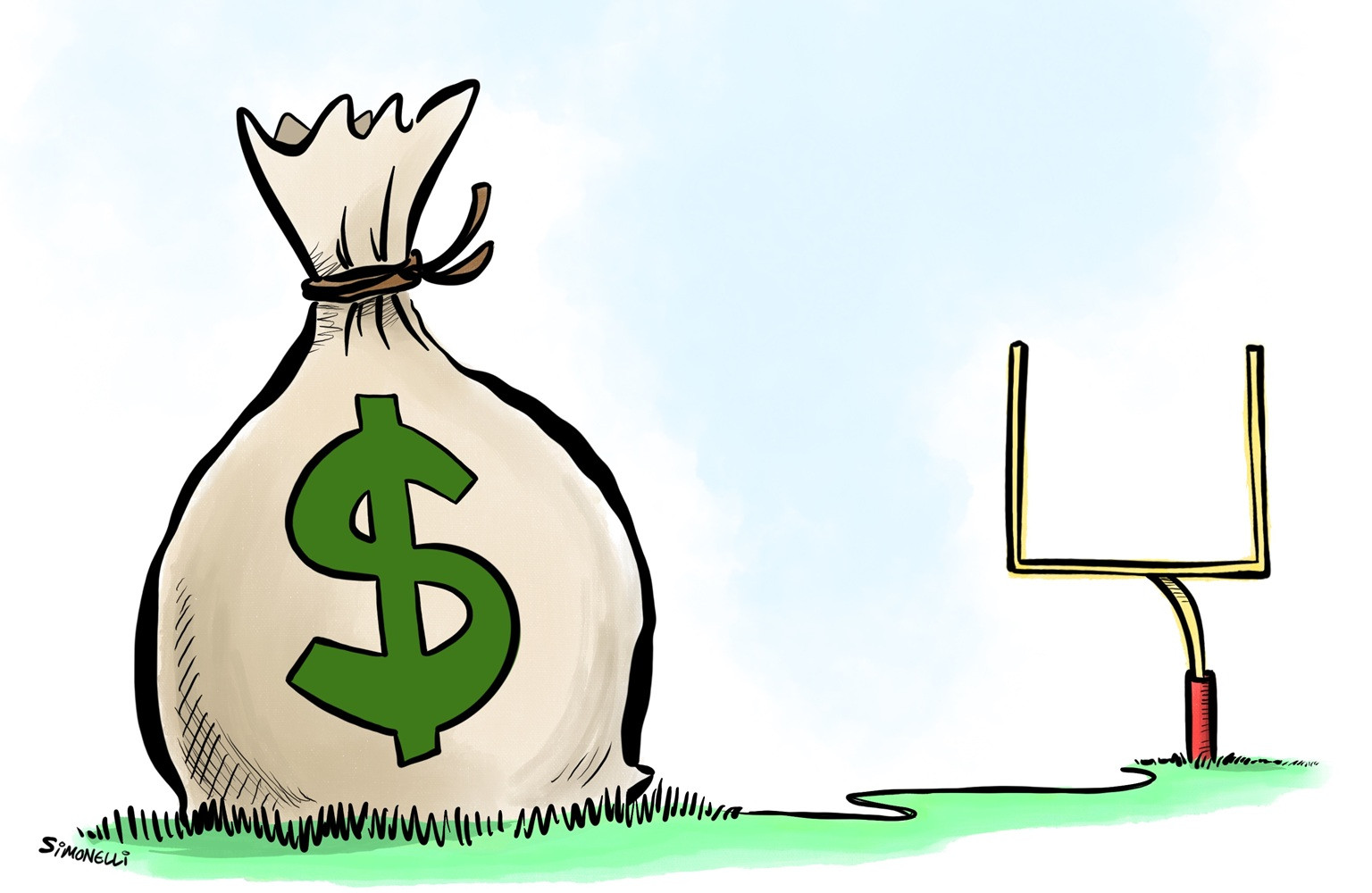
The $2.8 billion settlement in House vs. the NCAA allows schools to formally pay all athletes. It is supposed to do it in a way that limits the ability of donors and NIL collectives, aiming to create a level playing field.
It is not.
While all schools will have an equal amount to pay, $20.5 million this year, athletes still are able to get deals on their own, as long as they approved by a new commission, which deems them to be more than just pay to play.
It was supposed to curb the power of the major programs.
It has not.
Earlier this month, the NCAA Commission announced it had approved more than 8,000 NIL deals worth more than $80 million.
The biggest winners will be the name-brand schools in college-crazy markets. The biggest losers will be schools in areas that are all about pro sports. Schools in the Northeast for instance.
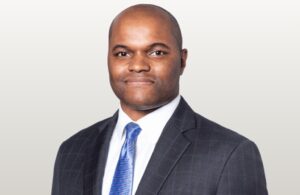
So said Matthew Baker, a partner at Genova Burns in Newark and an expert on all things NIL since Name, Image and Likeness deals changed the course of college athletics.
“The irony is that the House deal was supposed to level the playing field, but it’s not,” he said.
BINJE recently talked with Baker to get an update on the situation. Here’s some of the conversation, edited for space and clarity.
BINJE: Let’s start with more details of the House vs. NCAA settlement in June. We know it means athletes this year will have money from a set total to share (up to $20.5 million) and that money was set aside for athletes from the past, too. That’s great for athletes, what was the NCAA trying to get out of the agreement?
Matthew Baker: The NCAA was trying to get a lot out of the agreement – most directly, an end to the House litigation and the two other cases that were consolidated with it, to avoid the possibility of being found liable and having to pay even more in damages to current and former players. But more generally, they were also trying to create what they viewed as a sustainable NIL framework.
One goal of that framework was to try and eliminate the influence that wealthy boosters and donor collectives had over NIL, specifically in signing NIL agreements with athletes that looked a lot like pay-for-play, which is still prohibited by NCAA rules.
So, the House settlement sets up a structure to scrutinize NIL agreements between athletes and boosters or collectives, while allowing each school to distribute up to $20.5 million through NIL agreements with its own athletes. And not only are NIL agreements with boosters and collectives under more restrictions, but the $20.5 million amount is based on eight distinct categories of revenue that athletic departments bring in, none of which include individual or corporate contributions.
(The categories: Ticket sales, income from playing road games, bowl game revenue, money from media rights deals, NCAA distributions and grants, money from non-media conference deals, sponsorship and licensing deals, ads.)
BINJE: That’s great, but it sounds as if they are restricting the amount an athlete can earn – which is what started the NIL process?
MB: That’s a good question and brings up an important point. The House settlement does not cap earnings. It doesn’t prevent the star quarterback or a Caitlin Clark-type of athlete from getting million-dollar contracts for major ad campaigns from, say, soft drink or sports apparel companies, or a fair-value deal from a local small business that is not otherwise associated with the school.
While all NIL deals for more than $600 do have to be reported to the newly formed College Sports Commission, the type of agreements that will likely receive the most scrutiny from the CSC are agreements where a relatively unknown backup receives a five- or six-figure payout (or other benefits) from a collective in exchange for a few appearances at private events hosted by that collective.
The CSC would review that agreement to determine if it is for a “valid business purpose” and whether the compensation paid to the athlete was within a reasonable range.
BINJE: This sounds like a good idea. It allows top players to be compensated and all athletes to get part of the billion-dollar college athletics pie. How are schools getting around this? How are schools such as Rutgers still at a disadvantage to schools such as Texas or Oklahoma?
MB: Start with the $20.5 million cap. A limit like that could help to level the playing field and prevent schools that might otherwise devote $30 million or $50 million from doing so. But generally speaking, the $20.5 million figure is based on an average of certain revenue categories from across the five major conferences.
So, schools that generated above-average revenue from those categories before the House settlement will likely have an easier time setting aside the full $20.5 million than schools that generated less-than-average revenue from those categories, especially since total incoming revenue will decrease across the board in order for the NCAA and the major conferences to fund the back-damages portion of the House settlement.
There is also a practical concern here for schools in the Northeast where professional sports loom large. If the price tag is $20.5 million and school administrators know that they’re competing with professional teams for dollars and viewers, they may not quite be as willing to earmark the full amount as a school like the University of Texas.
BINJE: Of course, a sports-crazy school is going to want to have more than just $20.5 million to spend. How can they do that?
MB: We all know that there’s still a lot of money out there that is ready to be spent on college sports, specifically on revenue sports like football and men’s basketball. The big question is: How will that money find its way into the hands of athletes in a way that doesn’t trip up the safeguards that the House settlement has attempted to set up?
One of the ways that we’re starting to see that happen is through partnerships with apparel companies and media rights companies where, as part of an agreement to provide goods or services to a school, the company will also agree to set aside millions of dollars for NIL deals for the school’s top athletes. These funds would not count against the $20.5 million that the schools can distribute themselves.
This is another area where Northeast schools may be at a disadvantage, as sponsor companies may ask themselves: ‘Where are we going to get the biggest return on our investment?’ Is it going to be at a school in the Northeast where they have to compete in the marketplace with pro teams from DC, Philly, New York and Boston, or is it going to be at a place like the University of Alabama, where the biggest competition would be from another school, Auburn. Those schools have a captive market there. If you’re a corporation, trying to figure out where your where your highest return on investment is, it’s likely to be at a place where the school has as close to a monopoly on the fan base as possible.
BINJE: Which brings us back to the $20.5 million. If you’re a school that doesn’t have a monopoly on your fan base, you may not be able to justify this added expense.
MB: I think schools where there’s less overall support for the major revenue programs – and maybe more relative support for non-revenue sports or Olympic sports – may face additional internal pressure to say, ‘We can’t cut rowing, or swimming, or soccer, or volleyball in order to bump up football.’ If you’re Boston College and you have a nationally ranked hockey program with great support, are you going to make cuts to that program in order to make sure you have enough revenue sharing for football and men’s basketball? That’s a very serious question.
Schools do have some flexibility in that the House settlement also allows schools to offer more overall scholarships, and to offer partial scholarships in sports that had previously been all-or-nothing like women’s tennis and women’s soccer. But the answer to this question is a little clearer in places that routinely draw 100,000 fans to a home football game. Even though these schools may have standout track and field, swimming, baseball, or softball programs, there is probably more of an understanding that the football team is going to get what it needs to compete if for no other reason than the knowledge that their rivals are doing the same thing.
BINJE: Are there any caveats here that we should consider, or is this all done and dusted?
MB: There are a few. First, I should note that the schools’ distribution of the $20.5 million – if distributed mostly to football and men’s basketball players, as many schools have indicated will be the case – will likely be the subject of Title IX litigation. Those cases may not be filed until later this year or even after this school year concludes, since that is when schools will report certain payment data to the NCAA, but there is a very real question of whether schools are required by Title IX to distribute payments equally between male and female athletes.
For what it’s worth, when the NCAA originally allowed athletes to sign third-party NIL deals in July 2021, its initial guidance specifically cautioned that school involvement in NIL deals could raise “Title IX issues.” Other aspects of the NIL economy and the House settlement are currently being challenged on Title IX grounds – a group of female athletes from College of Charleston, Vanderbilt, and UVA have already appealed the House settlement’s back-damages amount, arguing that the anticipated distribution of these damages (most of which were going to be paid to football and men’s basketball players) did not take Title IX into account, and a group of female athletes at the University of Oregon are currently suing the school and arguing that unequal payments from the school’s collective constitute a Title IX violation.
We should anticipate that similar arguments will be made regarding how schools distribute the $20.5 million, and possibly even regarding NIL deals with school sponsors.
The second big caveat is the SCORE Act, which is being considered by Congress as we speak, and which would codify much of the House settlement into federal law. The SCORE Act would grant the NCAA an antitrust exemption, preventing future antitrust suits like House.
But as far as the most immediate impact, the Act would preempt any state law that is inconsistent with the House settlement terms. Since many state NIL laws – including New Jersey’s Fair Play Act – arguably give in-state schools the power to prevent the NCAA or the CSC from invalidating NIL agreements, the SCORE Act, if passed, would preempt those laws and would grant the NCAA and the CSC broad power to set enforcement rules, resolve disputes, and penalize violators.


