


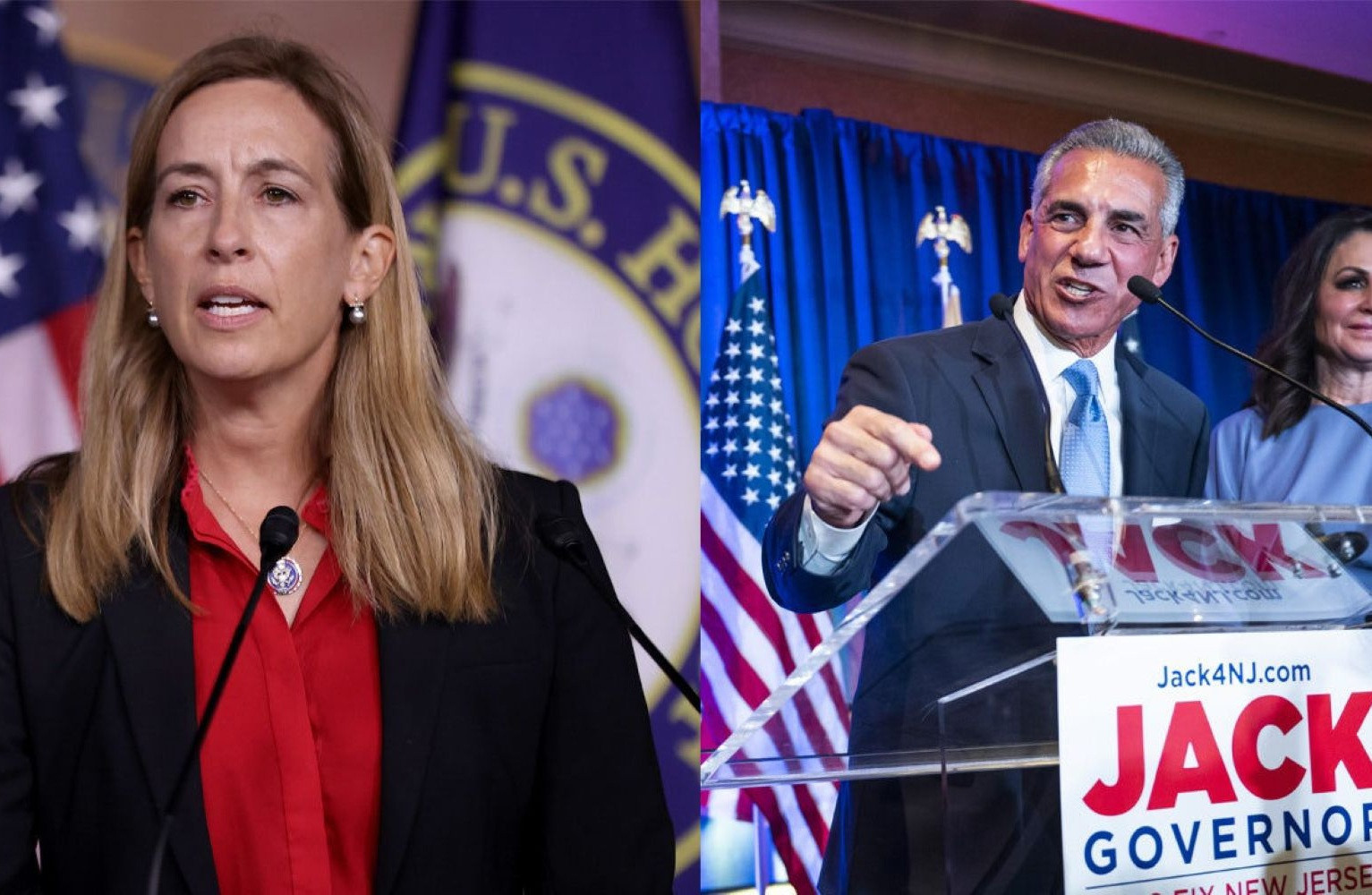
It would be easy to surmise that the big victories by Democrats on election day in New
Jersey, Virginia and New York City was a repudiation of President Donald Trump.
A look at the final numbers in New Jersey may tell a different story.
According to exit polls, Republican nominee Jack Ciattarelli received exactly what his
campaign aimed for: Approximately 1.4 million votes. Ciattarelli won 52% of the white
vote and more total votes than he did four years ago.
A look at the votes of people of color better explains Sherrill’s 14-point victory.
Sherrill won by 1.87 million votes, defeating Ciattarelli by roughly 463,000 votes.
Here’s what that looks like beneath the surface:
- Black voters (10% of the electorate): They supported the Democratic ticket at
an extraordinary 94% rate, producing a net margin of +292,000 votes. - Latino voters (10%): They backed Sherrill–Caldwell 68% to 31%, contributing
another +121,000 votes. - Asian voters (5%): They supported the ticket by an overwhelming 82% to 17%,
delivering an additional +107,000 votes.
Together, these communities of color provided a net advantage of over half a million
votes, completely offsetting Ciattarelli’s 115,000-vote edge among white voters.
Sherrill’s decision to choose Dale Caldwell as her running mate appears to have
reshaped the race and electrified the electorate.
Caldwell — a pastor, educator, author and president of Centenary University — brought
something to the ticket that New Jersey politics hasn’t seen in decades: Trust in
communities that have long felt ignored.
In city after city — Asbury Park, Camden, Irvington, Jersey City, Newark, New
Brunswick, Paterson, Plainfield, Trenton — Caldwell’s message resonated. His 35 years
of on-the-ground service in education, community development, and faith-based
leadership gave him credibility beyond politics.
What made this coalition different wasn’t demographics — it was connection. Caldwell
didn’t parachute into neighborhoods during election season; he had been there for
decades.
As a pastor in Plainfield, he earned the respect of faith leaders and grassroots activists
alike.
As president of Centenary University, he proved that education and opportunity could
transform entire communities.
As a 20-year member of the New Brunswick School Board, he fought for equity in public
education long before it was a campaign slogan.
Caldwell’s presence on the ticket didn’t just add diversity — it added authenticity. He
turned voter frustration into faith. He gave communities that often feel invisible a reason
to believe that state government could work for them rather than around them.
That’s why labeling the election a Democratic landslide misses the point. This was a
mandate for representation, not a rejection of one man’s ideology.
Caldwell summed it up this way.
“Our mission is to make sure that every New Jerseyan — Black, Brown, White, or Asian
— can say that their government works for them, not against them,” he said. “That’s not
politics. That’s justice.”


