


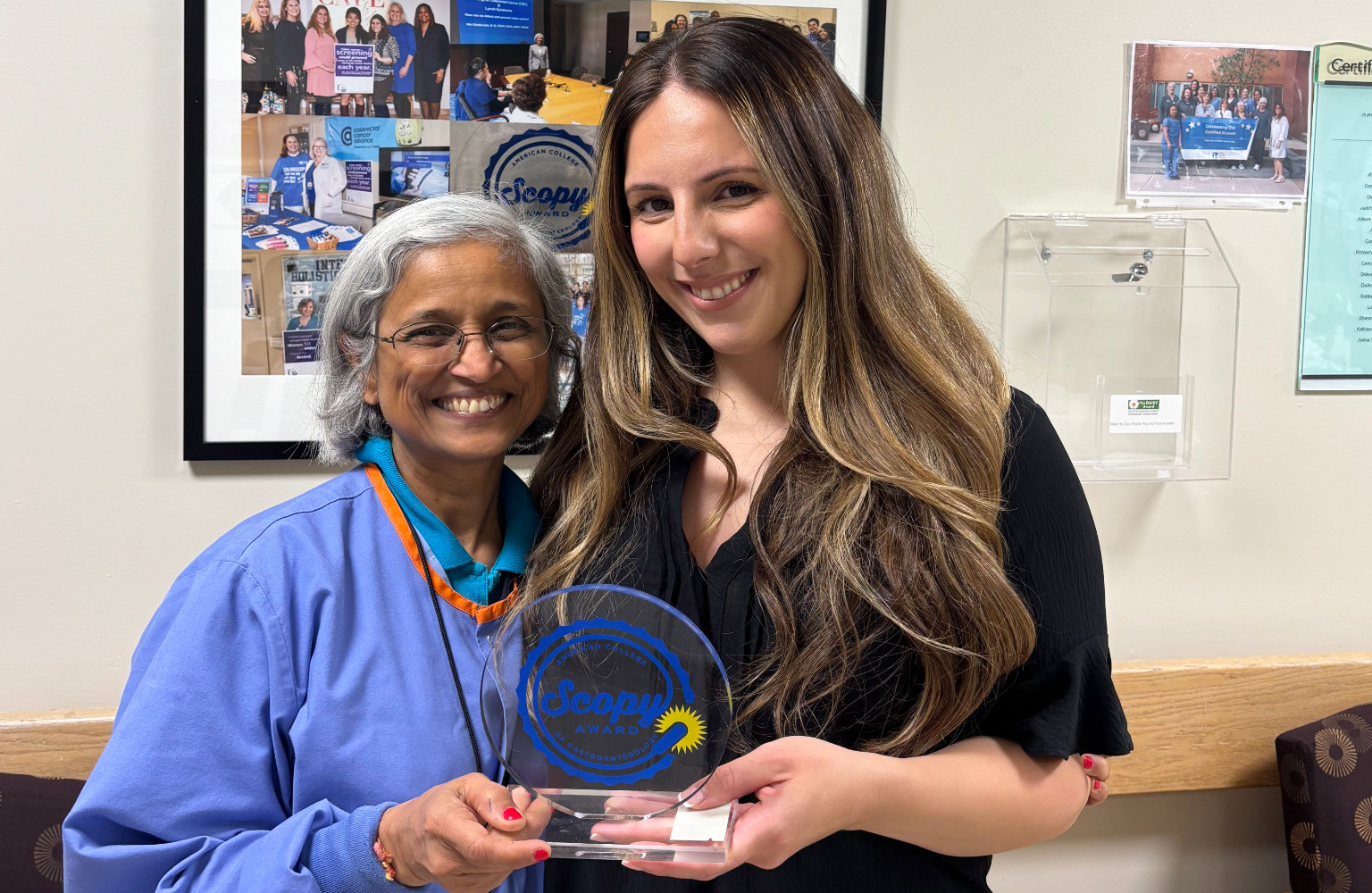
The Valley Hospital has recently received the SCOPY “Staying Strong & Scoping On” Award by the American College of Gastroenterology.
The award seeks to honor excellence in colorectal cancer outreach and prevention and was presented during the ACG 2025 Annual Meeting in Phoenix.
This award from ACG recognizes the achievements of ACG members in their community engagement, education, and awareness efforts for colorectal cancer prevention. ACG members submit examples of projects and programs to be considered for the award.
The Valley Hospital offers a Fast-Track Screening Colonoscopy program, where eligible patients can schedule a colonoscopy without having a pre-procedural visit with a gastroenterologist. Patients are screened over the phone by an advanced practice provider (APP) to ensure they are eligible for the program. preference. Since its inception in 2018, the Valley’s Fast Track Screening Colonoscopy program has proudly screened more than 1,800 patients.
Valley Health gastroenterologist Sita Chokhavatia accepted the award.
“We are honored to receive this award for the work we are doing to educate individuals about colorectal cancer, especially the younger generation,” she said. “Valley Health System looks forward to continuing to educate the community about the importance of colorectal cancer screening and prevention.”
Throughout February and March of 2025, Valley held several events to promote awareness and further education of colorectal cancer. This included tabling events at local grocery stores, middle schools, malls, and The Valley Hospital, as well as presentations to high school students.
The project, titled “Prevent Young, Protecting Lifelong: Educating Younger Populations on the Importance of Colorectal Cancer Screening,” focused on the younger population due to the increased risk of colorectal cancer among younger individuals.
Haleh Pazwash of Valley Hospital explained the importance.
“It is crucial to educate younger populations. By engaging with schools and organizing events geared toward younger audiences, we can work toward shifting the trajectory of colorectal cancer and reducing its overall prevalence.”


