


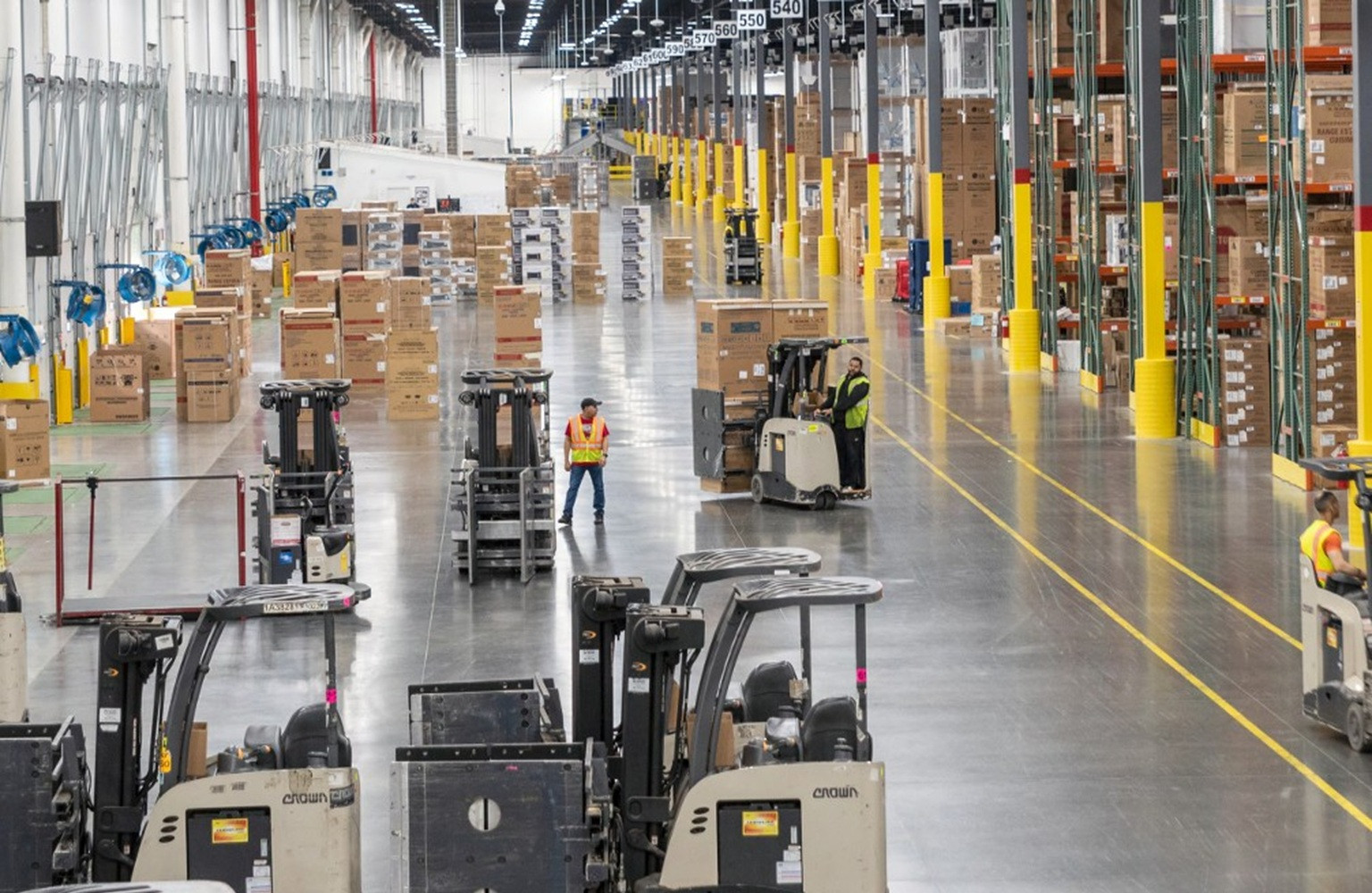
New Jersey, despite being one of the smallest states by land area, has long held a disproportionately large and vital role in the national and global economy. Serving as a crucial hub for the distribution of goods to the largest consumer market in North America, the state’s logistics industry—specifically its extensive network of warehouses and distribution centers—is the unsung hero powering its prosperity.
A new, comprehensive study by the Center for Advanced Infrastructure and Transportation (CAIT) at Rutgers University, commissioned by NAIOP, the Commercial Real Estate Development Association, and the Shipping Association of New York and New Jersey, has quantified this massive economic impact. The findings reveal the enormous value generated by these industrial facilities, confirming their status as a foundational pillar of New Jersey’s fiscal health.
The CAIT report analyzed the occupied warehouses and distribution centers in New Jersey as of the end of 2024, quantifying the immense ongoing economic value these operations generate annually for the state. The sheer scale of the industry’s contribution is staggering:
-
Total Jobs Supported: Over 1,350,000
-
This figure represents the total (direct and indirect) jobs supported by the industry in New Jersey, demonstrating a profound ripple effect throughout the economy.
-
-
Direct On-Site Jobs: Nearly 764,600
-
These are the workers employed directly within the approximately 956 million square feet of occupied warehouse and distribution space.
-
-
Business Activity: More than $295.8 Billion
-
This substantial number reflects the total value of industry production and sales generated annually by the operations.
-
-
Personal Income: Over $112.8 Billion
-
This total encompasses all forms of employment income, including wages, benefits, and proprietor income, flowing directly into New Jersey households.
-
-
Tax Revenue: Over $33.8 Billion
-
The industry generates enormous public revenue, with nearly $11.3 billion flowing directly to state and local governments, and almost $22.6 billion going to federal taxes.
-
These figures illustrate that the logistics sector is far more than just “industrial buildings along highways”—it is a complex, high-value ecosystem that drives employment, wealth creation, and public services across the Garden State.
The primary function of New Jersey’s warehouses and distribution centers is to maintain efficient and effective supply chains—the networks that move products from their origin to their final consumers. Because New Jersey is central to the largest consumer market in North America, these facilities are critical not just for the state’s residents, but for the entire Northeast region.
The report categorized New Jersey’s industrial buildings into three types, highlighting the complex activities that occur within them:
-
Transload and Storage Operations (25% of SF): Primarily handle bulk products (like lumber or steel) with minimal value-added activity and a smaller workforce.
-
Distribution Operations (50% of SF): These centers handle storage, distribution, and crucial value-added activities like assembly, picking and packing, cross-docking, and customization. Many single- or two-shift e-commerce operations fall into this category.
-
24/7 Operations (25% of SF): These facilities typically run three shifts multiple days a week, including complex e-commerce, food, and pharmaceutical fulfillment, requiring a much higher worker-per-square-foot ratio.
The analysis, which used a consensus estimation methodology informed by major industrial real estate developers, building occupiers, and engineering firms, confirms a massive occupied footprint of nearly one billion square feet of warehouse and distribution space, reflecting the immense volume of goods moving through the state.
The report emphasizes that as the Port of New York and New Jersey’s cargo volume and efficiency continue to grow, these warehouses and distribution facilities must adapt and expand. New and redeveloped facilities are not just a luxury; they are necessary to ensure the ports remain strong, stable economic drivers and maintain a steady flow of goods and services throughout the state and region.
This growth trajectory relies heavily on informed public policy. The study acts as a vital resource for state and local leaders, underscoring the critical connection between land-use, infrastructure, and development policies and massive economic outcomes.
Dan Kennedy, CEO of NAIOP NJ, stressed the need to share this information widely: “Our goal is to help New Jersey’s elected officials and media understand the real impact of these critical assets on the state and beyond.”
The key takeaway for policymakers is clear: decisions regarding infrastructure and development must emphasize the central importance of logistics to the state’s long-term prosperity. Supporting the continued strength and modernization of the warehousing and distribution sector is synonymous with supporting more than 1.35 million jobs and over $112 billion in personal income for New Jersey residents.
By embracing and leveraging its role as a key distribution hub, New Jersey can ensure its status as a leading economic powerhouse, delivering stability, jobs, and tax revenue for decades to come.


