


The Port Authority’s $45 billion 2026–2035 Capital Plan will deliver a transformation not seen in a generation, reinforcing the Port’s central role in the movement of people and goods across air, land, rail and sea.
The plan funds completion of ongoing megaprojects while launching the next wave of critical infrastructure projects to strengthen regional mobility and economic competitiveness.
It will also create more than 50,000 jobs, including 33,000 union construction jobs, generating significant economic activity across the bi-state region.
Here is a look at all that will bring, according to the Port:
AVIATION
The Port Authority is in the midst of a more than $50 billion wholesale remaking of its three major airports, anchored by historic public-private partnerships in cooperation with airline and development partners. Over the next 10 years, the agency will continue to deliver on its promise to transform its airports from worst to first. Its airports have already redefined world-class standards, with a best-in-class customer experience, inspiring civic architecture, robust public art programs, local concessions offering an unmistakable sense of place, state-of-the-art functionality, and cutting-edge technology. Port Authority airports have been transformed from experiences to be endured into destinations.
Newark Liberty International Airport
The 2017-2025 Capital Plan achieved: Major steps toward an entirely new Newark Liberty experience.
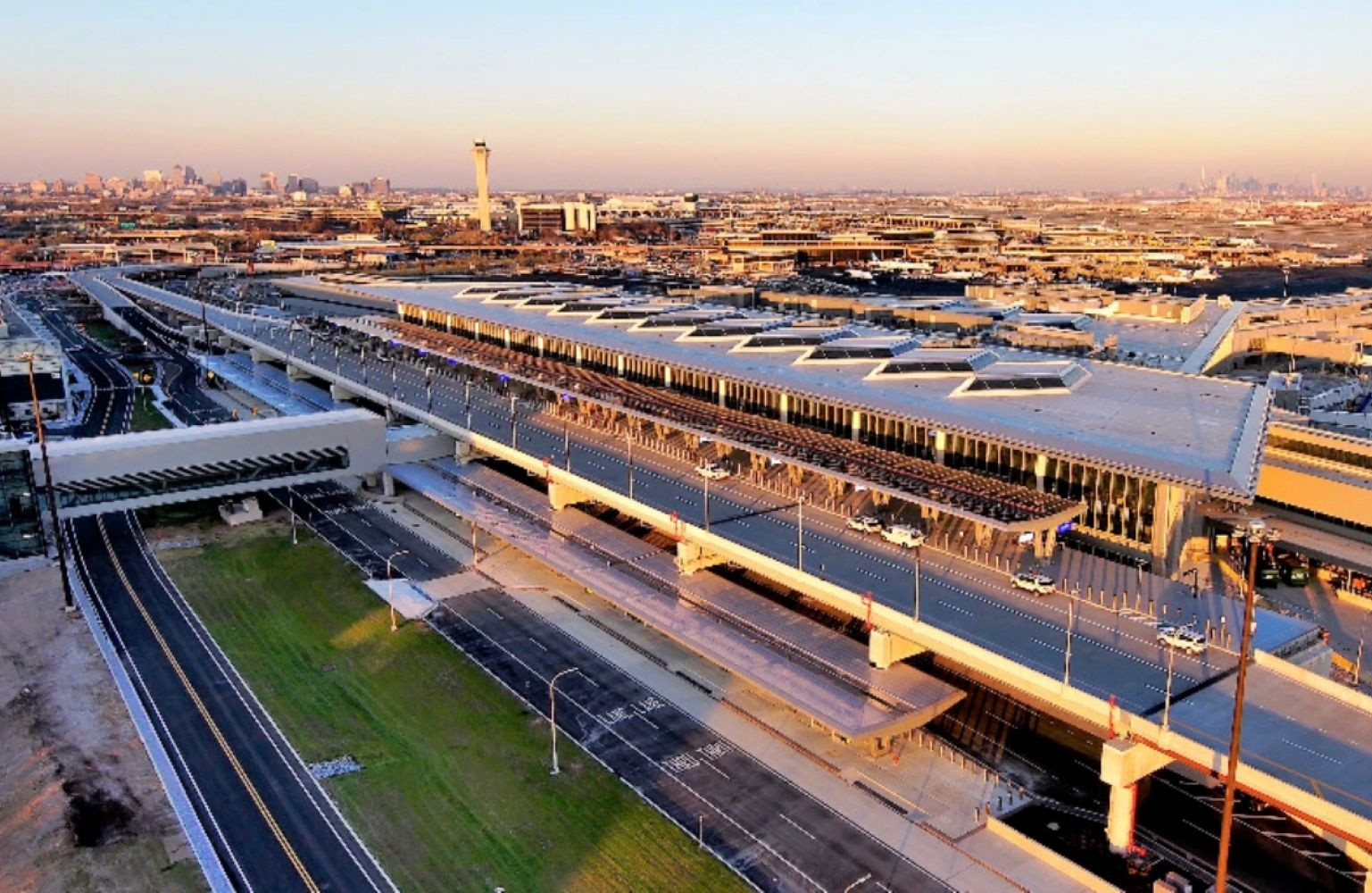
The stunning, airy and light-filled $2.7 billion Terminal A opened to acclaim, receiving recognition as the best new airport terminal in the world by Skytrax. The ambitious EWR Vision Plan was established, a roadmap to complete Newark Liberty’s transformation. Construction on a brand-new AirTrain Newark was designed, planned and launched.
The 2026-2035 Capital Plan will drive: Construction of a world-class gateway at Newark Liberty.
The plan provides funding for the Port Authority to establish a public-private partnership to design and build a new world-class, light-filled and inspiring Terminal B. The plan calls for expanding the five-star Terminal A, including design and construction work on additional gates for future growth, a critical step in the EWR Vision Plan. A brand-new, state-of-the-art $3.5 billion AirTrain Newark is currently under construction, improving reliability and capacity. Construction is also set to be completed in 2026 on a new community access point to the Airport Train Station, transforming airport and mass transit access for historically underserved areas of Newark and Elizabeth. The capital plan will also fund a third major taxiway to reduce flight delays and a new, simplified roadway network.
JFK International Airport:
The 2017-2025 Capital Plan achieved: An ambitious vision plan and construction to completely transform JFK into a world-class global gateway.
Construction began on the plan’s two anchor projects: the $4.2 billion Terminal 6 and the $9.5 billion New Terminal One. A $2 billion expansion at Terminal 4 and Terminal 8 delivered additional gates, new concessions and world-class customer amenities while consolidating airline operations. Construction also began on the completely redesigned roadway network, with about 70 percent now complete. More than $15 billion of the $19 billion is privately financed.
The 2026-2035 Capital Plan will drive: The delivery of a once-in-a-generation transformation of JFK.
The first gates of the world-class international terminals 1 and 6 are set to open in 2026, and further sections of the completely rebuilt, vastly simplified roadway network are set to come online. The plan also calls for designing and completing a transformation of AirTrain JFK with state-of-the-art new train cars to double capacity, alongside new world-class stations. At the central taxi hold lot, a new restaurant will open to serve taxi drivers. The plan also funds preliminary enabling work in the second half of the decade to replace aging terminals and infrastructure and accommodate demand-driven growth, as needed.
LaGuardia Airport
The 2017-2025 Capital Plan achieved: An unprecedented worst-to-first transformation.
Approximately $8 billion was invested in LaGuardia Airport across two innovative public-private partnerships at Terminal B and Terminal C, transforming the nation’s worst airport into its best with a wholesale world-class rebuild. Both spectacular, reimagined terminals were opened to the public, quickly setting the new standard for U.S. airport infrastructure and winning a series of prestigious, international awards.
The 2026-2035 Capital Plan will drive: Finishing the job to make a vastly improved experience at LaGuardia even better.
The plan calls for replacing the 1980s-era gate and boarding areas of Terminal A to meet demand and continued passenger growth. In consultation with community leaders and historians, the Port Authority will preserve the entire original Marine Air Terminal, including its rotunda and observation decks. The plan also funds a vastly improved fast, free and frequent LGALink Q70 bus service with a new bus lane on the BQE and new on-airport bus stop. Work will also be completed on a new taxi hold lot at Terminal B, with amenities including new restrooms and prayer space for drivers.
At all airports
The 2026-2035 Capital Plan funds “Operation Legal Ride” — a 10-year, $100 million investment to launch a new war on predators who harass airport passengers by offering illegal rides and steal business from hard-working drivers. The taxi community and the Uber-Lyft/for-hire vehicle community are part of the lifeblood of Port Authority airports. The Port Authority is committed to ensuring that airport customers receive transportation offers from only legitimate taxis and for-hire vehicle services.
This public safety initiative, developed in consultation with the NYC Taxi and Limousine Commission (TLC), will include new technology tools, such as license plate readers, AI-aided CCTV, and an expanded database of unpermitted drivers, as well as a meaningful enforcement and deterrence strategy aimed at eliminating repeat offenders.
Funding
The Port Authority derives most of its funding from a combination of private investments, cost recoveries, revenues from lease activity and fees. The agency works to maximize revenues from non-toll and non-fare sources, drawing on all available capital resources.
To further support the capital plan’s ambitious agenda, the plan aligns pick-up and drop-off fees for for-hire vehicles and taxis with peer airports.
TUNNELS, BRIDGES AND TERMINALS
The 2017-2025 Capital Plan achieved: The first major bridge construction since 1931 and critical steps toward a new Midtown Bus Terminal. The Bayonne and Goethals bridges were rebuilt and the $2 billion Restoring the George rebuilding program at the George Washington Bridge advanced to 60 percent completion. Additionally, the agency completely transitioned to cashless tolling, saving driving time, cutting emissions, and reducing crashes at toll plazas by 57 percent. At the Holland Tunnel, damage caused by Superstorm Sandy was repaired, and critical resiliency reinforcements were installed.
Finally, the Port Authority broke through longtime disagreements around a new Midtown Bus Terminal, designing the replacement, engaging the community, and launching construction. The existing Midtown Bus Terminal is a poster child of legacy infrastructure long past its useful life. Its planned replacement was long mired in controversy and lacked funding. After the Port Authority’s 2019 proposal received negative feedback from the community focused on removing buses from local streets, the agency revised its plan in 2021 with a complete redesign to incorporate public feedback. The project moved from one structure to three, doubling the cost. All project approvals and financing have been secured, alongside widespread support for the project. Ground was broken with early works construction underway.
The 2026-2035 Capital Plan will drive: The design, planning, construction and opening of the New Midtown Bus Terminal, a world-class, light-filled transit hub.
Additionally, the $11 billion investment will deliver direct, faster access to the Lincoln Tunnel, expanded terminal space, 21st century technology, and support for an all-electric fleet. For the community, buses will no longer circulate around community streets, street-facing concessions will enliven the community, and a new 3.5-acre green space will open, revitalizing the surrounding neighborhood. The once-in-a-century project will be completed in two phases: Phase One, including new ramps and the storage and staging facility, will be completed by 2030. Phase Two, including the new main terminal and green space, will be completed by 2035. The new, best-in-class Midtown Bus Terminal is a centerpiece of the 2026-2035 Capital Plan.
Funding
A vast majority of funding for the new Midtown Bus Terminal is derived from general Port Authority net revenues and bond/loan proceeds. To provide important additional support for the cost of building, operating and maintaining the world-class facility, the 2026-2035 Capital Plan updates carrier fees charged to bus companies operating at the facility, many of which have not changed in decades.
It also revises bus toll schedules, creating three new bus classes broadly characterized by potential for roadway wear and tear and generating congestion — minibuses, two-axle and three-axle — and institutes gradual increases in toll rates for these new classes from mid-2026 through 2034.
The 2026-2035 Capital Plan will drive: Extensive rehabilitation and setting the stage for next chapters.
Celebrating its 98th birthday in 2026, the Outerbridge Crossing will be the focus of a comprehensive $336 million rehabilitation program to keep the bridge strong and structurally sound in its final years ahead of the construction of a replacement crossing. The program includes work on the bridge’s structure, roadway and deck, all taking place over four years while keeping the crossing open to traffic. As part of the 2026-2035 Capital Plan, the Port Authority will begin planning for its future replacement to take place early in the 2036-2045 Capital Plan period.
The Lincoln Tunnel Helix is key to both the Lincoln Tunnel crossing as well as the Midtown Bus Terminal as the primary express bus route. An extensive rehabilitation program valued at $640 million intends to keep the roadway structurally sound in its final years ahead of the construction of a replacement. The program includes work on the bridge’s structure, roadway and deck, all taking place over five years while keeping the crossing open to traffic. As part of the 2026-2035 Capital Plan, the Port Authority will begin planning for its future replacement to take place in the 2036-2045 Capital Plan period.
Funding
To support critical investments at the agency’s crossings, the 2026-2035 Capital Plan phases out the current $2 discount for autos/motorcycles offered during off-peak hours. The phase-out will take place over four years ($0.50 per year) beginning January 2027. The Staten Island bridge discount program will remain unchanged. Truck E-ZPass discounts at off-peak hours will also remain unchanged. There is no change to the calculation of the peak E-ZPass toll.
PATH
The 2017-2025 Capital Plan achieved: Bold action and a $3 billion investment to make the 117-year-old system more reliable and resilient.
An outdated signal network was replaced with a $1 billion state-of-the-art system, allowing more trains to run closer together safely — one of the first railroads in the country to implement automatic and positive train control. The $430 million PATH Forward program is nearing completion, repairing aging stations, tracks and switches to deliver a smoother, more reliable experience for customers. The outdated Harrison station was expanded with a sleek, airy facility reflecting 21st century standards.
PATH purchased 72 new railcars, expanding the fleet by 20 percent. Platforms were extended to run nine-car trainsets on the Newark-World Trade Center line during peak hours, boosting capacity by 12 percent and reducing crowding in the system. Critical efforts to repair damage from Superstorm Sandy were completed, making stations and tunnels more resilient against future storms. New customer-focused features were introduced including a tap-to-pay fare payment system, updated countdown clocks, and the RidePATH app to enhance the customer experience.
The 2026-2035 Capital Plan will drive: One of the largest service increases in PATH history. This includes more frequent rush hour service, more frequent late-night weekend service, and reinstating direct weekend service: Journal Square-33 St, Hoboken-33 St, and Hoboken-World Trade Center. The plan also funds all new uptown tracks, making critical infrastructure investments to enable faster and more reliable service, and the installation of new state-of-the-art fare gates to combat fare evasion.
For the first time in 25 years, all four PATH lines will operate seven days a week in 2026. The 2026-2035 Capital Plan funds a series of service increases:
- Significant increase in weekend service to 33 St starting in 2026, with additional increases in 2027
- Direct weekend service on Journal Square-33 St and Hoboken-World Trade Center lines by mid-2026
- Increase in morning rush hour service on Hoboken-World Trade Center line in 2026
- Doubling Friday late-night service to match Saturday late-night service in mid-2026
- Additional trains during morning and evening rush hours and weekend daytimes on Newark-World Trade Center line in first half of 2027
As part of the 2026-2035 Capital Plan, the agency is committing to take action to prevent fare evasion. New state-of-the-art fare gates will reduce fare evasion and ensure everyone pays their fair share. The plan also funds technology, including CCTV and artificial intelligence, to identify patterns of fare evasion and develop targeted strategies to deter evasion and enforce fare payment.
Funding
PATH’s operations are unique among major U.S. transit systems in that it receives no dedicated state or federal funds. Fares cover only about 25 percent of the actual cost of each ride, and the Port Authority subsidizes the remaining 75 percent. To sustain operations and fund major service increases, the 2026-2035 Capital Plan includes a fare increase of $0.25 beginning in summer 2026, with additional $0.25 increases each January from 2027 through 2029.
SEAPORT
The 2017-2025 Capital Plan achieved:
Sustained leadership for the Port of New York and New Jersey. It is the second-busiest seaport in the country and the East Coast’s busiest seaport despite the pandemic’s supply chain shocks, while largely avoiding the congestion seen at other U.S. ports. The $1.7 billion effort to raise the Bayonne Bridge enabled the movement of larger, higher-capacity cargo ships. Terminal leases were restructured to drive private investment in best-in-class operations. The ExpressRail system was opened at the Port Jersey-Port Authority Marine Terminal, marking completion of the overall $600 million system across the seaport, supporting the rapid transfer of cargo from ship to rail to increase capacity and maintain market share growth.
Construction was planned, engineered and launched on a $220 million wholesale rebuild of the Port Street corridor to eliminate congestion and pinch points at the Newark-Elizabeth marine complex’s main northern entrance. The agency also gained full ownership of the Howland Hook Marine Terminal on Staten Island, expanding opportunity for cargo growth in the region. Finally, critical repairs were made following Superstorm Sandy to reinforce the seaport for a more resilient future.
The 2026-2035 Capital Plan will drive: Investments to maintain the port’s position as a “must-call” port on the East Coast.
More than $1.2 billion in private investments will modernize and expand container terminal operations and infrastructure. New container terminal lease requirements also aim to drive investment in improving the trucker experience and transitioning to sustainable port operations, including electric cargo handling equipment. Plans are underway to further strengthen rail operations to increase fluidity and capacity.
The agency is also advancing deepening of the harbor to 55 feet in cooperation with the U.S. Army Corps of Engineers to enable the safer and more efficient movement of larger, high-capacity cargo vessels. Wharves and berths, some over 60 years old, will get restored or replaced to ensure long-term vitality through future growth in operations. These investments protect regional jobs, strengthen trade, and support national economic security, keeping the port competitive and the region’s economy moving.
WORLD TRADE CENTER
The 2017-2025 Capital Plan achieved: Major contributions toward the revitalization of Lower Manhattan.
The Port Authority and its private partners completed 3 World Trade Center, and One World Trade Center was established as a hub for technology and media companies, with 95 percent occupancy. The PAC NYC opened to the public to widespread acclaim. Additionally, the rebuilt St. Nicholas Greek Orthodox Church and National Shrine reopened, the only house of worship destroyed in the Sept. 11 attacks. The Port Authority has also planned and implemented unique and highly successful event programming on the campus, including local food markets and a beer garden, live sports watch parties, yoga and wellness classes, and riveting public art.
The 2026-2035 Capital Plan will fund: Continued efforts to ensure that the World Trade Center remains a resilient, world-class destination and driver of downtown economic development for decades to come.
The Port Authority aims to complete the World Trade Center campus with buildouts of Tower 2 and Tower 5, while making strategic investments to maintain One World Trade Center as a Class-A office building that continues to attract high-quality tenants.


