


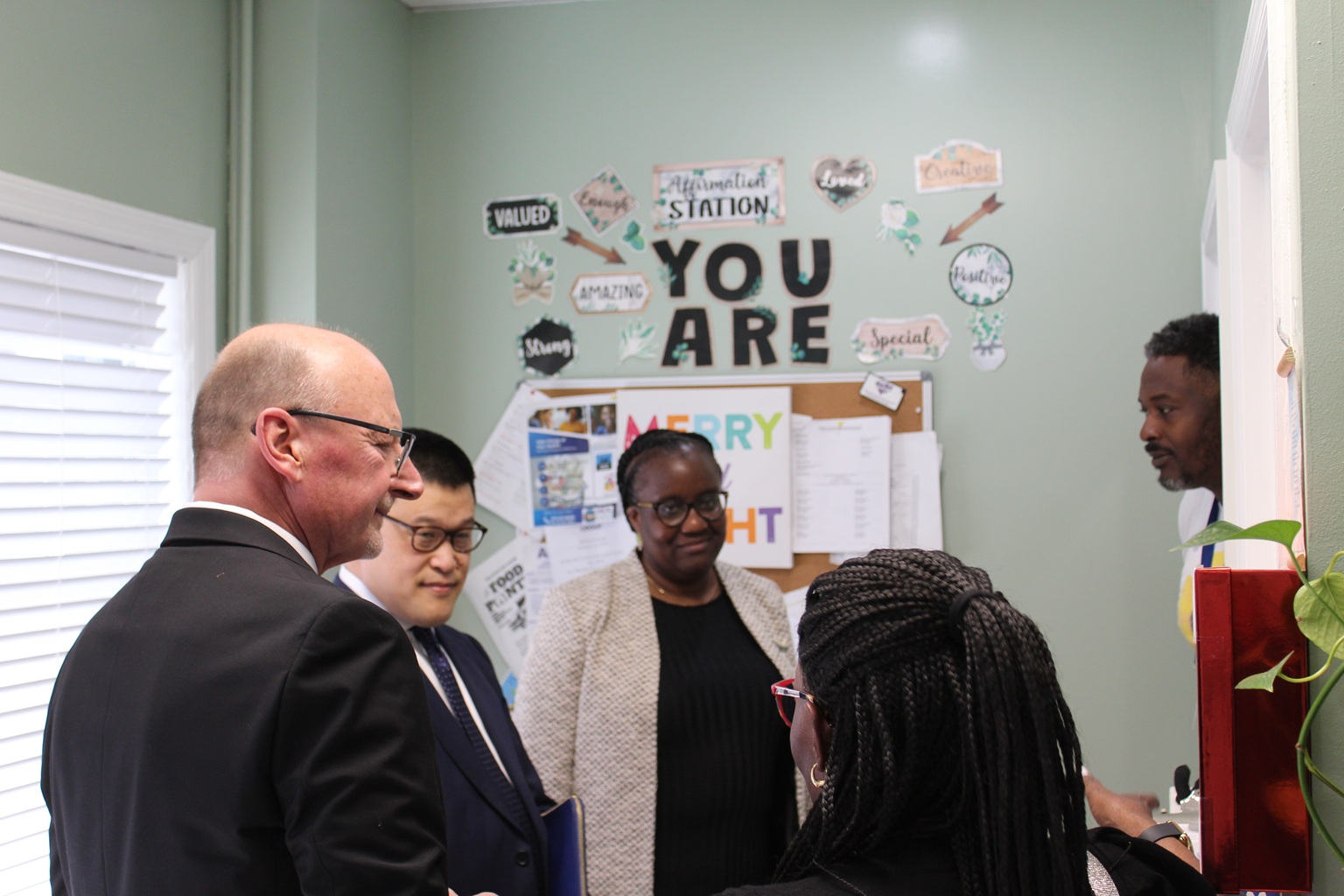
In his first official visit to a treatment provider since taking the helm of the New Jersey Department of Human Services, Commissioner Dr. Stephen Cha toured Integrity House in Newark late last month.
Accompanied by Deputy Commissioner for Health Services Valerie Mielke, Cha’s visit signaled the Sherrill administration’s focus on integrated behavioral health at a moment of significant fiscal uncertainty. The tour comes as New Jersey officials brace for potential federal funding challenges stemming from proposed Medicaid cuts under H.R. 1, which could implement stricter work requirements and impact continuous coverage for the state’s most vulnerable residents.
Firsthand look at integrated recovery
 Integrity House, a nonprofit with a 55-year history in Newark, serves as one of the state’s largest licensed providers of mental health and substance use disorder services. The Commissioner’s tour covered a cross-section of “boots-on-the-ground” recovery tools:
- Certified Community Behavioral Health Clinic (CCBHC): A walk-in facility at 1091 Broad Street providing 24/7 crisis stabilization and primary care screening.
- Mobile Community Care: A specialized vehicle that brings medication-assisted treatment (MAT) and recovery support directly to individuals experiencing homelessness.
- Integrity Wellness Center: A no-cost harm reduction site offering naloxone, HIV/Hepatitis testing, and peer support.
“Every day, we see how recovery takes shape in real life. It happens in communities, in neighborhoods, and in the moments when someone is able to access the care,” Robert Budsock, president and CEO of Integrity House said.
During the visit, leadership at Integrity House, including Budsock and Chief Clinical Officer Eman Gibson, highlighted the specific risks posed by federal legislative changes. Of particular concern is the Pregnant and Postpartum Women’s (PPW) Residential Treatment program.
This high-need program allows women to live in a residential treatment setting with their non-adult children while accessing MAT, pediatric care, and employment readiness training. Under proposed federal Medicaid cuts, whole-family services like these—which often require more intensive funding—are considered to be at the highest risk.
Cha and Mielke spent time speaking directly with Integrity House clients. These interactions provided the state’s top health officials with a direct look at how Medicaid-funded programs facilitate the path from instability to recovery.
“Commissioner Cha and Deputy Commissioner Mielke’s visit speaks to the critical role that organizations like Integrity House play,” Budsock added. “As our state prepares to navigate significant federal funding challenges, visits like this one remind us that the strongest solutions come from government and community providers working together.”


