


The trade relationship between Mexico and New Jersey is one of the strongest — and biggest — of all American states. Last year, it produced $11.5 billion in economic activity.
Two key voices — one on each side of the border — say that relationship is poised to grow in a deeper and more intentional way, driven by Puebla, one of Mexico’s most dynamic states, and by a growing network of Mexican and Mexican-American business owners in the region.
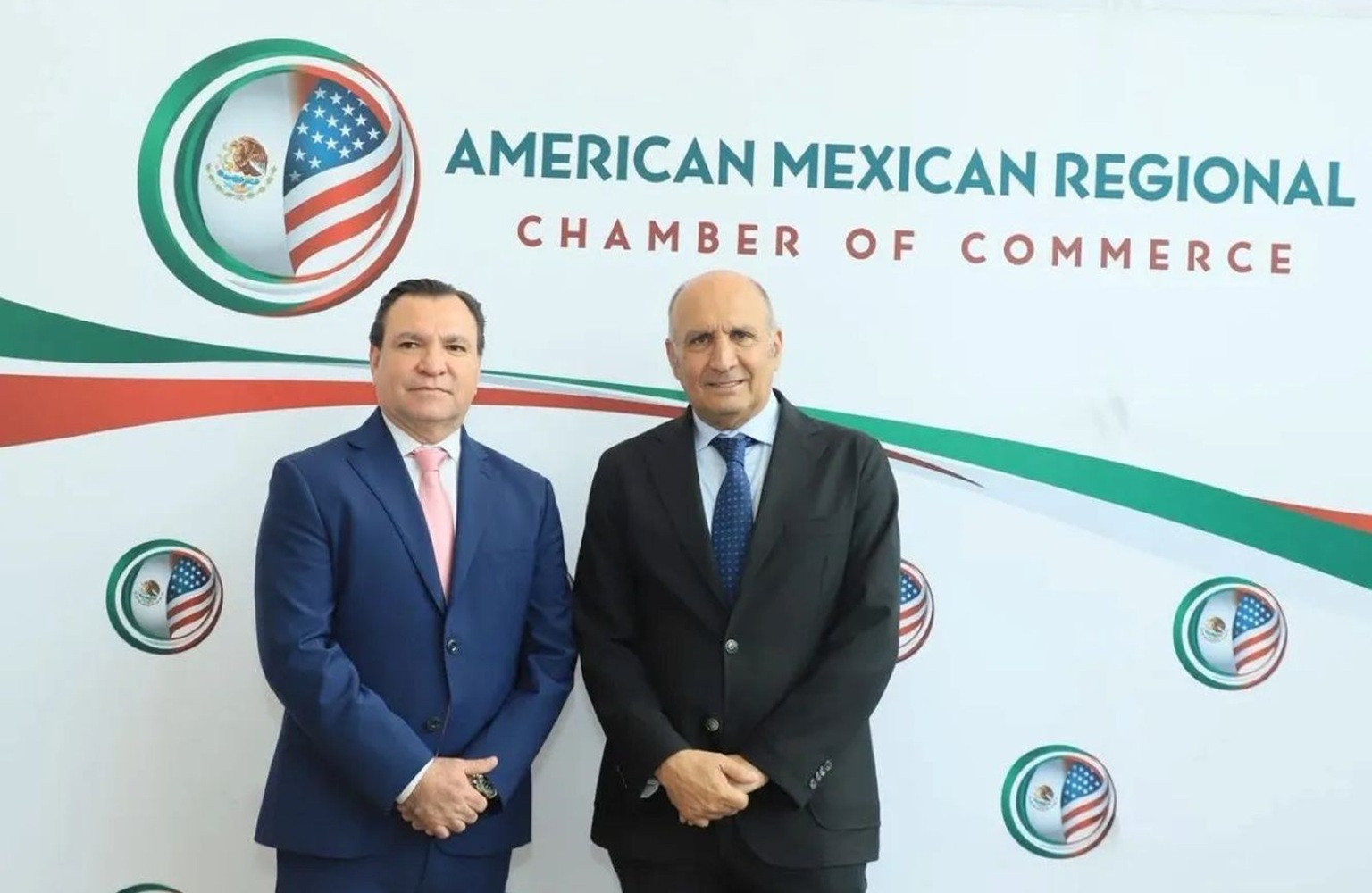
That was evident during the one-year anniversary party of the American Mexican Regional Chamber of Commerce Sunday in Andover.
In an interview conducted through a translator, Víctor Gabriel Chedraui, head of the Ministry of Economy and Labor in Puebla, said New Jersey is uniquely important because of the deep human ties that already exist.
“The most important thing,” he explained, “is the amount of people from Puebla who live in New Jersey, and the amount of people in Puebla that want to connect to existing businesses in New Jersey, to send products that are produced in Puebla.”
That constant back-and-forth — Poblanos in New Jersey wanting products from home, and producers in Puebla eager to reach them — has led officials to think differently about the Garden State. It’s not just another U.S. market; it’s a natural extension of Puebla’s own economic ecosystem.
To take advantage of that, the state has been working with business leaders on branding and market access. One concrete example Chedraui cites is a Puebla-based label they are pushing in the U.S.
“They have the products,” his translator noted, “they create something that is called Puebla Cinco de Mayo, which is a Puebla-based brand that they want to sell to customers in the U.S.”
 Getting it distributed in New Jersey is a goal — and one of the reasons Chedraui came to the event.
***
The biggest bottleneck in the effort to increase trade between Mexico and New Jersey is getting those products into the hands of wholesalers, distributors and retailers who already know the New Jersey and East Coast markets.
That is where the new American Mexican Regional Chamber of Commerce comes in.
Chedraui sees it as a critical connector between producers in Puebla and business owners in New Jersey who already have the customer relationships.
“This chamber will help them to expedite the process, because the main producers, the main distributors and the main restaurants participate in this chamber,” he said. “It will facilitate things, so that the products arrive immediately.”
In other words, the chamber plugs Puebla directly into the people who already have access to the market, solving what Chedraui called the “most important challenge or bottleneck” his exporters faced.
Read more:
- One year in, the American Mexican Regional Chamber has found its voice
- 10 things about … trade with Mexico
Finance is another place where cross-border partnerships can be transformative.
“It’s hard to finance a business in Mexico,” he acknowledged. “But if they connect a business in Puebla with a business here, they can find the finance here in order for them to grow together.”
That pairing — Mexican production with U.S. capital and market knowledge — is at the heart of Puebla’s strategy for turning migration ties into shared prosperity.
It’s a strategy many states in Mexico — and many companies in New Jersey — are using.
***
Most of the largest Mexican-owned companies, such as Gromex, Don Martin, El Tio and La Providencia are manufacturing goods in Mexico, importing them and wholesale distributing them with their own vehicle fleets and own delivery drivers.
Most cover the tri-state area or beyond. La Providencia, for instance, covers five states with direct store delivery.
And Puebla is just one of the many states that the AMRCC represents, as it has members connected to from Oaxaca, Guerrero, Jalisco, Estado de Mexico and Veracruz.
AMRCC President Francisco Del Toro said the hope is for the chamber to be a gateway for those states and its brands to penetrate the tri-state area.
Mariana Díaz, Consul of Mexico in New Brunswick, agrees with the business plan. And she is just as emphatic about the role the chamber is playing.
“I believe it’s an essential collaboration,” she said. “I see the chamber as a partner. I am really proud of what they’ve done during the last year, because it’s not just talking about what we’re going to do. It’s about seeing clear results.”
What impresses her most is how the organization has pulled together a community that was often fragmented.
“They’ve united the community, the Mexican community, that is thriving and building businesses and making businesses better,” she said. “They’re giving them tools to make their businesses grow.”
***
The chamber is deliberately regional, covering four states instead of stopping at any one border. Díaz said that broader footprint matches how commerce really works.
“I like the idea that it’s four states,” she said. “It’s not like trade ends at the border.”
Diaz credits chamber president Javier Del Toro with having “a clear vision of what he wanted this chamber to be about” from the start.
Díaz also has been working to connect the chamber to Mexico’s wider diplomatic network.
“I’ve been very fortunate to introduce them to my colleagues at the Consulate of Mexico in Philadelphia, the Consulate General of Mexico in New York, and the one in Boston,” she said. “It’s good to have that partnership between the Mexican government and the consular network and the chamber, because when we work together, we can do bigger and better things.”
Part of those “bigger and better things” involve changing how people see Mexican businesses.
“What impresses me the most is bringing the understanding that Mexican businesses are more than just a restaurant,” she said. “It’s also about the food distribution, all the
products that are coming from Mexico and that come through Passaic and are distributed all over the United States and Canada.
“You also have warehouses, transportation and distribution; I don’t think people really know about all of that.”
The numbers are striking, she said. That $11.5 billion in trade didn’t happen by accident.
“These businesses are the engine of this trade relationship,” she said. “To see how they’re working together, making everyone stronger, is just wonderful.
Both Chedraui and Díaz are keenly aware that all of this is unfolding in a difficult political environment, with debates over tariffs, deportations and immigration roiling Mexican and Hispanic communities.
Chedraui chooses to see that adversity as a catalyst rather than a deterrent.
“All the problems, all of the challenges can become opportunities if we all work together,” he said.


