


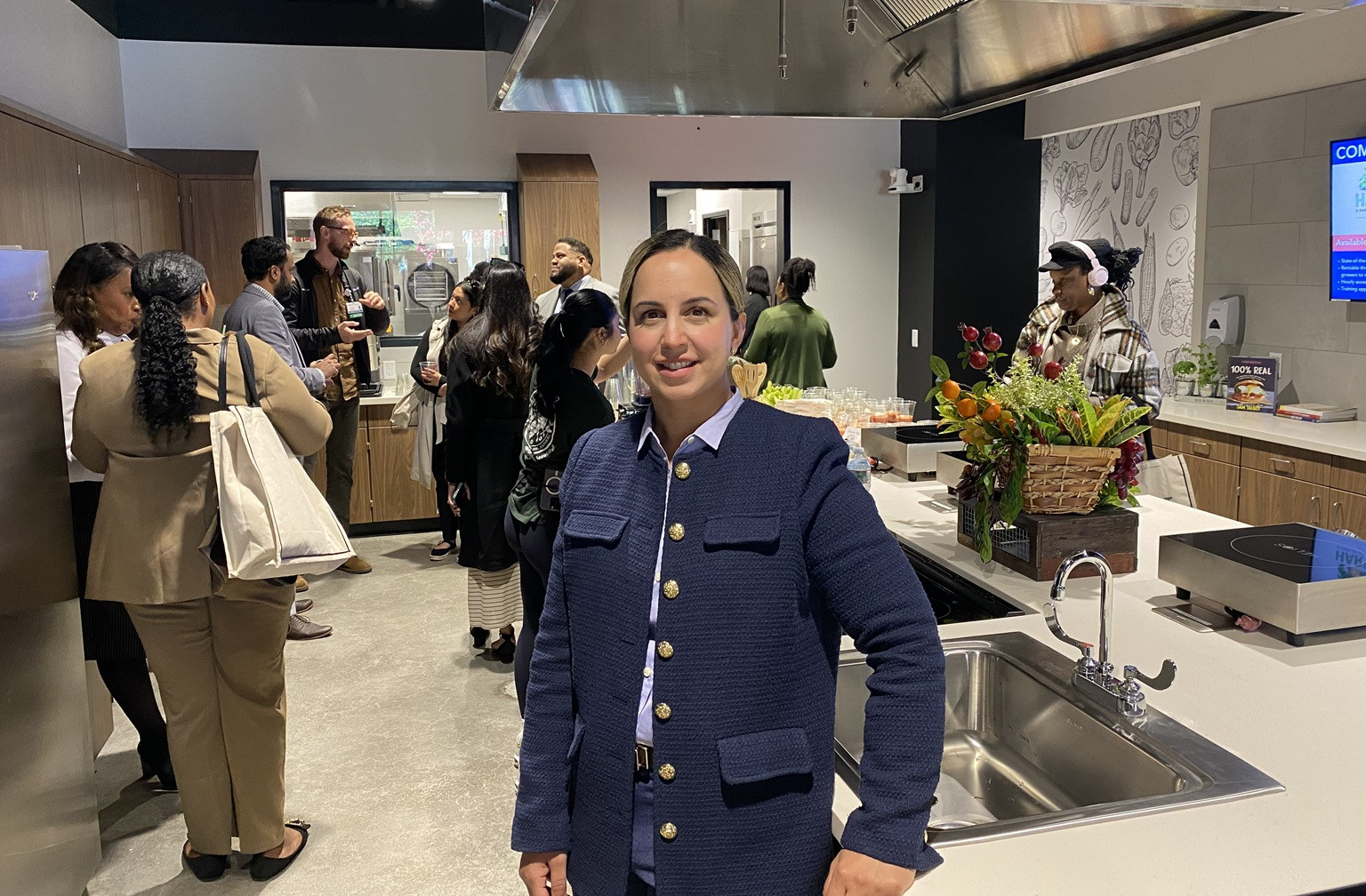
There’s a school-age kid arriving on a field trip, not only trying fresh food but learning how to make it.
There’s a young food entrepreneur who can’t scale their small business, now taking advantage of the commercial kitchen.
There’s an elderly person with health issues, meeting with a registered dietician to understand how food is the best medicine for managing those conditions.
There’s a single mom or lone caregiver not only struggling to make healthy foods, but obtain them — now getting registered for SNAP benefits.
Balpreet Grewal-Virk of RWJBarnabas Health said it’s difficult to describe the ideal person walking into Harvest: Farm to Community Center in Newark because the transformative location aims to serve so many people in the community.
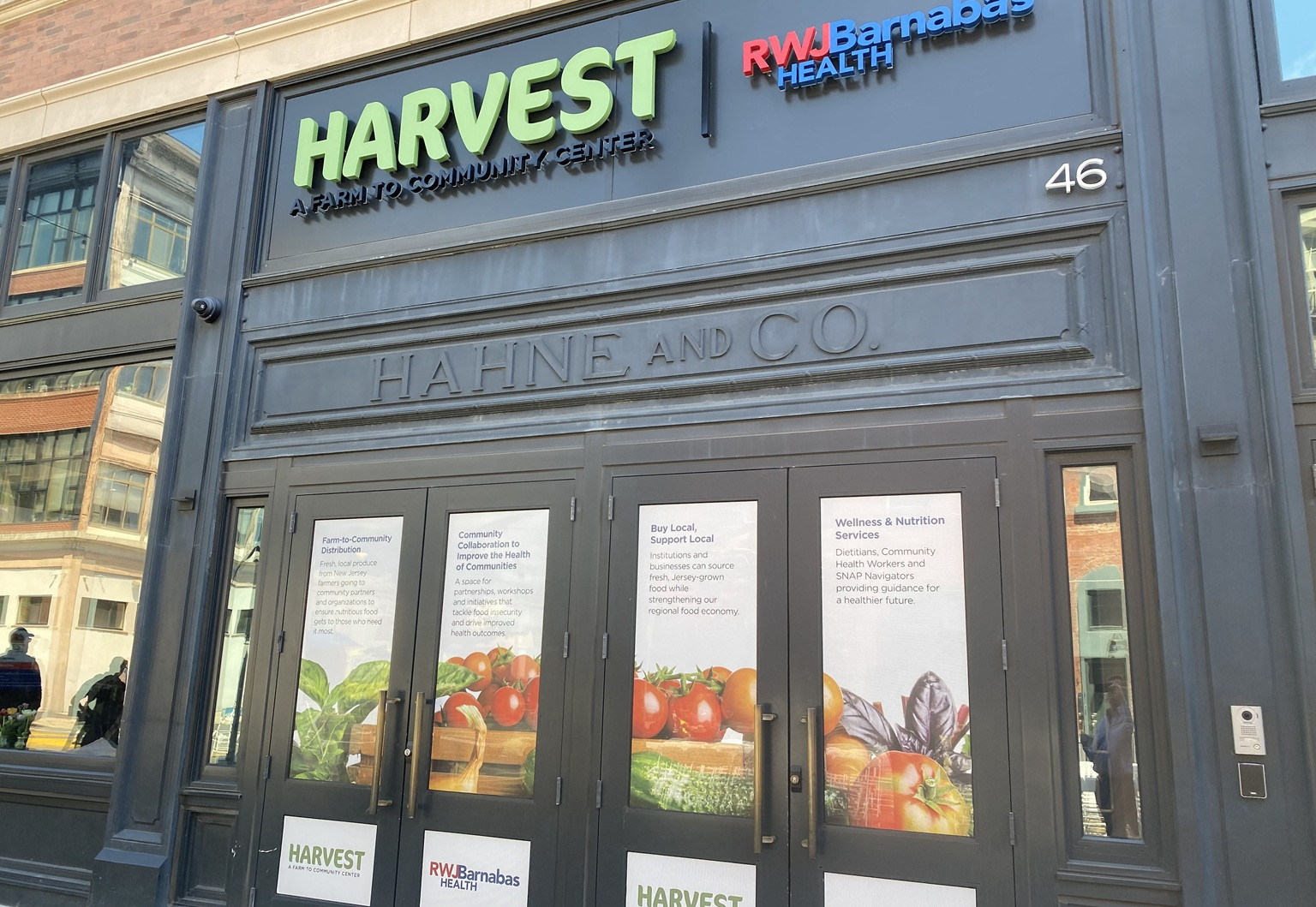
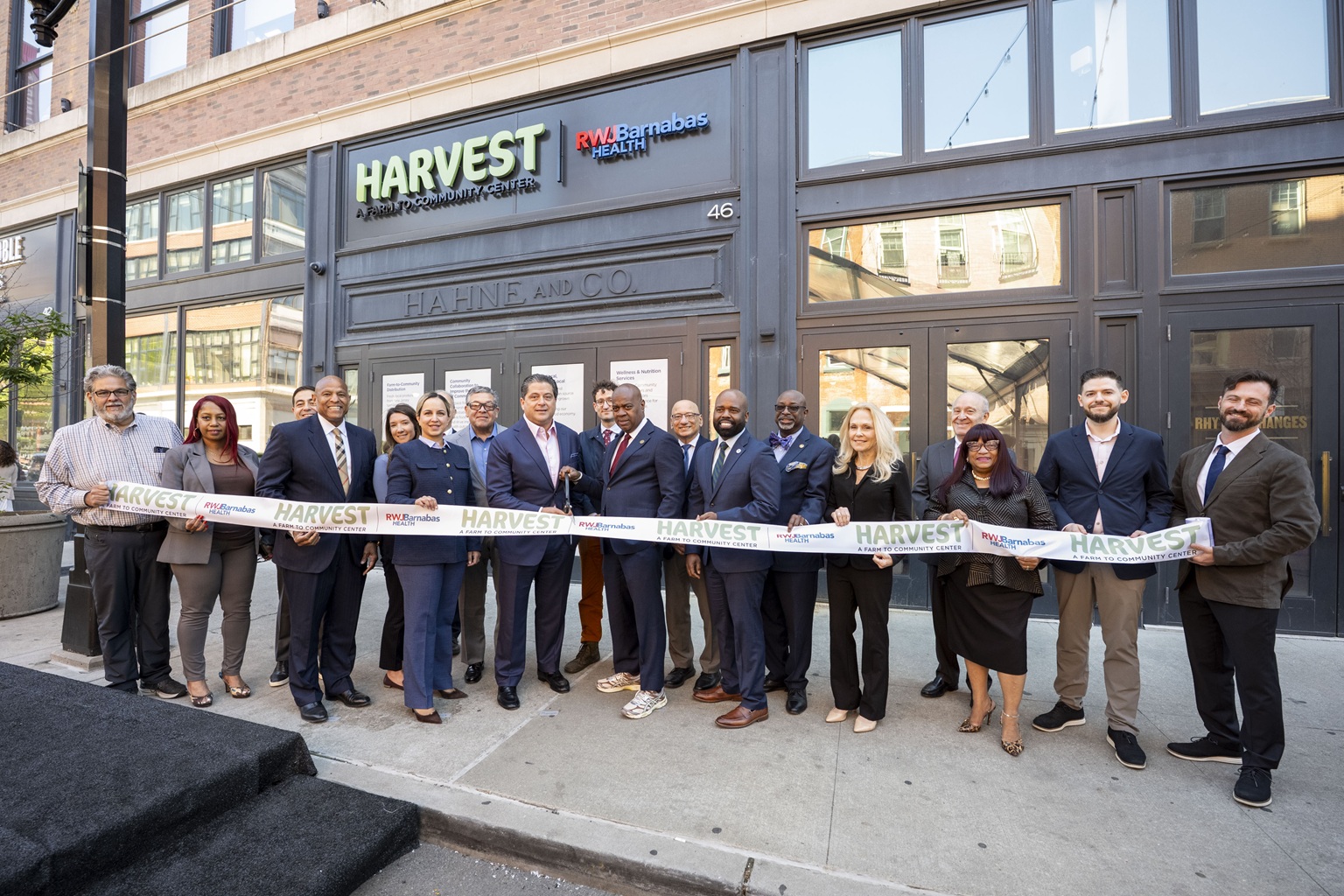
Grewal-Virk, senior vice president of Community Health at RWJBH, tried to sum up the potential of the facility, located in the Hahne & Co. building on Halsey Street in Newark, during its grand opening Monday.
“What makes this unique for the community is that we are not just feeding people, we’re teaching people,” she told BINJE.
“That can be a grade schooler learning how to cut strawberries and bananas and make a smoothie — and realize it’s very good. Or it could be someone meeting a dietician to take the first steps to a healthier lifestyle while learning how to access their SNAP benefits.
“It can be an entrepreneur using our kitchen and learning how to grow their business.
“The only goal is to serve the community and make them healthier.”
***
Harvest is part of RWJBH’s multi-million-dollar Our Healthy Communities initiative, which addresses the social determinants of health like no other programs.
CEO Mark Manigan said the program not only is the first of its kind in the state, it’s counterintuitive — and he half-jokes that if Harvest is as successful as it can be, it will put RWJBH out of business.
But that’s OK, he said. It’s the only way to break a cycle in which health care needs — and life expectancy — can be predicted by your ZIP code.
“Harvest is a transformational space with the ability to redefine what a health system can and should do to ensure the wellbeing of the people it serves,” he said. “Whether as a hub where fresh foods will get out into the broader community or where local entrepreneurs will come to build their businesses, Harvest will be at the center of a healthier Newark and, with it, a stronger New Jersey.”
The entrepreneurial aspect of Harvest should be recognized, too.
Those using the commercial kitchen will have access to guidance on growing a business — and potential access to capital to do so.
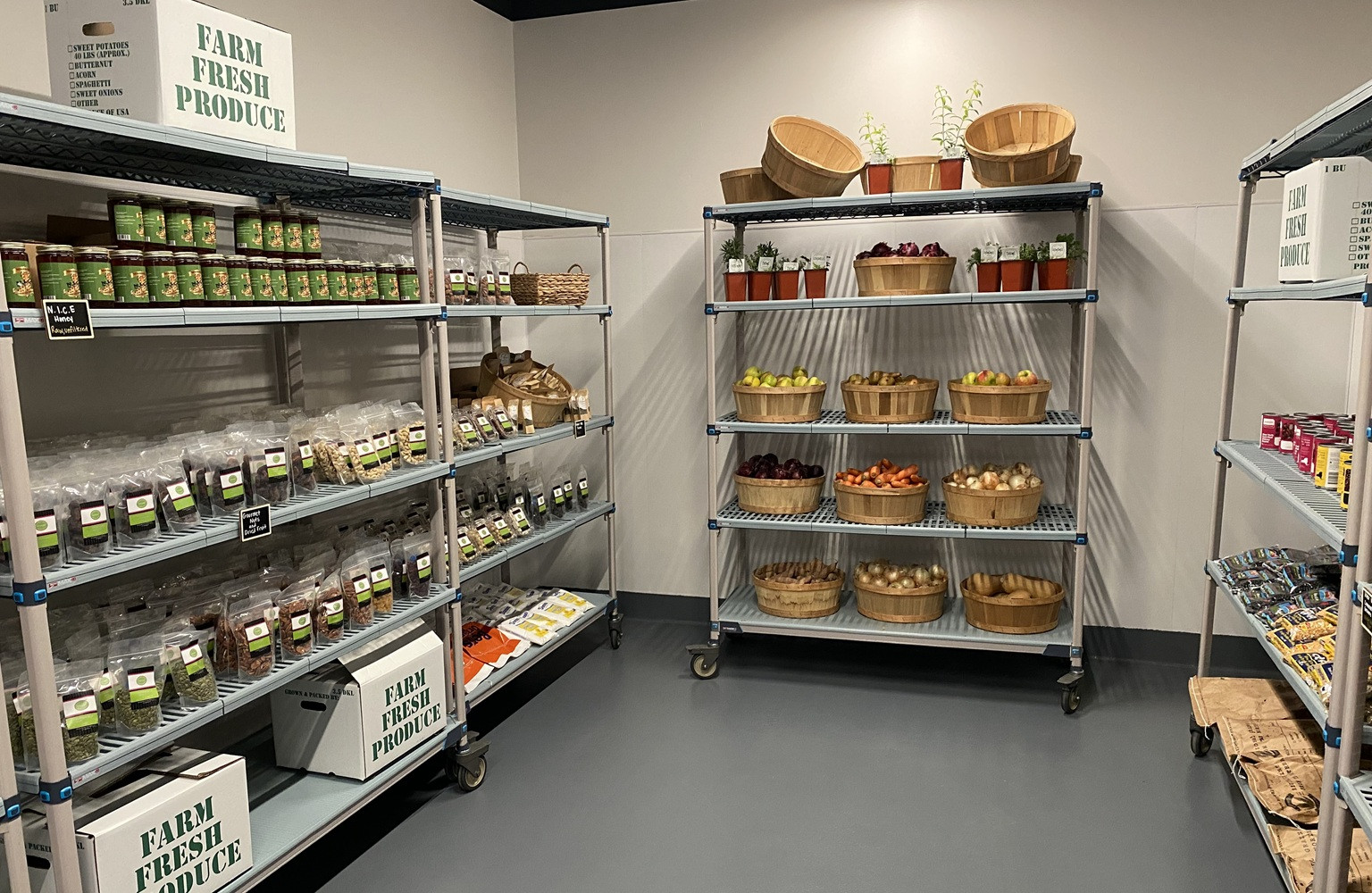
Then there’s the 2,100-square-foot distribution center, complete with cold and dry storage, that’s run by the Urban Agriculture Cooperative. It will collect and distribute fresh food from dozens of New Jersey farms on a daily basis.
In addition to helping nonprofits combating food insecurity and providing product for the center itself, the UAC will also bring more fresh food offerings to local restaurants, allowing them to serve healthier foods and potentially grow their businesses.
“This state-of-the-art space is the perfect home to further our work of creating a comprehensive, sustainable food economy in Newark,” UAC Executive Director and Co-Founder Emilio Panasci said. “RWJBarnabas Health has been a great partner in our mission — connecting farmers, institutions and families in order to support underserved food growers and consumers.
“From the kitchens to the wellness resources to the centralized location, Harvest is going to meaningfully advance our efforts and support the overall health of the greater Newark community.”
***
Grewal-Virk said UAC’s impact is tangible.
“In Newark, unfortunately, so many people only have access to not-so-healthy food,” she said. “We want to bring more fresh produce into those spaces.”
Access has a number of meanings here. The biggest challenge of programs in urban areas often is simply getting those in need to a facility.
Grewal-Virk said RWJBH has plans in place to address that.
The facility itself will have a number of vehicles to bring those in need to and from Harvest. There’s a partnership with Uber Health. And there are plans to bring school kids here on field trips — allowing them to experience healthy eating and hopefully take that experience back home.
“We have so many ways to get people here,” she said.
When they arrive, they will not find a one-taste-fits-all setup, either. Grewal-Virk said Harvest not only is sensitive to the various cultural differences among the Newark community, but it also celebrates them.
“If you know Newark, then you know that every ward is different,” she said. “There are many cultures, many backgrounds and we are super sensitive to that.
“We will work with you to make sure that we have options that are common and relatable to you and what your needs are.”
***
Newark Mayor Ras Baraka summed up the potential impact of Harvest in one sentence.
“This comprehensive initiative will change lives,” he said.
“Harvest will serve some of our city’s most vulnerable residents while driving economic development and promoting community health. There is nothing more important than ensuring the people of New Jersey’s largest city are given the proper tools and resources needed to thrive.”
Mark Dinglasan, executive director of the New Jersey Office of the Food Security Advocate, couldn’t agree more.
“Food insecurity is a highly complex socioeconomic issue with many interconnected challenges,” he said. “Accordingly, our programs, interventions and aspirations for community well-being must be just as highly interconnected. Harvest is a testament to what we can achieve and launch when we merge big thinking with bold and purposeful programming.
“Combining the agricultural aggregation of fresh, local produce with kitchen and programming space to create markets for farmers and neighbors to connect is a powerful vision that is now realized at Harvest.”
As with any program, funding is an issue.
There is no cost to use the facility – and it is open to residents beyond Newark’s city limits.
All of this only begs a question: Will there be other locations?
Jersey City, Paterson, Elizabeth, Trenton, Atlantic City — any urban area could benefit from such a program.
The key is state funding to help support facilities such as these.
“This can definitely be replicated anywhere in the state,” Grewal-Virk said.


