


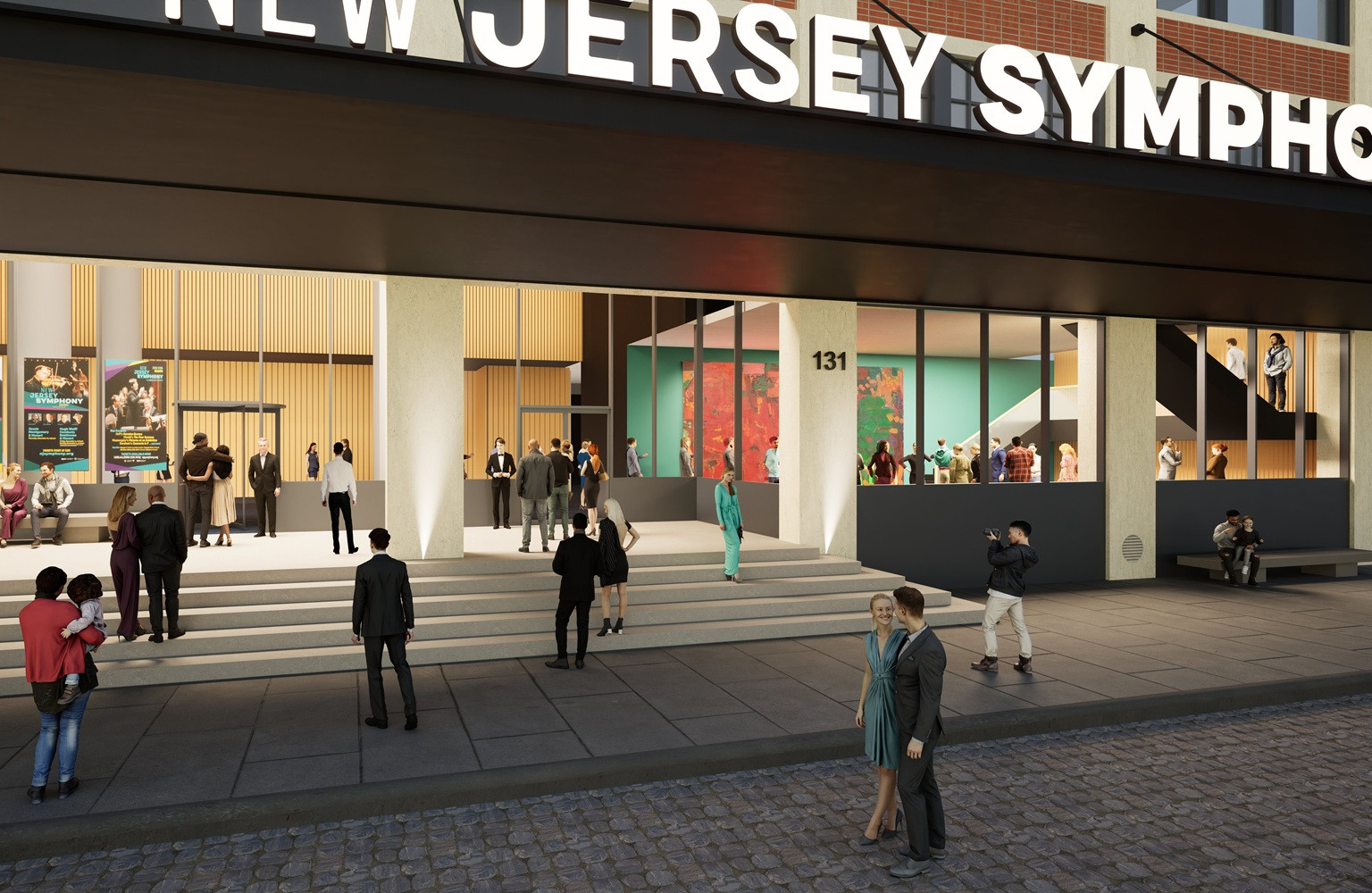
The New Jersey Economic Development Authority (NJEDA) has paved the way for a transformative cultural shift in Hudson County, approving more than $29 million in tax credits to establish a permanent home for the New Jersey Symphony.
The funding, awarded through the Cultural Arts Facilities Expansion (CAFE) Program, will support the development of the Symphony Center at the Powerhouse Arts District in Jersey City. The project marks a historic milestone for the 104-year-old institution, providing its first-ever fully managed performance and administrative space.
Located at 151 Bay Street, the new Symphony Center is designed to be more than just a concert hall. The facility will feature:
- A 550-seat performance hall tailored for orchestral, jazz, and multimedia productions.
- Dedicated rehearsal and production suites to support the Symphony’s rigorous artistic schedule.
- Education and community hubs for year-round workshops, afterschool programs, and artist residencies.
The center is expected to host over 100 public performances annually, serving as a civic anchor in a neighborhood already known for its rapid residential and commercial growth.
The NJEDA’s investment is part of a broader strategy to leverage the arts as an economic engine. By placing a major cultural institution within walking distance of the PATH, Light Rail, and NYC Ferry, the state aims to drive foot traffic to local small businesses and enhance the quality of life for Hudson County residents.
“New Jersey’s booming arts and culture sector continues to create impactful economic opportunities,” said NJEDA Chief Executive Officer Evan Weiss. “Supporting institutions like the New Jersey Symphony catalyzes neighborhood vitality and supports high-quality jobs across the state.”
Founded in 1922, the New Jersey Symphony reaches over 140,000 people each year. While the Symphony remains deeply committed to its presence in Newark and other communities, the Jersey City move allows for a significant expansion in a region previously underserved by dedicated symphonic facilities.
“As the Symphony’s president and CEO, and as a resident of Jersey City, I am excited about the opportunities this new chapter creates,” Terry Loftis said. “With the NJEDA’s support, we can expand our performances and education programs into Jersey City while continuing our deep commitment to Newark and the rest of the state.”
Jersey City Mayor James Solomon hailed the move as a defining moment for the city’s cultural corridor. “The Symphony Center will be a world-class performance venue and a civic anchor,” Solomon said. “This $29 million commitment reflects exactly what’s possible when state and local partners align around a shared vision.”
The CAFE Program remains a cornerstone of New Jersey’s effort to revitalize downtowns. While the program is not currently accepting new applications, this award represents one of the largest efforts to date to ensure that world-class arts remain accessible and affordable for the state’s diverse population.


