


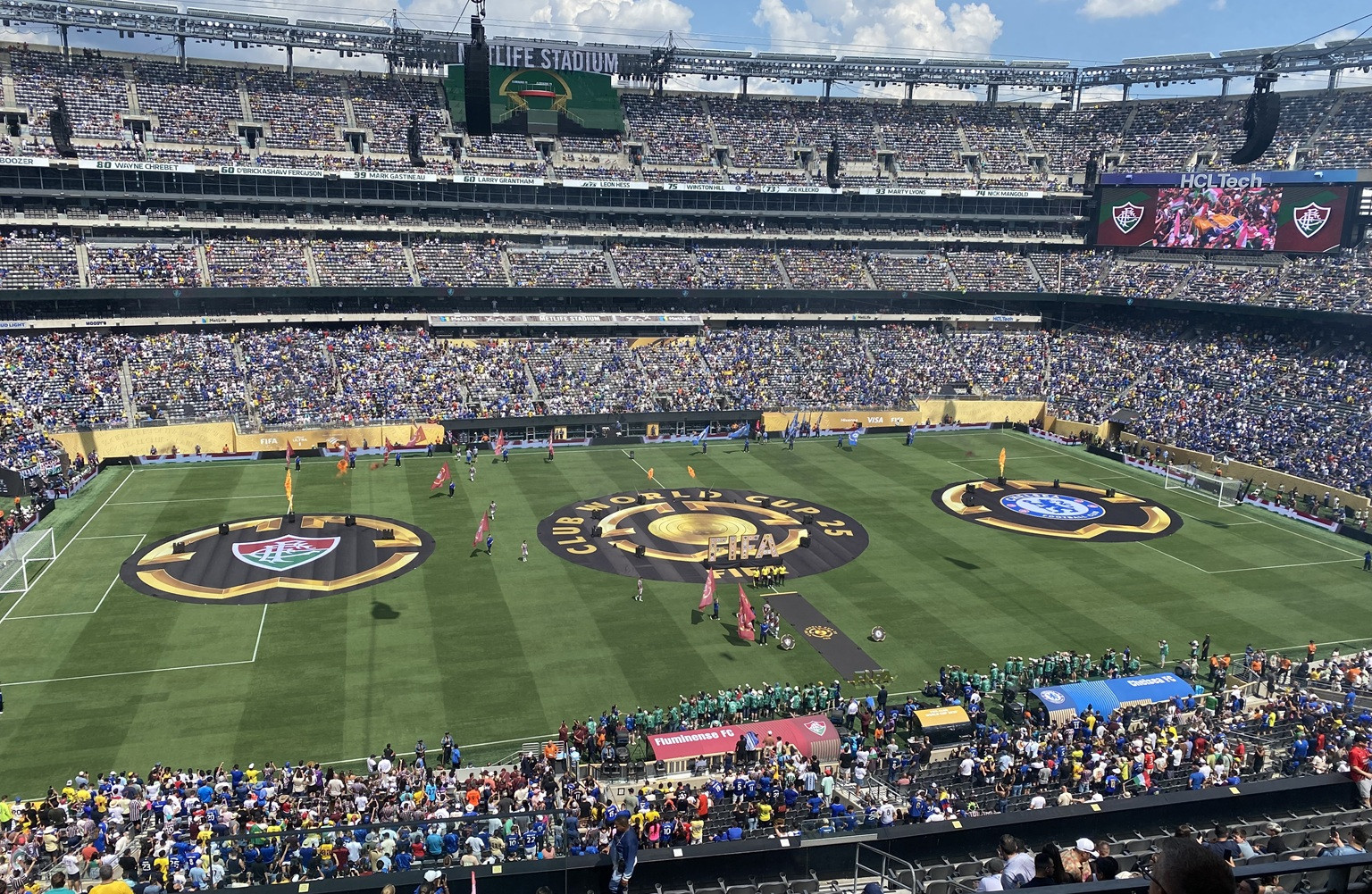
It’s easy to say Jim Kirkos will have good things to say about the Club World Cup at MetLife Stadium.
After all, as the longtime CEO of the Meadowlands Chamber of Commerce, he is supposed to be the region’s biggest cheerleader.
But if know Kirkos, you know he’ll tell it to you straight. You know he’ll be the first one to say the region didn’t activate itself properly when the Super Bowl came in 2014. And the first one to say failing to build a convention center continues to be a missed opportunity.
So, when he says he’s thrilled with how the Club World Cup is going, know he’s speaking the truth.
“This has been a perfect dress rehearsal for the 2026 World Cup,” he told BINJE, right before Chelsea clinched a spot in the final Sunday with a 2-0 victory.
“Every time we bring a big event here — especially a big international event — it’s a chance to improve on all aspects of our operation, whether it’s transportation, ticketing, parking, you name it.
“Every time we do these events we get better and better at it. That’s what we’re doing. That’s why this tournament is so important.”
The lessons are everywhere.
Kirkos said the Club World Cup is offering an opportunity for the area — and the patrons —to experience a new parking and perimeter setup.
Fans have noticed that the perimeter has moved well outside the stadium — a prelude to how it’s going to be when the World Cup plays eight matches, including the final, at MetLife Stadium next summer.
“We’re getting an understanding of what happens when you push the perimeter out,” he said.
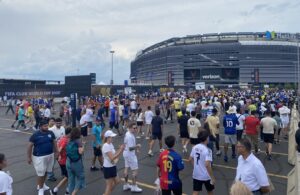
Fans are noticing the extreme summer heat, especially in the pedestrian walkway — which has been far hotter than it is for a fall football game. That’s why the area is rushing to build a bigger walkway.
And as for the limited parking this summer, that’s a prelude to next summer, when there will be no general admission parking.
Kirkos said it’s all part of the complex working together.
That means utilizing American Dream, which has proven to be a perfect pregame and postgame gathering spot for fans who arrive early — and want to escape the heat.
“We’re showing off all the assets of the region,” Kirkos said. “We’ve created a perfect confluence of venues in the complex.
“American Dream is learning how to activate itself before big events. They’re doing great. The place is packed. American Dream is helping visitors have a great experience.”
Indeed. Hours after the semifinal Tuesday, American Dream was still packed with patrons. It looked like a busy weekend. It figures to be the same today.
That experience certainly will lead to more visits, Kirkos said.
“Remember, it’s not always about the impact now,” he said. “It’s about the impact now, and the impact in the future.”
The immediate future unfolds in the next five days.
The second semifinal will be played Wednesday, when Real Madrid and Paris Saint-Germain determine which club will meet Chelsea in the final.
And while all the clubs — and fans — will return home after that. Kirkos said the lessons learned will remain. Yes, it will provide a roadmap for next summer’s World Cup. But it will mean so much more than that.
“A big event makes you think about all the ways your business can benefit from it,” he said. “Businesses need to understand that they can benefit from fresh ideas and activations even when there isn’t a big event going on. That’s a great lesson.”
Here’s another one. While the region clearly is better prepared to take advantage of the World Cup (as opposed to the Super Bowl), Kirkos said it must come with realistic expectations.
“Companies are not going to do a year’s worth of business in one month,” he said. “That’s just not realistic.
“What is realistic is understanding how use a big event to help your business now and in the future. That’s what this tournament is providing.”


