



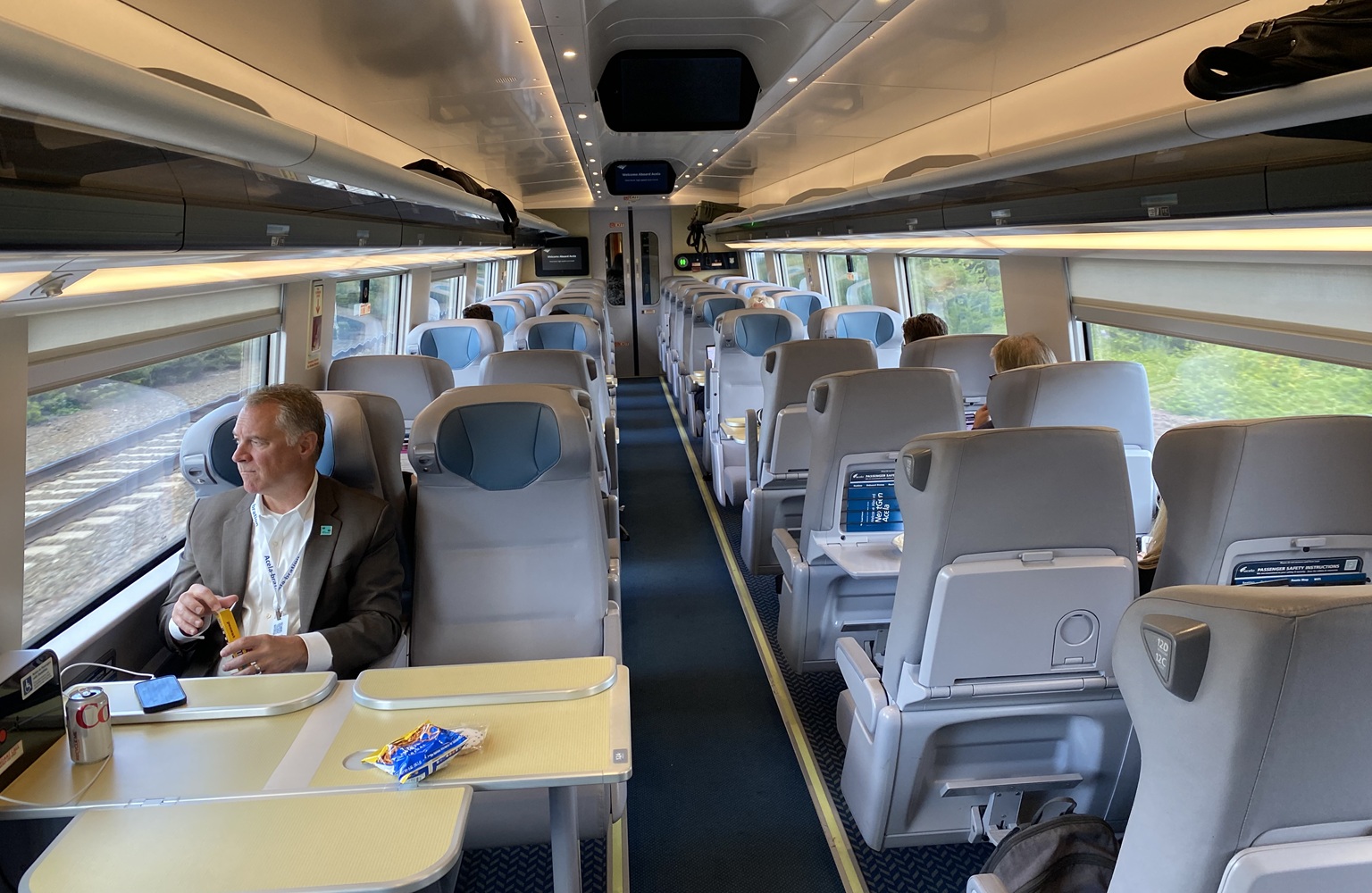
The first things you notice when you step aboard the NextGen Acela — bigger seats (created for comfort), wider aisles (appropriate for a premium cabin), modern workstations (equipped with 5G and all the needed outlets) and brighter interiors (with plenty of natural light) — let you know this is a new-era train.
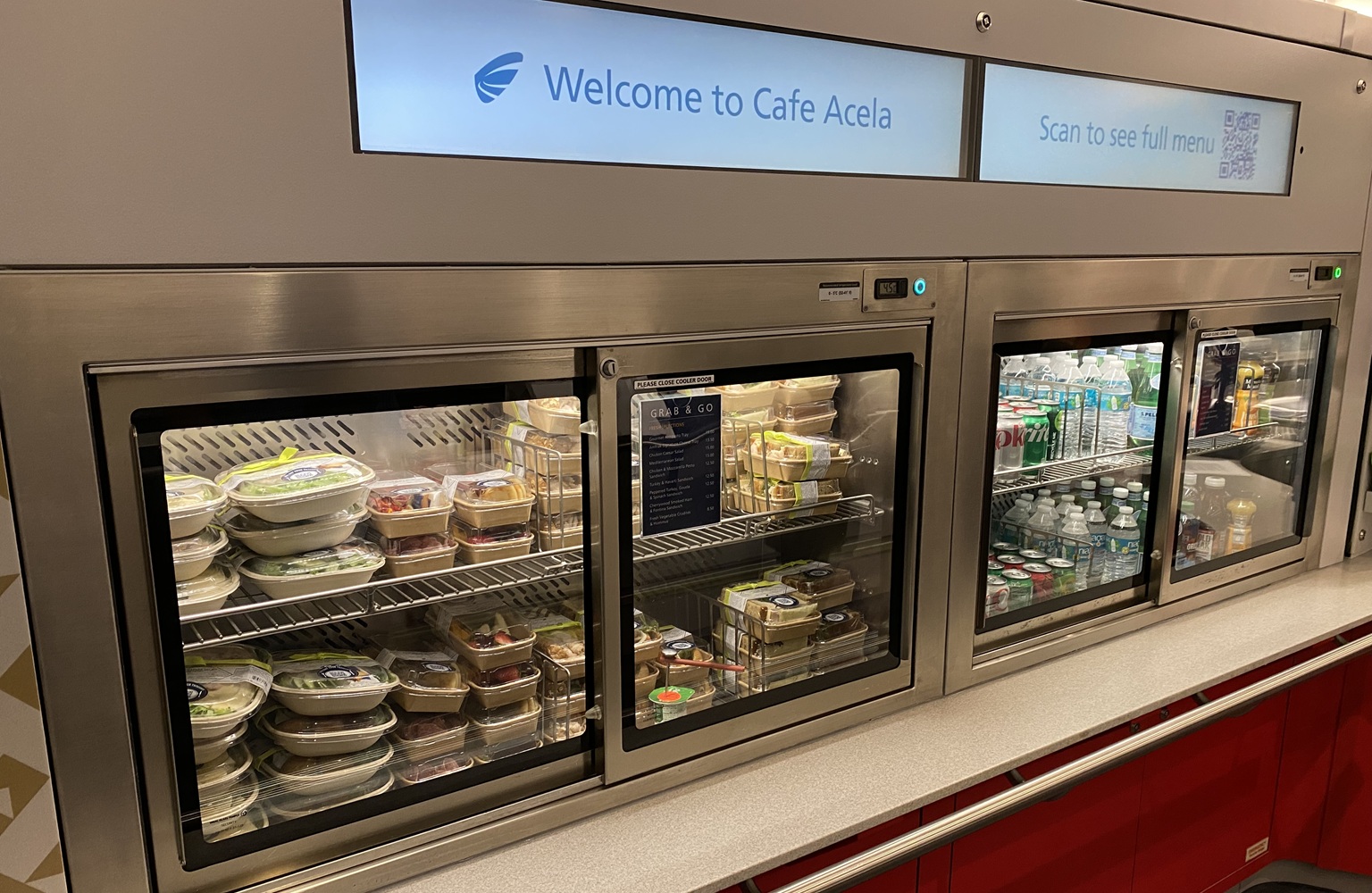
When you discover a cafe car with fresh-food options and bathrooms that are well above the already low bar for mass transit facilities, it’s easy to see why this could be a regular option for New Jersey business travelers headed south to D.C. or north to Boston.
But it’s what you don’t see that makes the NextGen Acela unique in the United States, according to Amtrak Chair Tony Coscia.
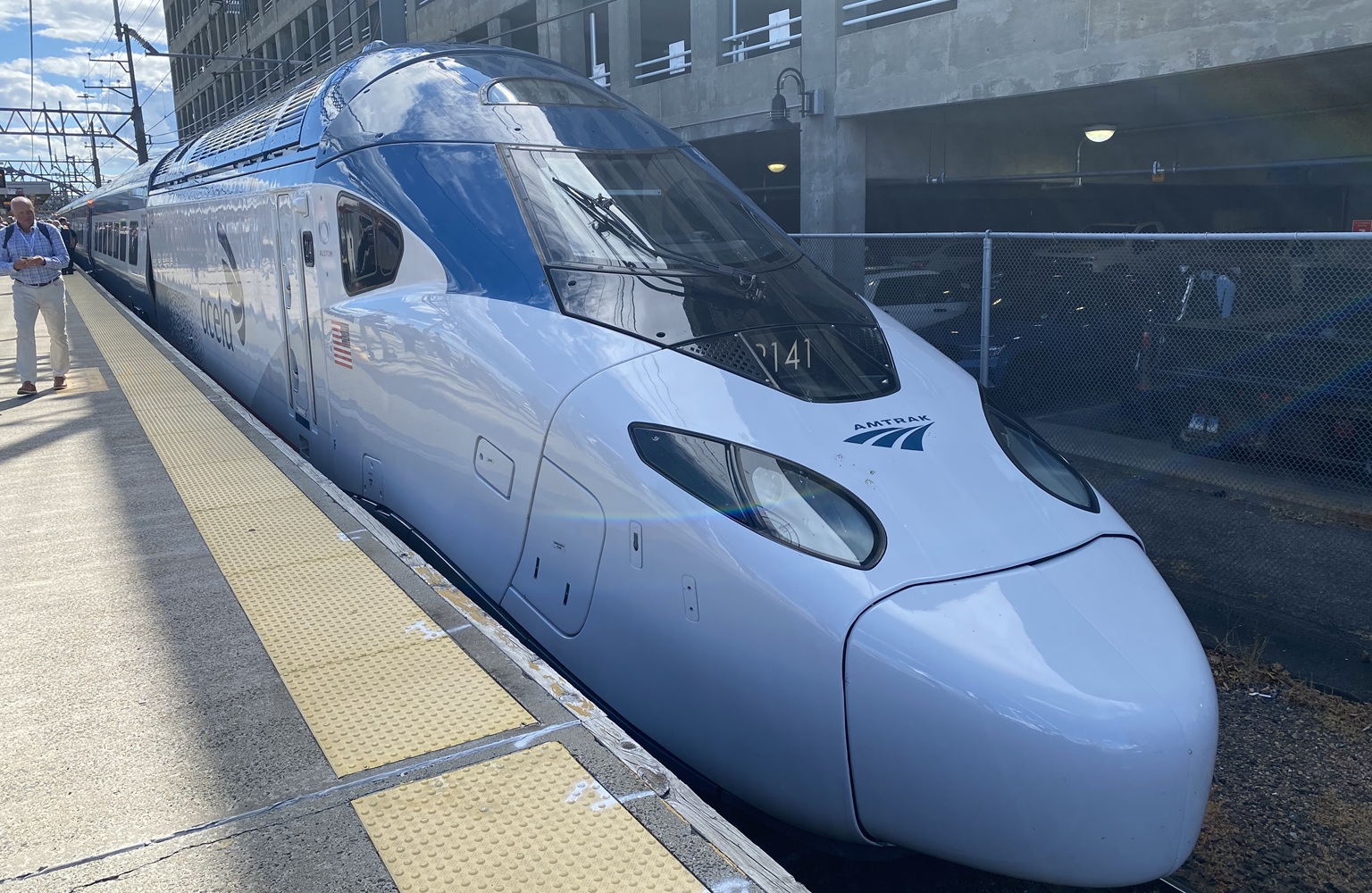
The trains, designed by Alstom and manufactured in the U.S., are based on the high-speed TGV system found in France. Using a tilt system, they are able to hug the tracks like never before, reaching speeds of up to 160 mph, far faster than the previous Acela trains, which top out closer to 120 mph, Coscia said.
It’s why Coscia feels the NextGen Acela, which officially launches Thursday after a media run Wednesday, is a symbol of a new Amtrak.
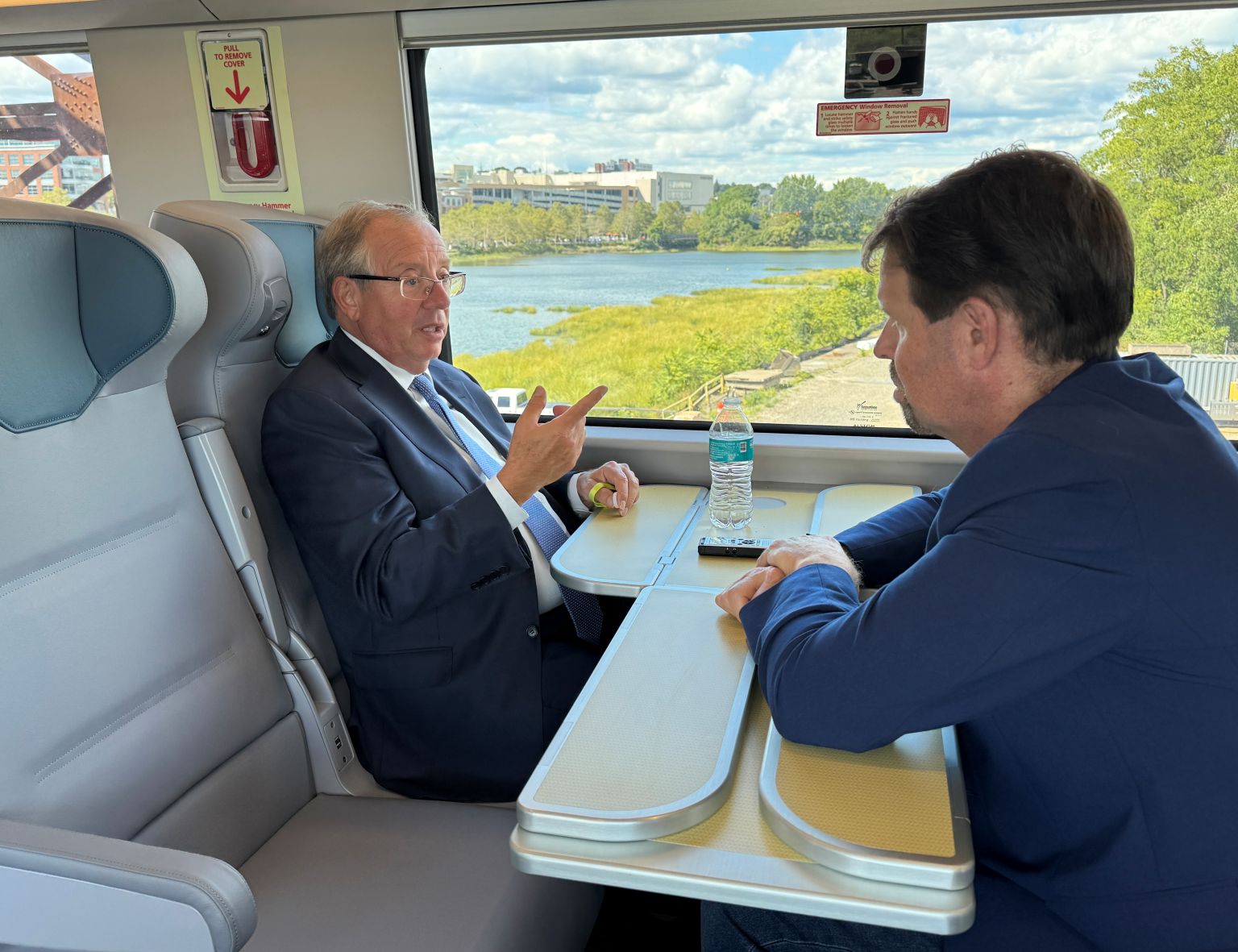
“This is Amtrak 2.0,” he told BINJE, traveling somewhere in Connecticut on a trip that started in D.C. and would run to Boston. “There’s no question that an entirely new generation has embraced train travel. We built these trains to meet that demand.”
The Acela run, which began in 2002, extends from Washington D.C. to Boston. It includes stops at Metropark in Iselin and Newark Penn Station.
Coscia said the NextGen Acela is a much-needed upgrade in all areas of the brand: Speed, comfort, efficiency and luxury. All the things a business traveler could want. More than that, the NextGen Acela is built to evolve as the nation’s transportation infrastructure improves, he said.
While the media run train did hit 160 mph (in Central Jersey), it certainly did not maintain that speed throughout the run.
Too many curves on the track (the biggest difference between tracks in the U.S. compared with Europe or Asia) plus too many tracks and tunnels designed more than a century ago for trains that were never expected to reach speeds greater than 50 mph, saw to that.
But Coscia noted the NextGen Acela trains are built to run better at all speeds.
Acela stops
A look at the stations (South to North) that serve the Acela by Amtrak:
- Washington, D.C.
- Baltimore, Maryland
- Wilmington, Delaware
- Philadelphia, Pennsylvania
- MetroPark
- Newark
- New York City
- Stamford, Connecticut
- New Haven, Connecticut
- Providence, Rhode Island
- Boston, Massachusetts
To be sure, the ride was noticeably smooth (much smoother than the return trip on an older train), increasing the ability to work during the trip. That’s part of the design. (Speaking of which, it’s worth noting the coupling of the cars is different — the familiar accordion model is gone, meaning even moving between cars is pleasant.)
As the infrastructure improves — Amtrak already has made improvements to 52 miles off track — the NextGen Acela will improve along with it.
Not that Amtrak is waiting.
Amtrak will have five NextGen Acela trains going Thursday. The company said that number will increase to 28 in the next two years, though Coscia told BINJE he expects many of those trains to be in service within a year.
All of this will help change one issue that Amtrak is lucky to have.
“Our biggest problem as a company is that we don’t have enough trains and enough seats to sell people,” Coscia said.
To be sure, the NextGen Acela comes at a next-gen cost.
As is the case with airline travel, costs will vary depending on time, day and distance. Some runs between New York and Washington on Friday will go for nearly $500.
And while you certainly can find a cheaper flight, it certainly wouldn’t come with as much comfort — and a guaranteed departure time, Amtrak officials note.
Coscia is not worried about price points. As he said, Amtrak doesn’t have trouble selling its premium seats now. The upgrade of the NextGen Acela figures to only make demand increase.
Coscia, well known around New Jersey for his work as a partner at Windels Marx, is just thrilled this day has arrived.
The dream of a NextGen Acela dates back to 2015, when Coscia led an initiative to remake Amtrak.
“We ripped Amtrak down to its studs and we rebuilt everything over again,” he said.
These NextGen Acela trains were part of the program, Coscia said.
“When we restructured the company, re-fleeting our most valuable commodity became a priority,” he said.
Things were going great for Amtrak — it had record ridership and broke even financially —and then pandemic hit, causing not only an obvious drop in ridership but a slowdown (if not a shutdown) of building the NextGen Acela fleet.
“People weren’t working on trains for a long period of time,” he said.
Coscia knows the Acela run on the Northeast corridor is central to Amtrak’s goal of breaking even again financially in two years. But more than that, he feels the NextGen Acela trains signify the potential of fast, safe and comfortable rail transportation.
Safety at these higher speeds, he said, is the obvious top priority.
“We had to get (regulators) comfortable with something that had never been done before in the United States,” he said. “These trains are operating on a technology that has never been deployed in the United States before, one that permits it to travel at higher speeds on a curved infrastructure.
“We had to test it over and over again. The regulators were very aggressive, and we never pushed back on that. We always felt that if the objective was a safe railroad, it was worth it.”


