


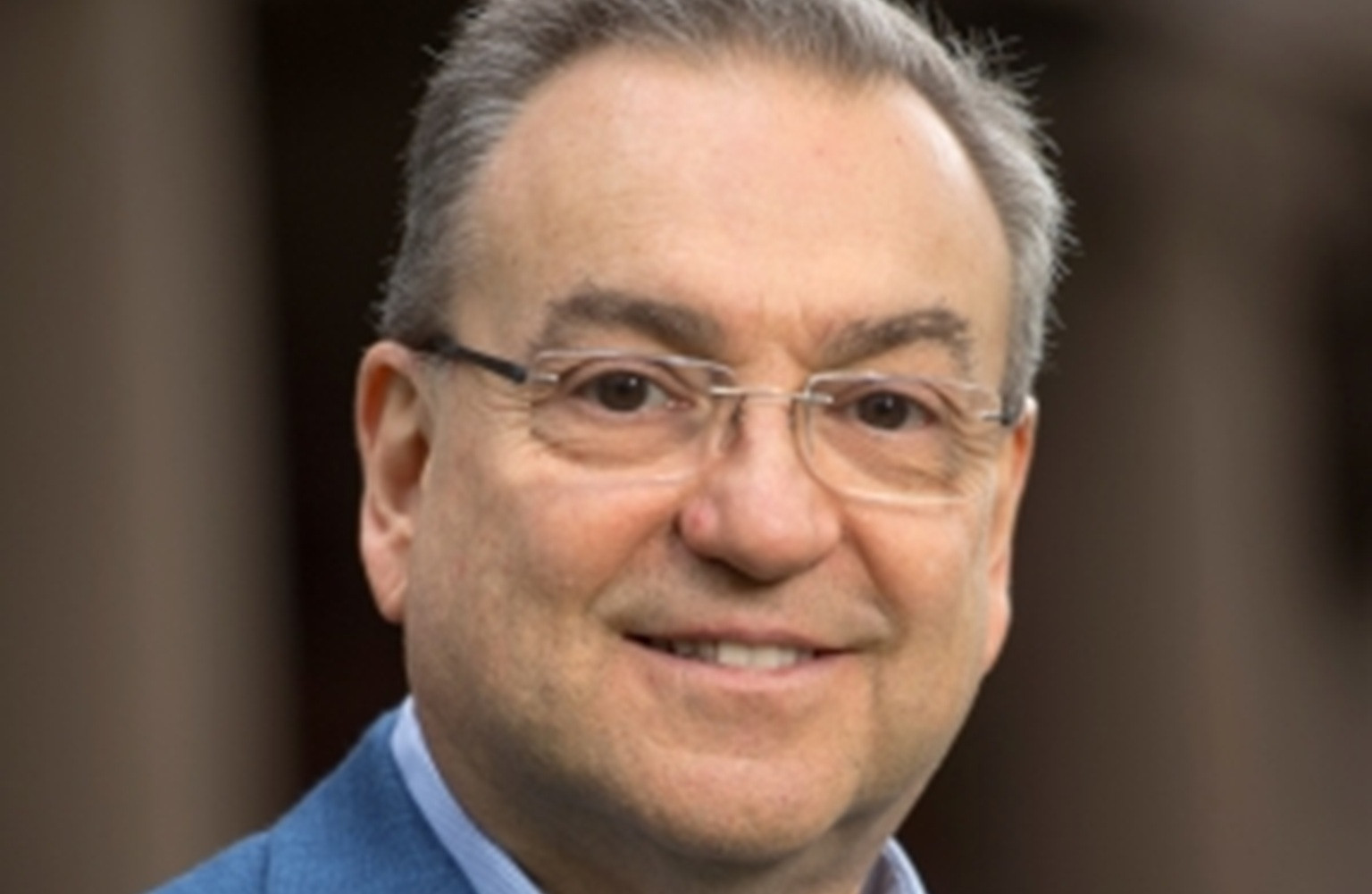
Tony Calcado, who has significantly influenced the evolution of Rutgers into one of the country’s premier research universities in numerous roles over the past three decades, including that of chief operating officer since 2016, announced Tuesday that he is separating from the university, effective Jan. 1, BINJE has learned.
The news, announced at a previously scheduled end-of-the-year meeting with over a hundred members of his leadership team, was not surprising.
Calcado had been essentially sidelined by new President William Tate IV, who has been bringing in his own team of leaders — as often happens — when he assumed leadership of the school on July. 1.
Calcado held several leadership roles at Rutgers, including vice president of facilities and capital planning and senior vice president of institutional planning and operations. His appointment to COO in 2016 marked a consolidation of responsibilities, giving him oversight of institutional planning and operations.
In his role as leader of institutional planning and strategic endeavors, including the capital construction program, Calcado has negotiated and structured private public partnerships that have generated over $1.4B in returned equity by cultivating entrepreneurial relationships with the development community as well as local, state and federal authorities.
His day-to-day management and leadership activities include oversight of a $650M operating budget spanning auxiliary, retail facilities, crisis and emergency management, transportation, a university run 19,000 bed housing system, construction, safety and emergency services.
Calcado is the primary steward of 29 million square feet of space valued in excess of $40 billion.
He is well known for serving as a steering team lead spearheading the largest university integration in U.S. history: The University of Medicine and Dentistry of New Jersey with Rutgers University.
The integration set up New Jersey’s first Academic Health Campus, one of only 120 in the nation, made up of nine schools including but not limited to medical, dentistry, public health and The Cancer Institute of New Jersey (NCI-Designated Cancer Center), establishing a new healthcare system in the State of New Jersey (Rutgers Health) with over 1,500 doctors serving 2.3 million patients annually.
Calcado told the group assembled Tuesday that they played a large role in the transformation of the school, sharing his successes with them.
“Our accomplishments are many,” he said. “Over the last 20 years, we have changed the face of Rutgers by successfully completing over $4 billion in construction while bringing in over $1.4 billion in free money.
“With shrinking budgets, we professionalized all of our operations. We strengthened our public safety posture during the most challenging of times in Higher Education. We launched programs to help our workforce improve and succeed. From the strategic to the physical. From master planning to crisis management. From a worldwide pandemic to a graduation visit by a sitting United States president. From a decentralized fragmented institution to an academic, research, and medical powerhouse.
“I recognize that my accomplishments are not really mine. They are the accomplishments of the almost 3,000 people who work at Institutional Planning & Operations. All of us are part of a team, part of the orchestra. No individual goes it alone, not even the conductor.”
Calcado also praised three past presidents: Richard McCormick, Bob Barchi and Jonathan Holloway.
“Dick McCormick pulled together, under Transforming Undergraduate Education, a fragmented New Brunswick campus and built a true flagship,” he said. “Bob Barchi was tasked with the largest and most complex merger in the history of higher education. Charged with pulling together two completely separate identities, ethos, goals, and cultures, and making them gel. Jonathan Holloway, took his predecessors accomplishments and used them as building blocks to grow our enrollment when others are shrinking, recruit top faculty and students, bring us to the top of the rankings and double our endowment. Quite literally putting us on the map.”
Serving these presidents was an honor, he said. Doing so with the team in operations was special.
“I recognized your contributions every single day of my career here,” he said. “Every decision I ever made, every action I ever took, every recommendation I put forth, always had you — all of you — top of mind.
“I tried to lead with honesty, understanding, fairness and empathy. My sincerest wish is that my success is measured in not what I accomplished, but instead in how I accomplished it. I hope that I never failed you and that I earned your respect by my actions.
“It has been the privilege of my life to have had the opportunity to serve you.”


