


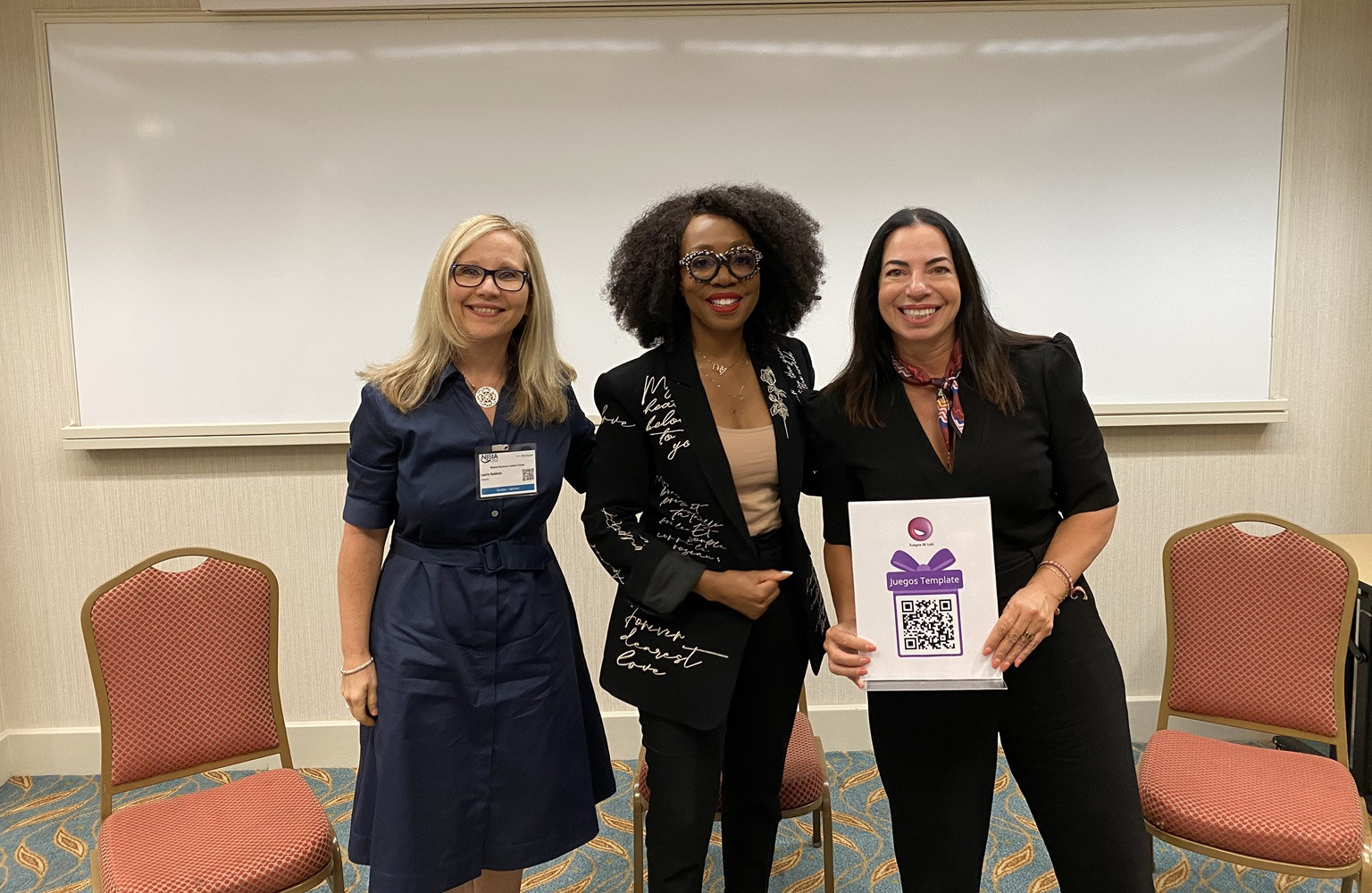

It’s no surprise that there was an overflow crowd for the breakout session about creating an AI toolkit to optimize your success in the workplace.
It’s the question everyone in every job has.
What may be surprising is the simplistic answer that Laurie Rebholz, the head of talent at Citizens, gave to the room of attendees Wednesday at the 11th annual NJ Women Business Leaders Forum.
“Get on it,” she implored the group. “Use AI. Don’t be scared.”
Rebholz then quickly addressed one misconception.
See all the coverage of NJBIA’s NJ Women Business Leaders Forum
- How WBLF continues to set standard for Women in Business events
- United’s Slater Stokes honored with Caren Franzini Award
- Rising stars: Two NJIT students among honorees at WBLF
- How Rutgers’ new AD is working to change culture — and raise money
- The BINJE survey: Women at Business Leaders Forum answer key questions
- Working the room: Ciattarelli wows crowd at BIA event
“Don’t think it’s just another Google — this is not just Google supercharged,” she said. “This is literally your personal assistant in so many ways.”
She followed that up with an even simpler thought:
“If you’re wondering how to engage in the world of AI. If you’re feeling a little nervous. If you’re not exactly sure how to dip your toes in the water. All you have to do is ask AI how to use AI.
“It’s that simple. Ask it how it can make your life easier.”
AI obviously is changing the workplace. And just getting started puts you ahead of so many afraid to take that step. But it’s not going to do your job for you — or, more importantly, cost you your job.
In fact, it can help you in your job.
That was the take of Elisa Charters, the founder of Juego AI labs and a member of the board of trustees at NJIT, a school that is a leader in AI research and application.
Her advice was for people to ask AI how it can help them.
“Each and every person in this room has something that they would love to achieve if they had extra two days to get that project done,” she said.
The solution? Ask AI.
“Do research,” she said. “Ask AI, ‘How should I set myself up to prepare to get this project done? Whether it’s a personal project or a professional project, it will give you some ideas on how to even start approaching it – and then it’ll give you information about how others have done it.
“We’re not all experts. We have this space now to become experts.”
But only by working together, panelist Dee C. Marshall said.
Her group does AI training for corporations, and one of the first lessons is: You get out of it what you put in it.
“AI will feed you content,” she said. “You, the human, create the context. There’s still very much a role that humans need to play in everything that we do. AI can make our lives easier, but you still need to put in the work, and you still need to provide that context.”
And to fact check.
Rebholtz said humans need to ensure they are getting all the information they need from AI.
“You have to make sure you also ask it, ‘What am I not asking you?’ ‘What might be wrong with what you’re recommending?’ ‘What might be the challenges with what you’re recommending?’” she told the group.
“It will often feed back what it thinks you want to hear. You’ve got to push it and say, ‘Give me the counter argument on what you’re telling me.’”
Of course, it all goes back to the first point by Rebholtz: Just start using it.
In all aspects of your life, Marshall said.
“Beyond business, it’s how you run your life, how you plan your family vacations, how you problem-solve, innovate, create,” she said.
And, of course, think about how you can use AI in the workplace, Marshall said.
“Reimagine your role, AI-powered,” she said. “Ask AI, ‘What are the top three strategic plays that I need to know and or do? What is it that I need to learn. And what is the plan that I can launch today that’s not so overwhelming.’”
Rebholtz agreed.
“It’s not about AI taking over your life,” she said. “It’s about you becoming more powerful by using AI.”


