


Imagine a well-established company — founded in Central Jersey in 1980 — that
already employs more than two dozen people, wanting to expand its manufacturing
facility and offices in Central Jersey, being willing to pay for it, but being denied because
the larger footprint wouldn’t meet a local parking space requirement.
To be clear: It wasn’t a lack of customers or capital. In fact, the company spent more
than $35,000 on plans.
The company was going to convert more of its building into production space and move
offices upstairs. The project died when local rules around parking space requirements
made expansion impossible.
That’s right, a parking formula killed the job-creating expansion.
The details of that fight may sound small, but for the manufacturers gathered at the
State of the State of Manufacturing last week in Trenton, the story was a metaphor for
how seemingly minor regulations can choke off real-world growth.
The story echoed a larger theme of the day: that New Jersey can be its own worst
enemy when it comes to helping small and midsize manufacturers grow.
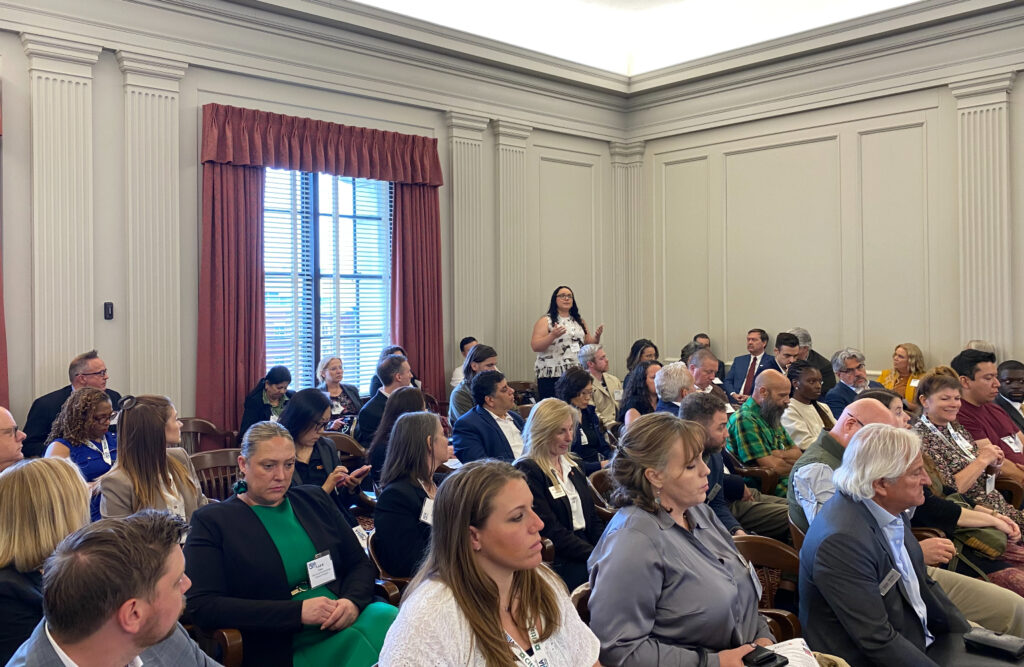
panel discussions during the State of Manufacturing event last week in Trenton. – TOM BERGERON PHOTO
One cannabis manufacturer talked about “a severe disconnect” between the state’s
legislative framework and the Cannabis Regulatory Commission.
Another owner of a tiny shop said a $5,000 to $50,000 loan or grant “would be
immeasurable,” but that it’s far easier for big companies to tap incentives than for
micro-businesses.
A century-old Trenton survival-gear maker said a HUBZone line drawn through its
campus left it ineligible for a federal designation even after it met the hiring threshold —
at the same time the Work Opportunity Tax Credit quietly expired.
Kellie Doucette, the state’s Chief Operating Officer, didn’t dispute the frustration. She’s
frustrated, too, she said.
“One of the big drivers for us is that there are too many small businesses that just never
even get off the ground because they hit these blocks,” she said. “On one side it’s a
cost; on the other side it’s a completely lost opportunity for New Jersey.”
She told the room the administration wants “honest candor” from manufacturers so the
state can target what isn’t working and learn from neighboring states that are “ahead of
us” on permitting and the business climate.
For the representative of the Central Jersey company, that candor didn’t stop when she
stepped away from the microphone.
In a brief follow-up after the meeting, the company leader asked BINJE to not use her
name or the name of the company.
“It’s company policy,” she said. “We don’t fight our battles in the press.”
Her story was too good to keep quiet. And she told BINJE the fight is not over.
“I will never give up,” she said. “That’s why I’m sent here. I’m a pit bull, and I will keep
on going.”
She admitted the company did look briefly at options in Virginia. Moving, however,
would require finding new employees — and leaving behind some who have been with
the company for decades. That made leaving a non-starter.
So, the state keeps her jobs, her tax base and her employees — not because the
system made it easy, but because she refuses to walk away.
She also refuses to lose.
“I will get my workshop made bigger,” she said. “I don’t know how, but I will.”

