


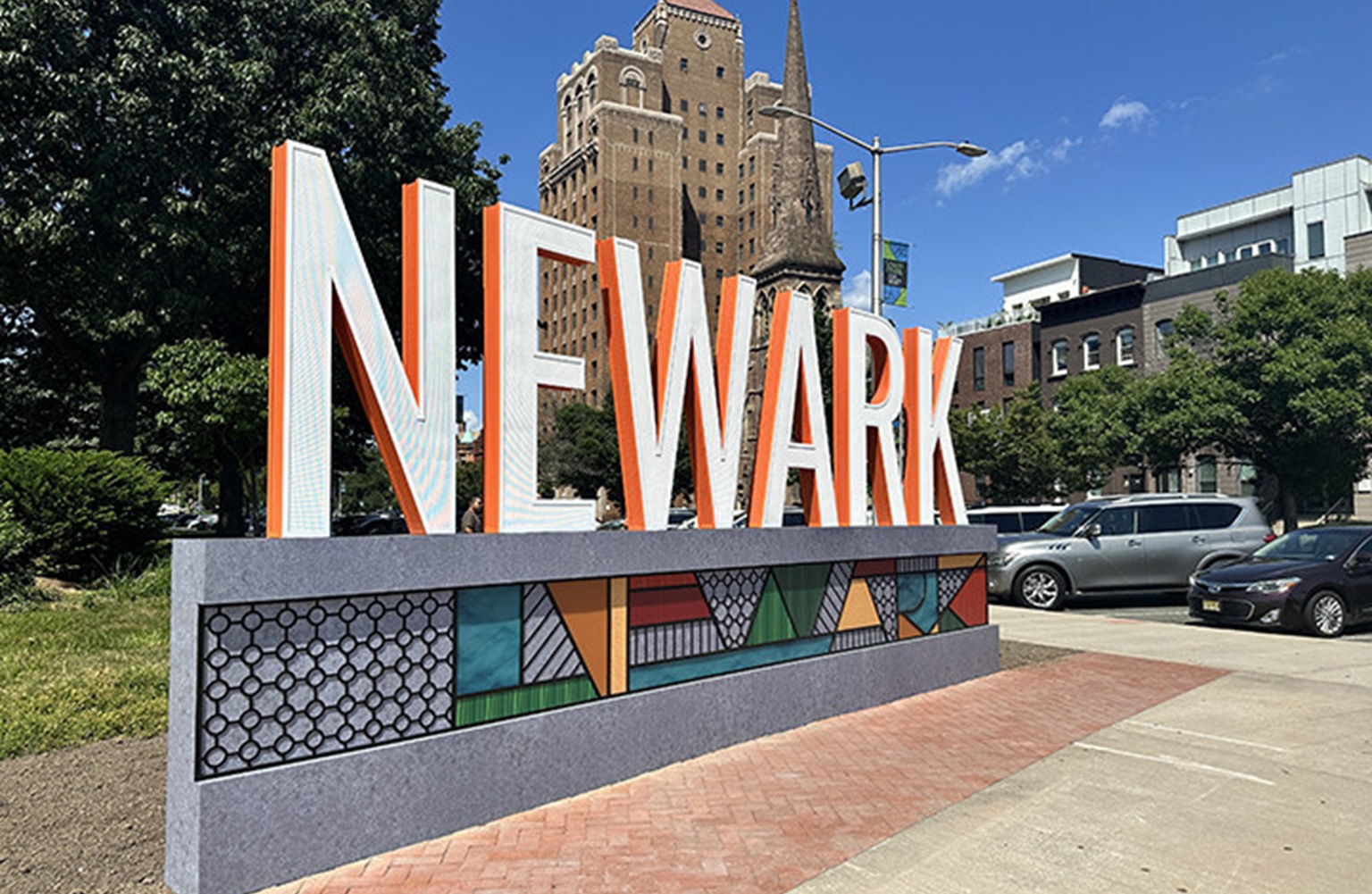
Newark has a new, bold and colorful wayfinding sign at the entrance to the City’s historical Lincoln Park. The sign, the first for Lincoln Park, installed last week serves as a destination marker for residents and visitors.
It also symbolizes a meaningful farewell gesture from the Greater Newark Convention and Visitors Bureau as it transitions operations to the Newark Alliance following a Jan. 8 ordinance supported by the City of Newark Mayor Ras Baraka and the City Council.
Baraka joined Dr. Angela Garretson, GNCVB’s final board chair, for the ceremony.
Garretson, with full support of the GNCVB board, has been leading the bureau’s transition since the January ordinance.
Several cornerstone GNCVB supporters — former board members and hotel property representatives, were also present for the commemorative sign unveiling of sign which symbolizes progress and pride for guests visiting Newark.
“This iconic sign in our historic Lincoln Park serves as an entrance to Newark’s rich history for everyone—residents, visitors, and guests alike,” Garretson said. “Positioned at this meaningful location, it reminds us that we’re part of something bigger than ourselves. As the GNCVB closes this chapter, including the installation of this sign, Newark’s hoteliers, businesses, and anchor institutions carry forward its legacy—continuing to embody the city’s spirit of hospitality by warmly welcoming travelers from around the world and honoring the residents who make this historic city a vibrant home.”
Lincoln Park, also known as “The Coast,” holds profound historical significance for Newark and the broader region.
During the early-to-mid 20th century, Lincoln Park emerged as Newark’s premier entertainment district, home to numerous jazz clubs, theaters, and nightlife venues that attracted both residents and visitors from New York City. This area helped establish Newark as an important cultural center during the golden age of jazz.
The district’s transformation from a residential area to an entertainment center and now to a modern cultural district reflects broader patterns of urban change in American cities, making it a significant case study for understanding Newark’s social and economic history. Today, it serves as an example of how historic neighborhoods can be reimagined and redeveloped while honoring their cultural heritage.


