


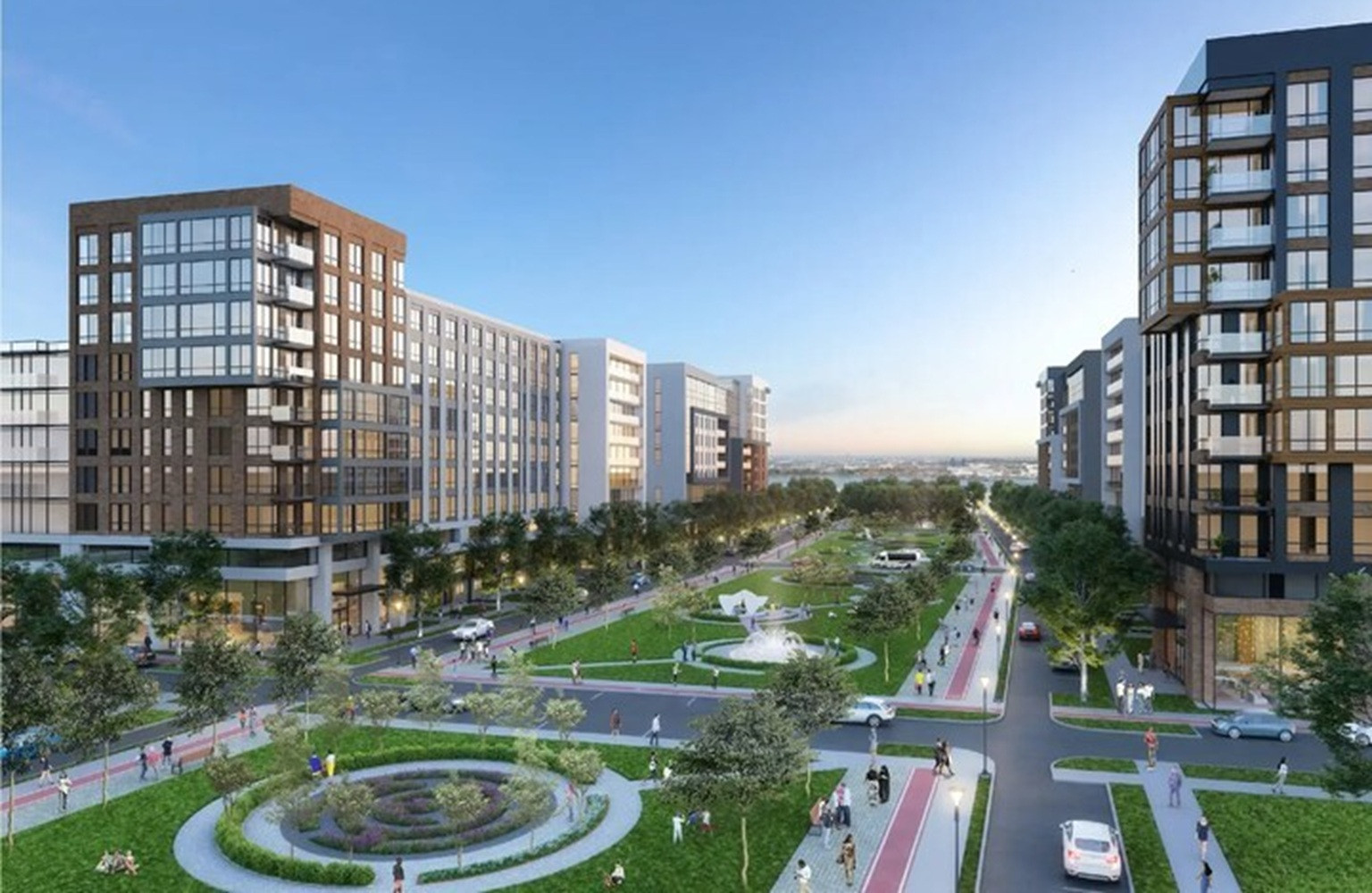
The Bayfront Redevelopment Project in Jersey City, a massive public-private partnership aimed at transforming a 100-acre contaminated waterfront site, received a significant boost from New Jersey Community Capital (NJCC). The nonprofit organization has made an $8.6 million preferred equity investment in the Cove Point phase of the project, which is set to become the region’s largest mixed-use community.
The development is a collaboration between the City of Jersey City, Bayfront Development Partners and BRP Companies.
The project will eventually feature up to 8,000 housing units, alongside retail space and public parks. A core component of the development is its focus on affordable and workforce housing. The Cove Point phase, which consists of four buildings with 350-400 units each, will set aside 35% of its units for this purpose.
The site, once a chemical plant and brownfield on the Hackensack River, was acquired by the City of Jersey City in 2018 after being environmentally rehabilitated.
“Bayfront is our promise kept to put people before profit, delivering the most affordable housing of any private mixed-use community of its size in the country,” Jersey City Mayor Steven Fulop said. “This transformation of a once-contaminated site into a vibrant neighborhood shows what’s possible when public and private partners work together.”
NJCC’s investment aligns directly with its mission of revitalizing underutilized properties and creating workforce housing. The organization’s President and CEO, Bernel Hall, highlighted the project’s long-term impact.
“With the eventual creation of 8,000 housing units, a new light rail stop, and a water taxi to Newark Liberty International Airport, the Bayfront Redevelopment represents one of the largest impact investments in the State of New Jersey,” Hall said.
BRP Companies, a New York-based developer specializing in affordable housing, is one of the partners in the project. Andrew Cohen, managing director of development for BRP Companies, emphasized the city’s role in making the partnership successful.
“The city came to the table with land, incentives, and a willingness to partner to improve the west side of Jersey City and create much needed affordable and workforce housing,” Cohen said.


