


Thousands of fans heading to World Cup celebrations in the southern New Jersey region will make the same mistake: they’ll drive.
They’ll sit in traffic, search endlessly for parking and risk paying inflated rates on their way to SoccerFest at Wiggins Waterfront Park in Camden. Some will even drive into Philadelphia for World Cup celebrations when a simpler option already exists.
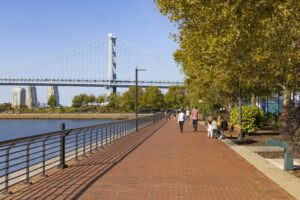
Meanwhile, another group of fans will wisely bypass all of it. They’ll arrive by bike or by foot using Ulysses Wiggins Waterfront Park Promenade and Camden Greenways, pulling directly into SoccerFest without paying for parking, idling in traffic or competing for street space. In these moments when our region is on a global stage, Greater Philadelphia and southern New Jersey’s trail network, the Circuit Trails, will reveal itself for what it actually is: not just a recreational extra, but essential transportation infrastructure.
Trails are too often treated as lifestyle amenities, nice-to-have additions discussed alongside weekend recreation and outdoor tourism. But when our region hosts one of the largest international events in the world, one of the smartest ways to move people to and from different celebration will not be on highways.
It will be on trails.
This moment should fundamentally change how we think about infrastructure investment in this region. The Delaware Valley Regional Planning Commission and commissioners in Burlington, Camden, Gloucester, and Mercer counties already think about trails as essential infrastructure. This is a chance for residents to do the same. Fans heading to SoccerFest from Philadelphia can take the Delaware River Trail and Ben Franklin Bridge pedestrian walkway, connecting directly into the waterfront promenade. Vice versa, Camden County residents can use these trails to travel into Philadelphia and make their way to the Schuylkill River Trail, which offers direct access Lemon Hill where they can enjoy FIFA Fan Festival.
Many of these trail routes also connect directly to PATCO, SEPTA, and Regional Rail stations, allowing residents to combine trails and transit instead of paying for gas, parking, tolls, and rideshares.
At a time when parking near major events can cost more than dinner, that matters.
This summer, the Circuit Trails network will help people avoid congestion, reduce transportation costs, connect to transit, and move safely around the region. It will serve commuters, families, tourists, and residents alike. And unlike temporary event infrastructure, its value will remain long after the final World Cup whistle blows.
Which is exactly why this summer should be a wake-up call for policymakers. If trails can help move people during one of the world’s largest sporting events, they deserve to be funded and planned like the transportation infrastructure they are.
The Circuit Trails network did not appear overnight. It exists because of decades of partnership between local governments, counties, nonprofits, transportation agencies, philanthropies, and private-sector partners who understood that trails are not just recreational assets, but long-term investments in mobility, public health, economic development and quality of life.
And the work isn’t finished.
The Circuit Trails network has already grown to more than 420 miles across Greater Philadelphia and South Jersey, with a goal of reaching more than 850 miles and connecting more communities to safe, accessible transportation options.
If trails can help move thousands of people during one of the world’s largest sporting events, imagine what they can do for residents every single day.
Justin Dennis is the Chair of the Circuit Trails Coalition and New Jersey Program Director at Trust for Public Land


