


The demolition of a 1970s-era office building in Newark might seem routine. On this occasion, it marked a turning point.
When Rutgers Health and University Hospital broke ground last week on a multiyear redevelopment plan that will transform the city’s health care corridor, it was more than just the first phase of an initiative that will expand the campus and increase access to care, world-class clinical services, education and research.
It was about keeping a promise of the 1968 Newark Accords.
The accords, born out of the 1967 Newark uprising, said University Hospital would serve the people of Newark, not displace them. Last week’s ceremony, more than five decades after the fact, served as a declaration that the city’s future will be built on community-centered care.
So said Junius Williams, a civil rights attorney who helped negotiate the original Newark Accords. He was there to mark the long-sought occasion.
“I’m proud to be here representing that negotiating team and to welcome this new building as the next round of buildings that will help carry on the mandate of the medical school agreement … for the economic and health benefit of the people,” he said.
Gov. Phil Murphy agreed, calling the groundbreaking a renewed commitment to advancing health equity and improving health outcomes for the people of Newark.
“When this project is complete, University Hospital will have the modern resources and facilities to better protect the health and future of both Newark and the surrounding region,” he said.
The redevelopment will unfold in stages:
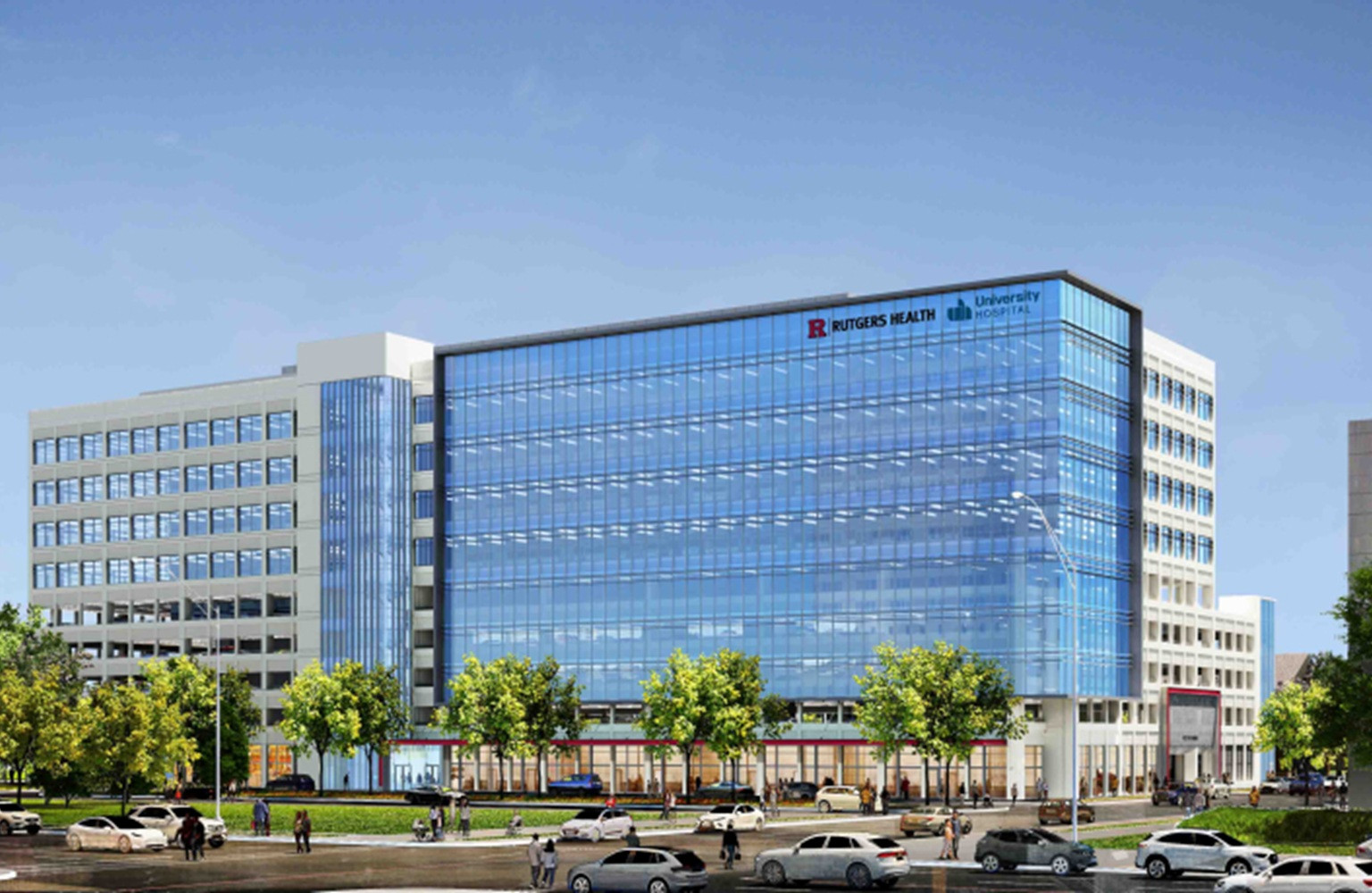
- An administrative building, including 11,000 square feet of clinical space for outpatient care and an 875-space parking garage;
- A new medical office facility to replace the Doctors Office Center at 90 Bergen Street;
- A new patient tower and major upgrades to the existing hospital.
Newark and hospital officials say this phased approach ensures continuity of care, with patients receiving services in current clinics until the new facilities open. By 2027, specialties will begin transitioning into purpose-built spaces designed for efficiency, personalization, and community engagement.
Rutgers Health Chancellor Brian Strom said the initiative is more than a construction project.
“At its core, this project is about people,” he said. “It is about expanding access to care, improving health outcomes and revitalizing a critical health care corridor in the heart of this city.”
Incoming University Hospital CEO Carole Johnson agreed.
“We will have a true community asset — a living, breathing promise that world-class care is right here in Newark,” she said.
The ceremony drew a powerful cross-section of leaders, including Newark Mayor Ras Baraka, Rutgers University President William Tate IV, congressional representatives, state legislators and community advocates.
EDA Deputy CEO Mary Maples, who once served as interim CEO of University Hospital, summed up the day this way.
“For decades, University Hospital has been an anchor institution in Newark, offering critical health care services to residents from across the state,” she said. “Under Gov. Murphy’s leadership, New Jersey is investing in expanding access to health care — understanding it’s not just an investment in people’s well-being, but a key driver of economic growth and community revitalization.”
And the fulfillment of a promise.


