


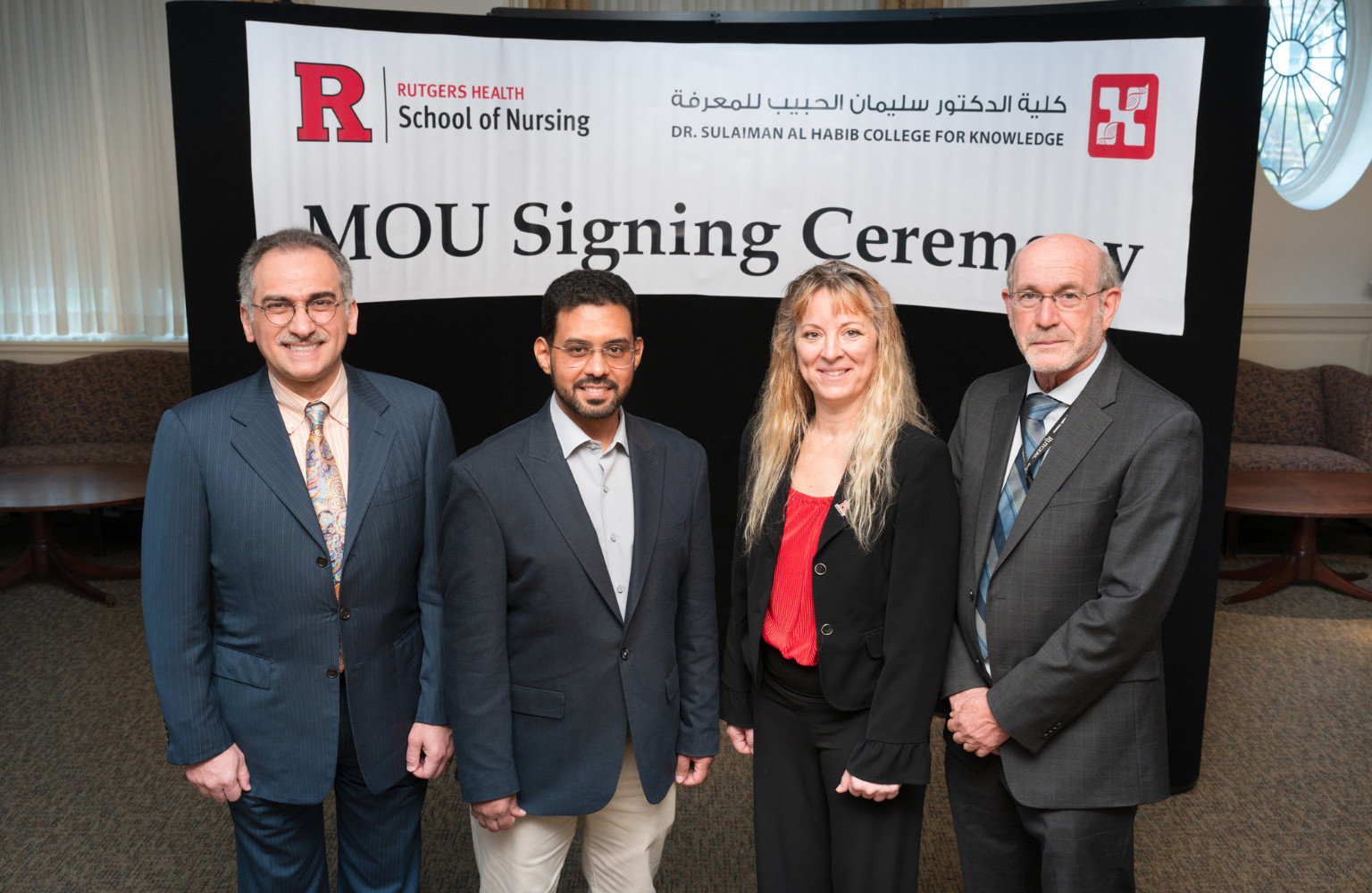
Rutgers School of Nursing has announced a partnership with Dr. Sulaiman Al Habib College for Knowledge with the hopes of expanding nursing education and promoting international collaboration.
The Dr. Sulaiman Al Habib College for Knowledge – a private, nonprofit institution located in Riyadh, Saudi Arabia, was founded in September 2024 under the Dr. Sulaiman Al Habib Medical Group.
Operating as one of the Middle East’s largest health-care systems, the institution admitted its first class of nursing students in August.
During a three-day visit to Rutgers’ New Brunswick and Newark campuses, leaders from the newly established Saudi nursing college met with Rutgers faculty and administrators to explore academic models, clinical partnerships and student support systems. The visit included the signing of a memorandum of understanding that establishes a framework for academic exchange, joint research and shared learning between the two institutions.
Rutgers School of Nursing Dean Angela Starkweather praised the international collaboration.
“Health-care challenges transcend borders,” she said Angela Starkweather. “By sharing knowledge, research and innovation, we can prepare nurses everywhere to meet the needs of their communities – and, in doing so, improve health outcomes globally.”
The memorandum of understanding – the first between Rutgers and Dr. Sulaiman Al Habib College for Knowledge – outlines four primary areas of collaboration: faculty development, curriculum innovation, student and faculty exchange and the design of future postgraduate nursing programs. Together, the institutions aim to strengthen nursing education and research, promote academic and cultural exchange, and build long-term capacity within Saudi Arabia’s health-care system.
Founding Dean Monir Almotairy praised the potential growth in Saudi Arabia.
“Our collaboration with Rutgers is an investment in the future of nursing education in Saudi Arabia,” he said. “We are delighted to be thought partners alongside Rutgers in areas such as leadership, faculty development, simulation, curriculum enhancement, student engagement, and to bring those lessons back home to benefit our health-care system.
Saudi Arabia faces a nursing shortage as health care demands rise and the nation works to expand access under Saudi Vision 2030. The country has relied on an expatriate workforce, with Saudi nationals accounting for only a small percentage of practicing nurses.
To improve care quality, Saudi Vision 2030 calls for broad health-system reforms that expand local training and career opportunities. In response, both government and private sectors are investing in nursing education, scholarships and faculty development – particularly to recruit and retain Saudi citizens.


