


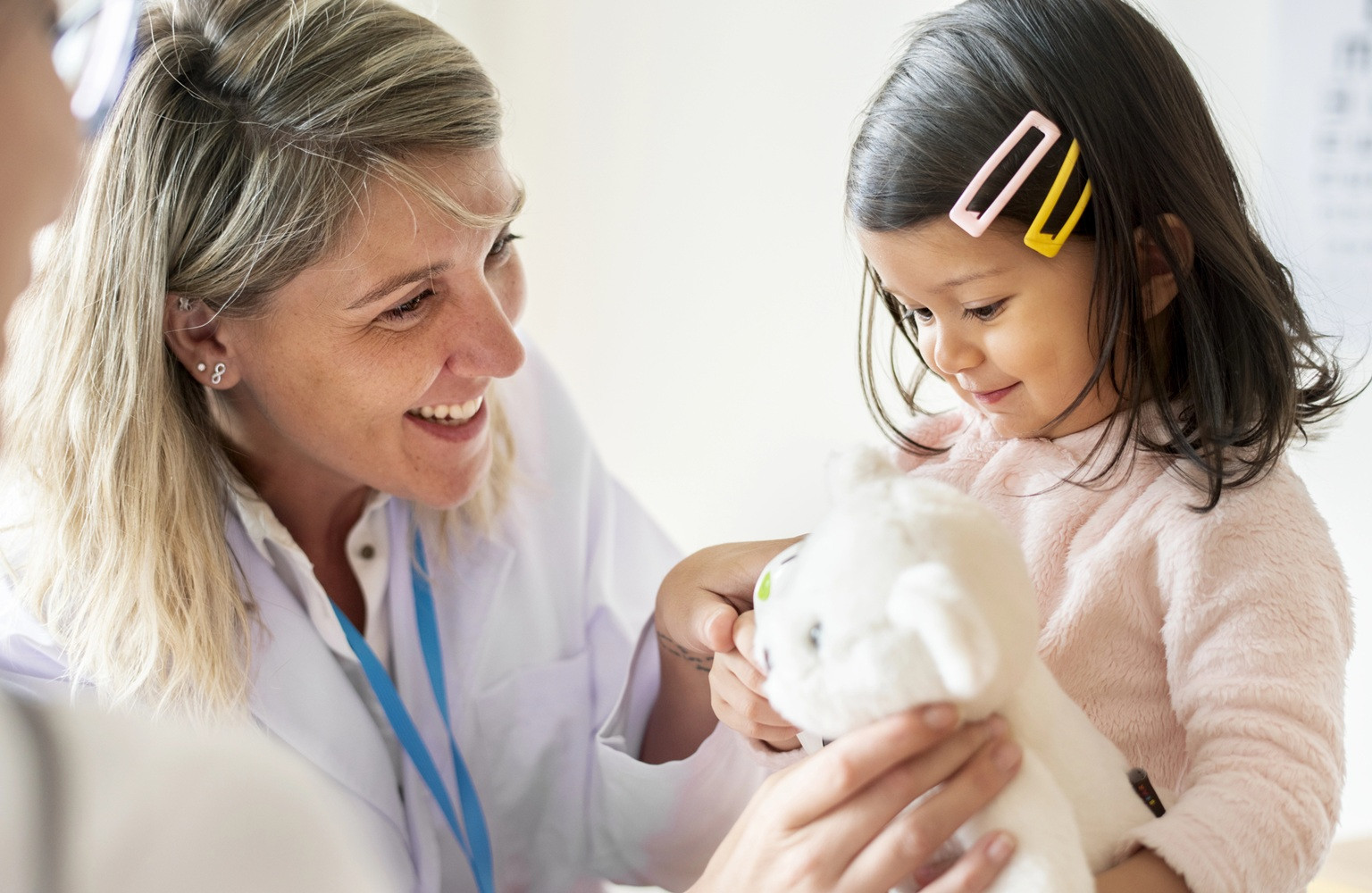
The U.S. News & World Report rankings for Children’s Hospitals were released on today. And while many believe the annual ranking process in this category is a more difficult process than it is for hospitals in their entirety, the rankings do not do justice to the challenges children’s hospitals — and pediatric specialists — face in their daily duties.
Simply put, caring for children is much harder. And very much unappreciated.
U.S. News rankings
Sanzari and Hovnanian children’s hospitals (part of HMH) ranked as No. 1 in state.
BMS Children’s Hospital (part of RWJBH) ranked as No. 2 in state.
Here’s a take from Dr. Fernando Ferrer, the chief pediatric officer for RWJBarnabas Health and a pediatric urologic surgeon.
“The provision of care for children is really markedly different,” he told BINJE. “Children vary in weight, which tremendously impacts dosing. Normal laboratory values for kids are different from adults. Procedures on children are much more difficult because they’re smaller.”
And then there’s this.
“Treating children is often much more multidisciplinary,” Ferrer said. “It often requires a village of doctors with different specialties. The disorders that children have can involve different organ systems. They might originate from a unique genetic abnormality, but it impacts multiple organisms, so it changes the complexity a lot.
“So, if you look at it from the quality and safety perspective, then look at it from the perspective of complexity of their condition, it can be much more difficult.”
The team at RWJBarnabas Health handles it well.
The Bristol-Myers Squibb Children’s Hospital at RWJ University Hospital in New Brunswick was ranked as the No. 2 children’s hospital in the state in the U.S. News rankings. The BMS Children’s Hospital was ranked No. 16 in the Mid-Atlantic region, which stretches from New York to Viriginia.
Only Hackensack Meridian Health, with a combined entry of the Joseph M. Sanzari Children’s Hospital (Hackensack UMC) and the K. Hovnanian Children’s Hospital (at Jersey Shore Medical Center), ranked higher in the state and region.
And the good news is that advances in pediatric care are coming so quickly, that there are fewer reasons for children to be admitted to a hospital.
But when they do — and any parent of such a patient will tell you — the first concern isn’t a ranking but a commitment to care.
Ferrer said parents will find that at BMS, the HMH hospitals — and all of the leading children’s hospitals in the region.
Doctors who treat children work at another level, Ferrer said.
“The type of people that go into pediatrics are typically extremely mission driven,” he said. “Not that other doctors aren’t, but they’re extremely mission driven. They’re very committed to the children and, oftentimes, they’re very committed to discovering in academics as well.
“So, they’re not just busy taking care of the patients, they’re busy trying to figure out new ways to treat these children so that we can get better outcomes for them. It’s a unique population of doctors.”
Unfortunately, it’s not one that is growing.
In 2024, 252 out of 3,139 pediatric residency slots went unfilled, according to the American Academy of Pediatrics. It reflects a troubling trend where fewer medical graduates are choosing pediatrics. Some feel the shortage is driven by lower pay and lower prestige.
Ferrer said the shortage is well known.
“It’s something we’re worried about,” he said. “We’re already seeing shortages in many pediatric specialists now, and they’re predicted to worsen.”
Fixes are not easy. After all, a shortage of pediatric specialists only matches a shortage of doctors in all specialties — nurses, too.
“This is a subject that the societies and government are grappling with, but it’s critically important for a state like New Jersey to make sure that it has the appropriate number and the talent that they need to care for their children with these complex conditions,” he said.
For now, doctors such as Ferrer and hospitals such as BMS Children’s Hospital, will press ahead.
Honors, such as the ones handed down today, are nice — but not for the reasons you might think, Ferrar said.
“This is a very competitive process, and you really have to continue to hone your skills every year — so it speaks to the commitment we have within the program,” he said.
It’s a commitment more people need to recognize.


