


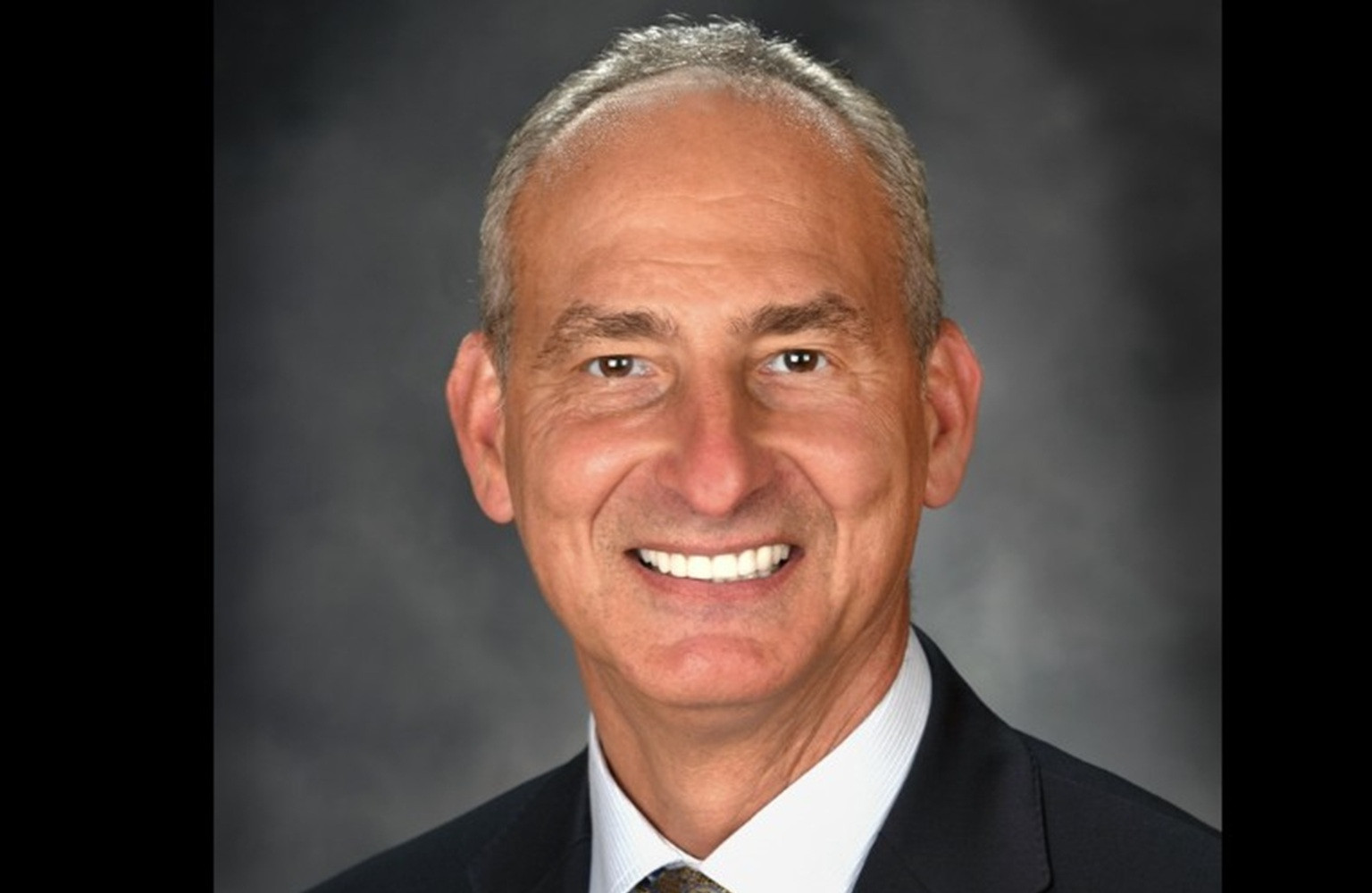

For all the bricks and mortar and state-of-the-art design that now define Valley Health’s footprint in North Jersey, the most telling mark of Dr. Robert Brenner’s leadership as CEO may not be visible from the street.
Instead, it shows up in classrooms, conference rooms and patient-care teams — in the intentional creation of a teaching culture inside a health system that, until very recently, had never trained medical residents.
That shift toward medical education is not an accident. It is central to how Brenner — who succeeded longtime CEO Audrey Meyers in the summer of 2024 — is putting his stamp on Valley. And it reflects both continuity with the past and preparation for the future.
Read more about Valley Health
- At Valley Health System, success has created a new challenge: Handling increased demand
- 10 things about … Valley Health System
- Quality over quantity: Why Valley Health has no interest in merging
- Why medical education is central to Brenner’s vision for Valley
- Where AI fits — and where it doesn’t — at Valley Health
Graduate medical education, Brenner has said, is something Valley long needed, and something former CEO Audrey Meyers strongly encouraged him to pursue.
Meyers, who led Valley for 20 years and became an institution in her own right, understood that education does more than produce physicians. It raises expectations across an organization.
Brenner, who spent years as a residency director earlier in his career, shared that belief, during a recent sit down with BINJE.
“When you have residents in the building, it changes the tone,” he says. “Everybody steps up. Everybody has to know what they’re doing.”
That philosophy became reality in April 2024, when Valley opened its new hospital in Paramus — and, for the first time in its history, welcomed residents at the same time.
Through an affiliation with the Icahn School of Medicine at Mount Sinai, Valley launched graduate medical education programs in internal medicine and obstetrics and gynecology. Since then, it has added surgery and received approval for oncology, cardiology and palliative care.
It is Valley’s program, Brenner is careful to note, not a precursor to a merger. Mount Sinai serves as the sponsoring institution, providing faculty support, software and regulatory guidance, but Valley maintains control and identity.
That distinction matters. Education, in Brenner’s view, is not about branding or prestige. It is about building a workforce — and a culture — that can sustain itself.
A learning organization, he believes, “raises all boats.”
The push to education at Valley extends well beyond physicians.
Under Brenner’s leadership, the system has expanded nursing education and nursing residencies, strengthened relationships with colleges such as Ramapo, and deepened training programs in radiology technology, pharmacy and allied health.
The goal is not simply staffing. It is creating an environment where learning is expected and accountability follows.
Succeeding a CEO who guided the organization for two decades is no small task. Meyers shepherded Valley through enormous growth, planning for a new hospital that would become a regional destination for care.
Brenner, who rose through the organization after joining Valley in 2015 as its first chief physician executive, was deeply involved in that work. But as CEO since July 2024, Brenner has been deliberate about making culture — not construction — the defining feature of his tenure.
He has invested heavily in leadership development, relying on mentorship, retreats and formal programs, including 360-degree assessments, to build alignment across the organization. A recent leadership retreat off campus was designed less around strategy documents than around trust, communication and shared purpose.
At the organizational level, Valley has reworked its mission, vision and values, elevating patient safety to the top priority. Brenner reinforces that message personally, leading new employee orientation sessions every other week and speaking directly — and repeatedly — about respect, accountability and safety.
“How we treat each other is how we treat patients,” he says.
That focus reflects a long view of leadership. Asked what he hopes to look back on one day, Brenner’s answer is not the hospital, the programs or the balance sheet.
“It’s not about bricks and mortar or the program development,” he says. “It’s about the people.”
That doesn’t mean facilities are unimportant. Under Brenner’s leadership, Valley opened its new hospital — a 370-bed, purpose-built facility designed for flexibility, efficiency and patient experience. The system also has expanded ambulatory care, including a 60,000-square-foot center in Montvale, to meet demand without overburdening inpatient capacity.
But those investments are presented as a means, not an end.
The real essence of Brenner’s leadership is preparation — preparing leaders, clinicians and the organization itself for a health-care environment that remains volatile, competitive and profoundly human.
Where Meyers built Valley into what it is today, Brenner is focused on ensuring it can endure tomorrow. And in choosing education as the place to lead, he has made that intention unmistakably clear.


