


Two facts have dominated the conversation about NJ Transit and the N.J. Turnpike Authority as the region prepares for the 2026 FIFA World Cup:
- You will not be allowed to drive and park at MetLife Stadium for any of the matches.
- And it will cost a lot (now $98) to take NJ Transit to the area.
Those realities not only grabbed headlines — they also overshadowed an important transportation legacy from the global event: lasting upgrades that will reshape how the region moves.
Upgrades that will endure well beyond the tournament, which runs June 11-July 19.
“The takeaways of this are going to be lasting and long-term,” Stephen Dilts, the Chief Operating Officer of the New Jersey Turnpike Authority, said.
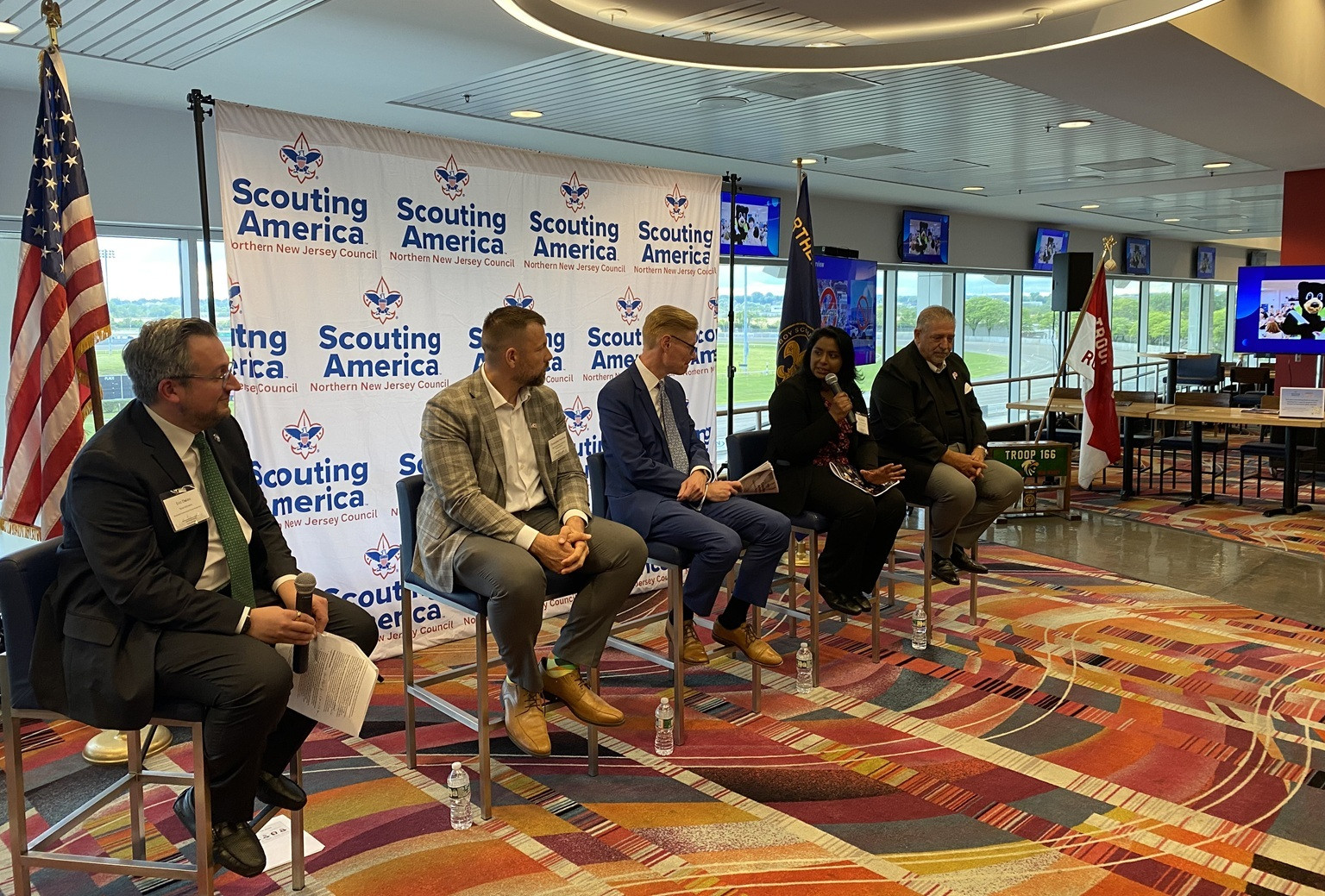
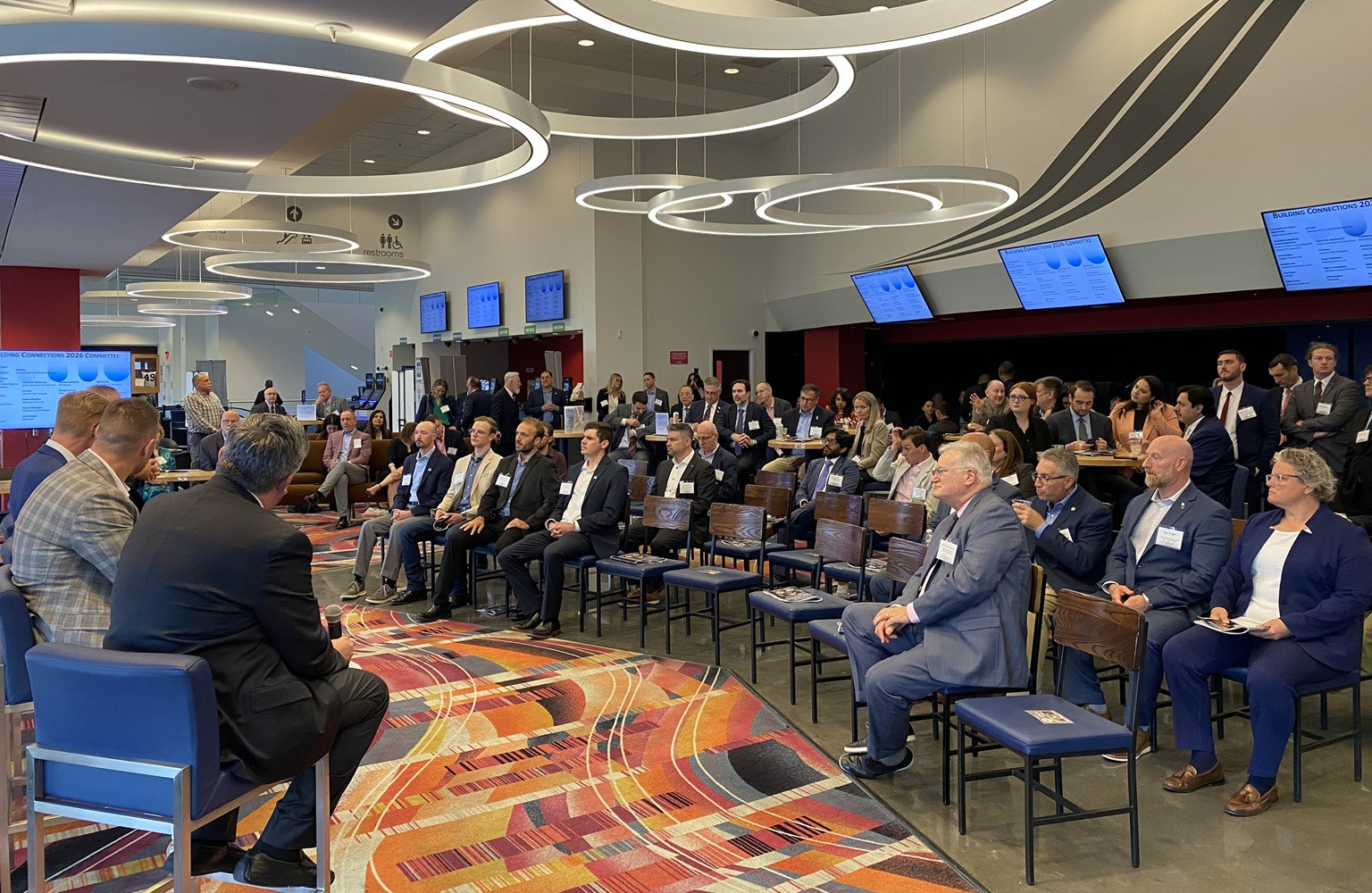
Dilts joined a transportation panel last week at the Meadowlands Racetrack during a “Good Scouts” event benefiting Scouting America programs. Chris Feinfeld, Binu Thomas and Jim Kirkos also participated.
Moderated by Eric Daleo, Founder and Managing Partner of Telos Advisors, the panel detailed the changes ahead.
***
The honorees
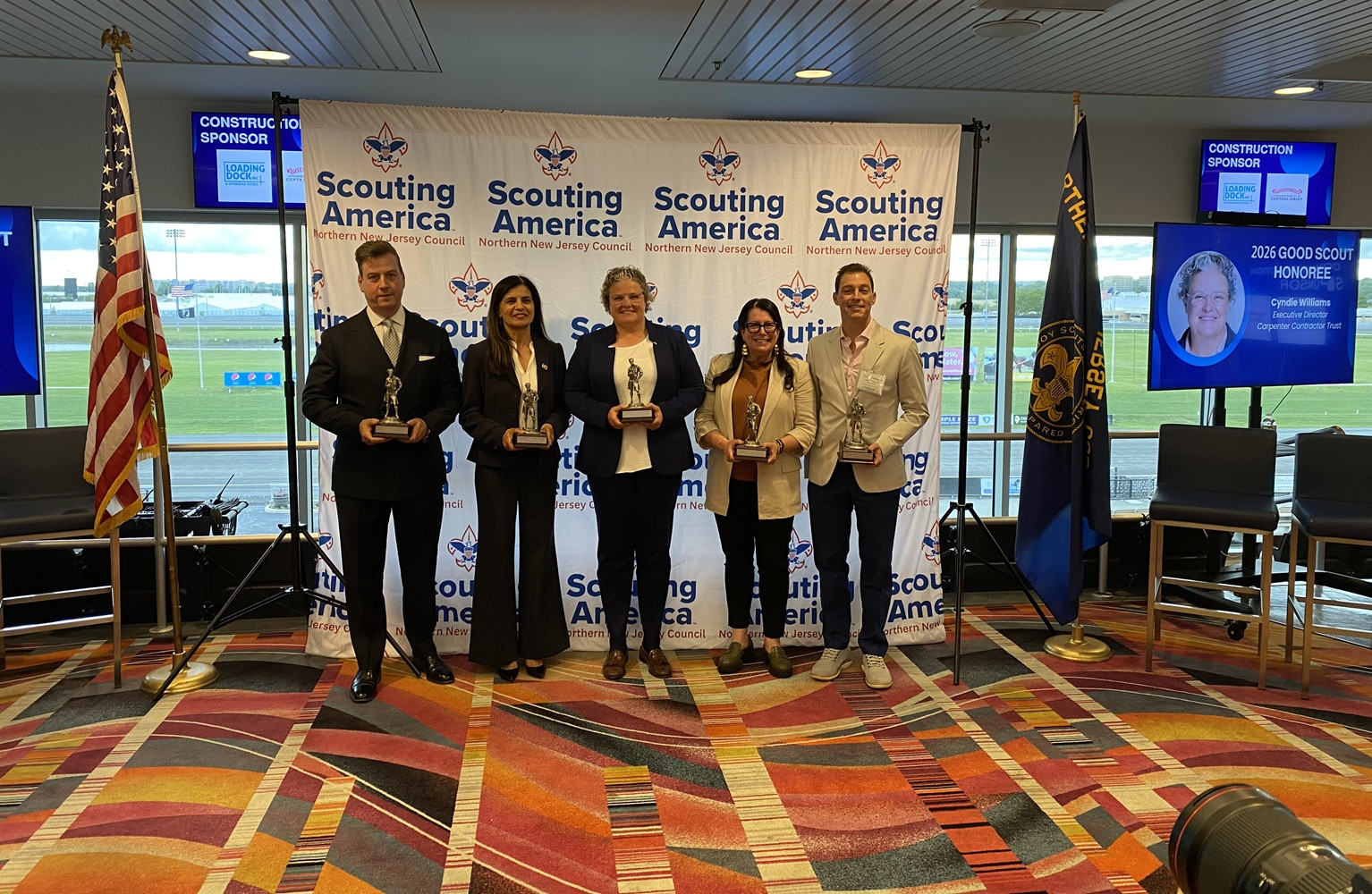
Five were honored during a “Good Scouts” event benefiting Scouting America programs last week at the Meadowlands Racetrack:
- Clinton Calabrese: Assemblyman (D, Ridgefield)
- Jill Hirsch: CEO, N.J. Sports & Exposition Authority
- Priya Jain: Commissioner, N.J. Department of Transportation
- Kevin McCabe: Commissioner, Port Authority of NY/NJ
- Cyndie Williams: Executive Director, Carpenter Contractor Trust
In just four weeks, the Meadowlands will host one of the world’s biggest sporting spectacles. Eight matches, including the final, will bring a million visitors and an estimated $3 billion in economic activity. But for those moving fans in and out of MetLife Stadium, the bigger question is what remains after FIFA leaves.
The answer: a fundamentally different way to move people — and tools that will last for decades.
“This area will be the safest it’s ever been,” Chris Feinfeld, Assistant Commissioner of Operations at the New Jersey Department of Transportation, said.
He cited more than $54 million in technology upgrades on Routes 3, 120 and 17.
“There’s not a single blind spot for camera coverage anymore — above overpasses or beneath bridge decks,” he said.
Those upgrades, along with Turnpike and NJ Transit changes, represent a once-in-a-generation opportunity to rethink mega-event transportation.
For drivers, the most visible legacy may be Turnpike improvements that outlast the final whistle.
“How many of you have been stuck trying to exit 16W?” Dilts asked.
That’s changing.
Dilts said that in early June, the authority will open a new option for E-ZPass users to bypass 16W by heading north to 18W and using a maintenance U-turn to avoid congestion while paying the same toll.
“That’s instituted for FIFA, and that will be permanent,” he said.
The authority has also added a bridge off 16W and is reconfiguring toll plazas.
“We are adding reversible lanes — 10 going in, eight coming out,” he said.
Behind the scenes, new cameras and technology will improve traffic management and the “patron experience” long term, he said.
***
On the transit side, NJ Transit is treating the World Cup as both a stress test and a chance to address perceptions after the 2014 Super Bowl, when three-hour waits made national news.
“Rail is the best way to go,” Binu Thomas, Senior Advisor to NJ Transit CEO Kris Kolluri for World Cup planning, said. “You know the schedule … you can go in and out, no problem.”
Thomas said the agency learned from last year’s Club World Cup, which it treated as a dress rehearsal.
Two major differences stand out.
First is communication, given the number of international visitors. NJ Transit is deploying multilingual ambassadors.
“We’re going above and beyond,” Thomas said.
The second is timing.
The first match is at 3 p.m. on a Tuesday, meaning fans will enter rush-hour traffic.
Feinfeld said agencies are targeting a 20 percent traffic reduction on Route 3.
“We are not looking for everyone to stay home … but we are looking for a 20% reduction,” he said.
Thomas also highlighted pop-up transit terminals that are being utilized for large events.
“The buses will have a dedicated lane to the stadium, which alleviates traffic,” she said.
***
If there was one consistent message, it was that agencies must work together.
“We can’t work in a silo,” Thomas said. “It’s not a one-person show, not a one-agency show.”
Dilts credited former Transportation Commissioner Diane Gutierrez-Scaccetti with improving coordination.
“Under her leadership, she organized us to coordinate closely,” he said. “We are connected in meaningful ways.”
Feinfeld pointed to the power of deadlines.
“Working in government there can be red tape,” he said. “But there’s nothing like a good deadline. “This has forced us to break down barriers.
“I hope we can stay that streamlined.”
***
For the Meadowlands business community, the goal is to avoid repeating a Super Bowl-era mistake — assuming economic benefits would automatically follow.
“We weren’t going to make that mistake twice,” Meadowlands Chamber CEO Jim Kirkos said.
This time, the state is funding festivals and events beyond the stadium footprint.
“New Jersey is going to benefit greatly from this overall economic impact,” he said. “We can showcase New Jersey to as many as 3 billion people.”
Success, Kirkos said, can be measured now — and later.
“We’re going to give visitors who’ve never been to New Jersey a really great big hug, and a really great warm welcome, because we want them back,” he said. “If they recognize that Jersey’s attitude isn’t so bad, and they’re welcome, they’ll come back and see us again.”
Feinfeld, for his part, has a simpler wish.
“I hope Team USA wins, they’re talking about how great our pizza is — and they have no idea who I am,” he said.


